Young Activists Are Learning to Lobby Politicians for Better Climate Education
In New York, high schoolers head to the statehouse to speak truth to power, getting a hands-on lesson in how hard that can be
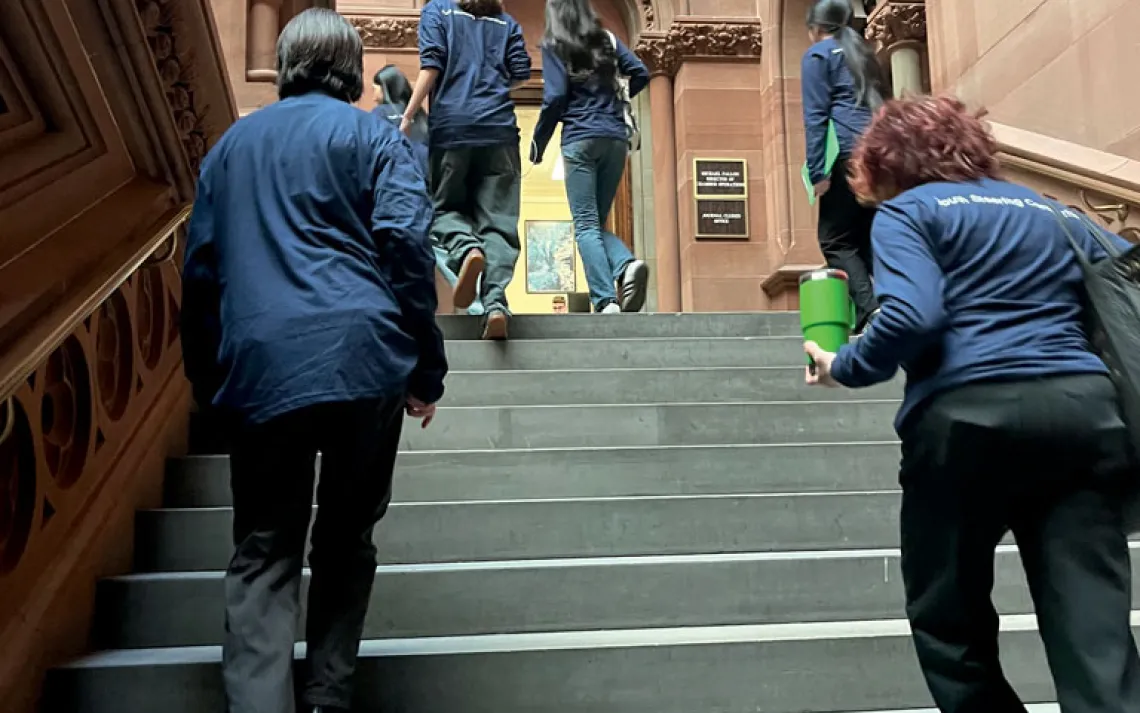
Photo courtesy of the National Wildlife Federation
One morning in March, high school senior Maggie Handelman woke up around four o’clock. She wasn’t going to school that day. Instead, she would be taking a long bus ride with other students from New York City to the state capitol building in Albany. They were going to speak with lawmakers about climate change.
Maggie and her peers have been learning how to persuade people in government who make rules about education. The students are part of a group called Climate and Resilience Education Task Force (CRETF). This group is asking for state laws that require public schools to teach students of all ages about climate change.
“I’ve gone years without hearing about climate change in school,” Maggie has told multiple policymakers during several trips to the capitol.
Maggie remembers the day the skies turned orange in New York City. It was in 2023. The smell of smoke seeped into her classroom. Students were coughing. Through the window behind her, she saw the eerie haze of wildfire smoke. It had traveled hundreds of miles from Quebec, Canada.
“Eyes forward—we’re taking tests,” she remembers her teacher saying.
None of her teachers that day talked about what was happening. Maggie, like her classmates, was scared. “All I wanted was for one of my teachers to say, ‘This is not normal. This is terrifying . . . and your feelings are valid,’” she said.
Some students in New York City do learn about climate change when they take classes like AP environmental science. But those classes are not required or common. CRETF learned that the average student receives only a few hours of climate education per year from kindergarten to 12th grade.
Educators first had the idea for CRETF in 2018. Then in 2020, they got students involved. Some students wanted to help a climate education bill become law. The educators had an idea: Why not talk to or write to the people who make the laws?
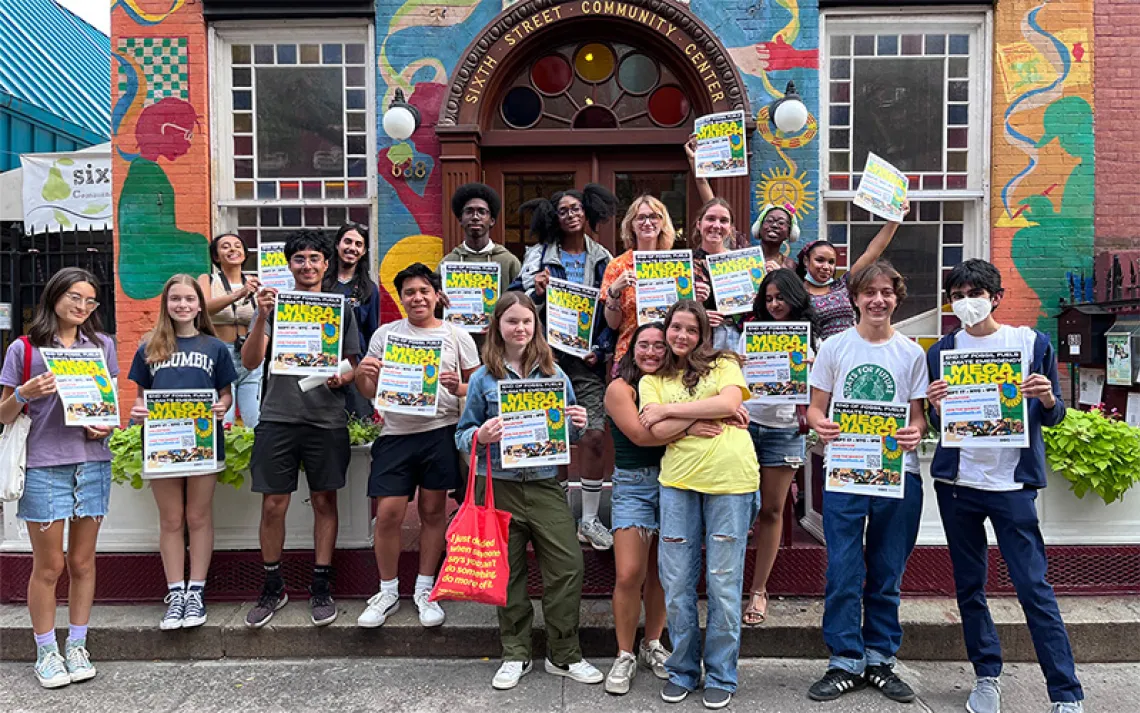
That’s when CRETF’s student-led team, the Youth Steering Committee, was born. Meeting with lawmakers on behalf of a group that has a particular goal is known as lobbying. The CRETF youth group that does this lobbying work has grown from seven to more than 50 students in five years.
“They’re really getting an opportunity to be the spokesperson for what they’re experiencing,” said Ester Du Von, CRETF’s public-speaking coach. She teaches students that their personal stories are key to getting people in power to pay attention. Du Von helps them speak confidently.
Tenth grader Lottie Arnold sees the giant Climate Clock in Union Square every day on her way to school. The clock is on the side of a building and counts down how much time we have left to protect our planet from getting too hot. It’s scary, she said, but also motivating. At a CRETF meeting, Lottie shared her experience of talking to lawmakers about the climate bill. “A few of them really listened to our stories and didn’t seem to be opposed to it,” she said.
Sixteen-year-old Rafael Aldana-Diaz’s mom is from the Dominican Republic. He has noticed changes when he visits family there. A river he and his sister loved has dried up from severe weather. It’s a reminder of how quickly climate change can affect the places we care about. Rafael thinks that with even a little bit of climate education, kids would leave school “more self-aware and knowing what the future will look like.”
This is the second year CRETF has brought students to the capitol. This year, they asked for about $500,000 for two new staff members: one to support climate education directly and the other to work on projects to lower schools’ carbon dioxide emissions. Meanwhile, students lead workshops where teachers learn how to include climate change in lesson plans. For example, a middle school math teacher could create problem sets based on carbon emissions.
Not everyone agrees that schools should teach climate change. Florida and Texas have tried to make it harder for schools to use textbooks that mention the subject. But other states, such as Oregon and Colorado, have pursued climate education laws. Many of them “are driven by youth activists,” said Glenn Branch, deputy director for the National Center for Science Education. “[The youths] bring a lot of energy and enthusiasm.”
It’s important for students to learn the causes and effects of climate change as well as solutions. This is the next generation that will make decisions about our planet. Yet CRETF’s youth group is already experiencing how hard it can be to create change. “You’re listening to me,” Maggie said of the politicians she spoke to. “But are you gonna put the money where your mouth is?”
By May, the answer became clear: New York policymakers would not be including climate education in the state’s budget for the second year in a row. This disappointment has shown Maggie and her peers why it’s important to keep voicing their concerns.
“Lobbying has taught me that many adults don’t take young activists seriously,” Maggie said. “It’s crucial for people in power to hear your experience as a young person. You have every right to hold politicians accountable.”
Start or join a student action plan: See sc.org/kid-action and sc.org/school-action.