 The Magazine of The Sierra Club
Full Circle
Yurts—yak not required
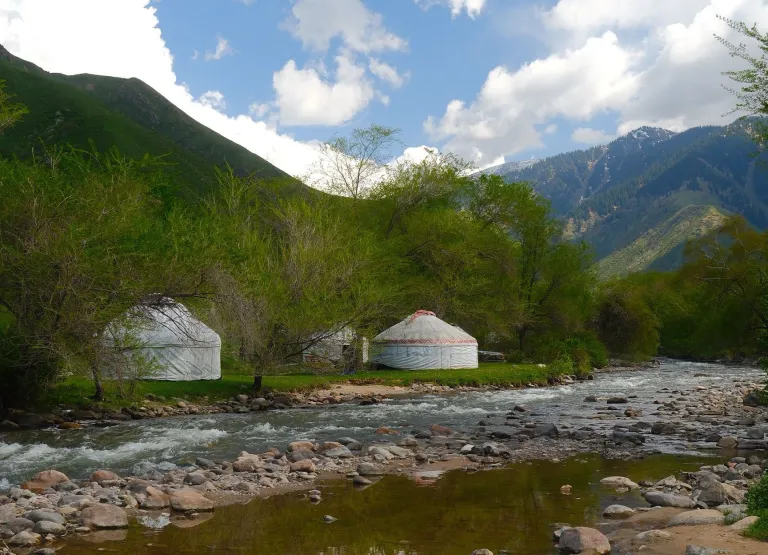
I never meant to fall in love with yurts. I took a caretaking job at a retreat center, and a rental yurt was part of the agreement. My cat and I moved into the odd circular structure with its fabric-covered lattice frame and began living in blissful solitude.
The yurt was simple and serene, and the sounds were enchanting. From my fabric home I could hear a rushing mountain creek, trees blowing in the wind, and the occasional coyote serenade. I slept better and dreamed more, and if I woke in the middle of the night, I looked up through the central skylight at an inky black, diamond-studded sky.
After another retreat-center experience (this time in a yurt with a radiant-heat earthen floor), I moved into my own yurt in the mountains of Idaho. Once the platform was built, my family and friends gathered to help raise the structure. It went up in a day.
Some visitors expect to find me living primitively, but my yurts have always been filled with beautiful furnishings and ample amenities. A wood stove keeps my home cozy and warm in the winter, and electricity comes from solar panels. I cook with a propane oven and have a laptop, phone, and Internet access. I use a simple composting toilet, but flush toilets are common in yurts.
Yurts may not be everyone's idea of a primary residence, but they are catching on as vacation homes and guest accommodations. A yurt's price tag is appealing too: $5,000 to $20,000. The Oregon Parks and Recreation Department describes the 190 rental yurts that dot 14 of its coastal parks and 4 inland sites as "16 feet in diameter, filled with comfy furniture, and pointy on top." Who can resist that?
And there's nothing like coming off a hiking or cross-country ski trail into a backcountry yurt, sipping hot chocolate by a wood stove while relaxing with friends, cozy and protected but just a few millimeters of insulated fabric away from the great outdoors that drew you there in the first place.
Becky Kemery is the author of Yurts: Living in the Round (Gibbs Smith, 2006) and maintains a companion Web site, yurtinfo.org.