Wolves Aren't Safe in British Columbia. A First Nations Partnership Set Out to Protect Them.
Here's how Indigenous and conservation groups teamed up
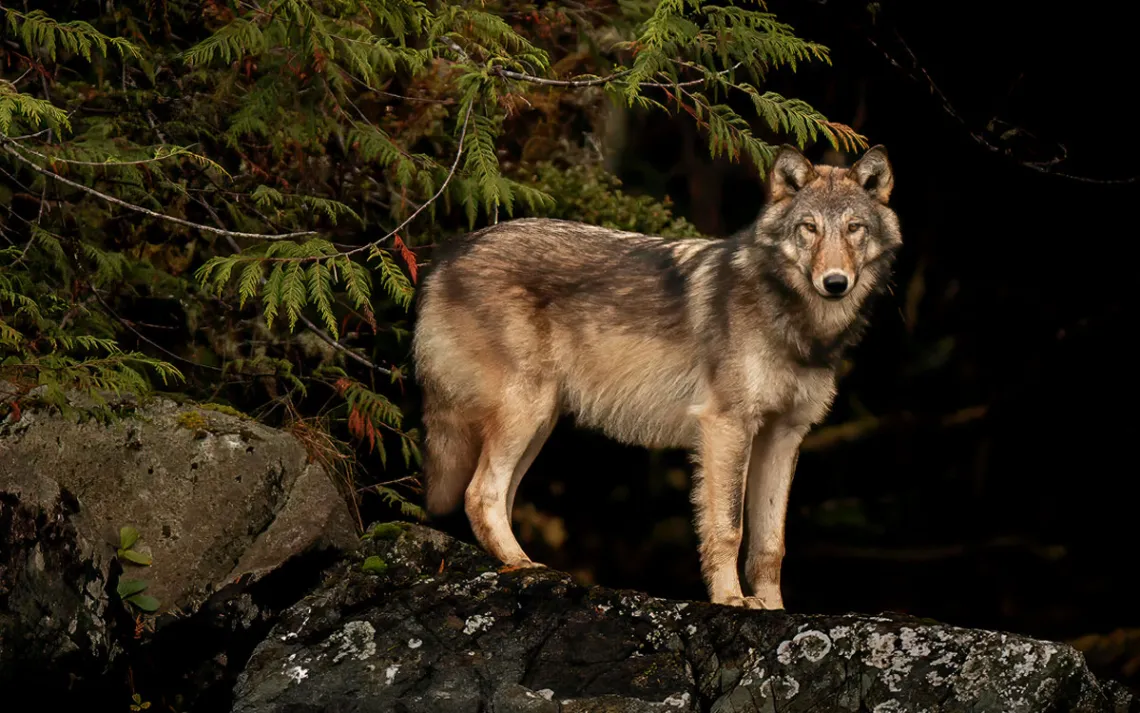
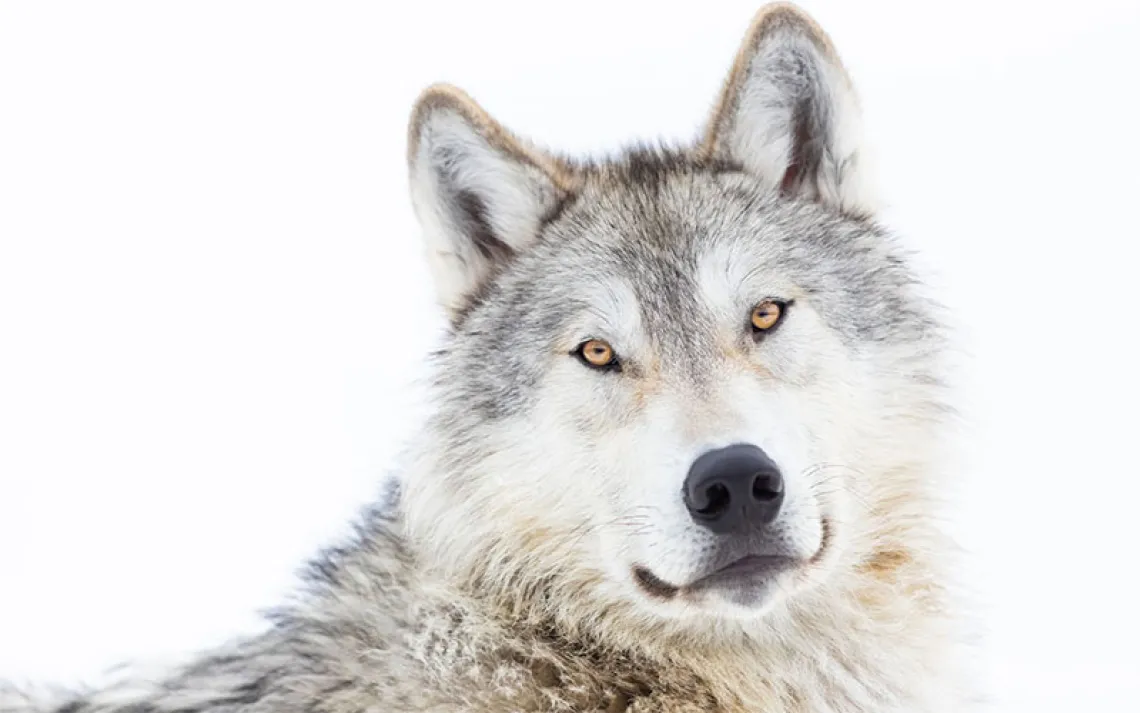
Photo by Mark D. Williams
We'll call him Elder, because there are wolves under his protection and his real name might point people in their direction. Suffice it to say, he belongs to one of the Coast Salish First Nations, and his traditional territory is tucked among the mountains of British Columbia’s Lower Mainland.
Elder has never seen Norway, but his homeland is often compared to it—mountains of gray and white, swooping skyward over cobalt fjords. Giant western red cedars can still be found in its unlogged corners, and its glacial streams boast famous runs of sockeye, Chinook, and coho salmon. Protecting the land and its wildlife is among Elder’s responsibilities, and his nation has worked hard to keep the salmon running. “We refer to them as our salmon family,” he said.
Elder’s family has taken on two new members. The first was Roosevelt elk, which have been reintroduced into forests throughout the Lower Mainland since the 1980s. A few dozen were released on Elder’s land in the early 2000s, and now there are hundreds, herding complacently in sight of road and trail, and feeding locals when the salmon runs fail.
The second newcomer followed the elk, appearing first in scattered reports and low-resolution photographs: black and tawny blurs gliding among fir and hemlock. It took a partnership with the Raincoast Conservation Foundation, a scientific nonprofit, for Elder and his people to put a face to the rumors. These were the first wolves on their land in living memory, and some of the precious few seen in this region since the 1950s.
“I didn’t even know wolves were fishermen.”
“A big part of this project is to move slowly and build a deep, enduring relationship with our Indigenous partners,” said Chelsea Greer, a biologist and wolf conservation program manager with Raincoast. “Everything’s guided by their priorities.”
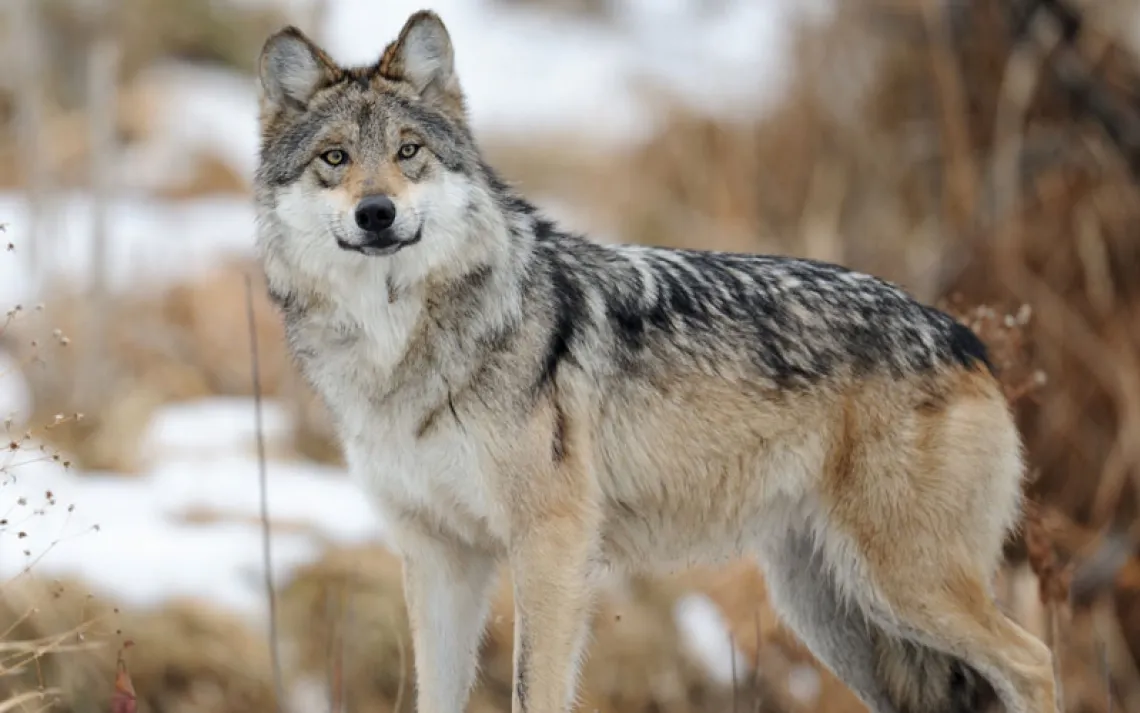
For the moment, the priority is understanding this wolf pack—its size, its members, its diet. Fieldwork began in 2021 and has consisted mainly of camera traps set up by Greer and her colleagues. The wolf filmed the most by far is the pack’s breeding female. She’s black, with a graying muzzle and hair loss along her tail, perhaps because her cubs chew off the fur each spring.
This partnership in First Nation territory is also a chance for Greer to refine—and in some ways pioneer—noninvasive research techniques. Tranquilizing and collaring these wolves might yield quick data, she said, but it would also compromise the animals’ welfare and, more to the point, modify their behavior. Instead, she’s pairing her camera traps with acoustic recorders so that wolf songs can be matched—at least in theory—with the individuals being filmed. She’s also been collecting scat to see what the wolves are eating. So far, it has revealed salmon, deer, mice, beaver, muskrat, and, of course, elk.
At last count, the pack numbered six adults. The enduring mystery is where they came from. When wolves disperse into new territory, it’s nothing for them to travel hundreds of miles. The pack of the Lower Mainland could hail from the Rocky Mountains in the east as easily as from the Great Bear Rainforest in the north.
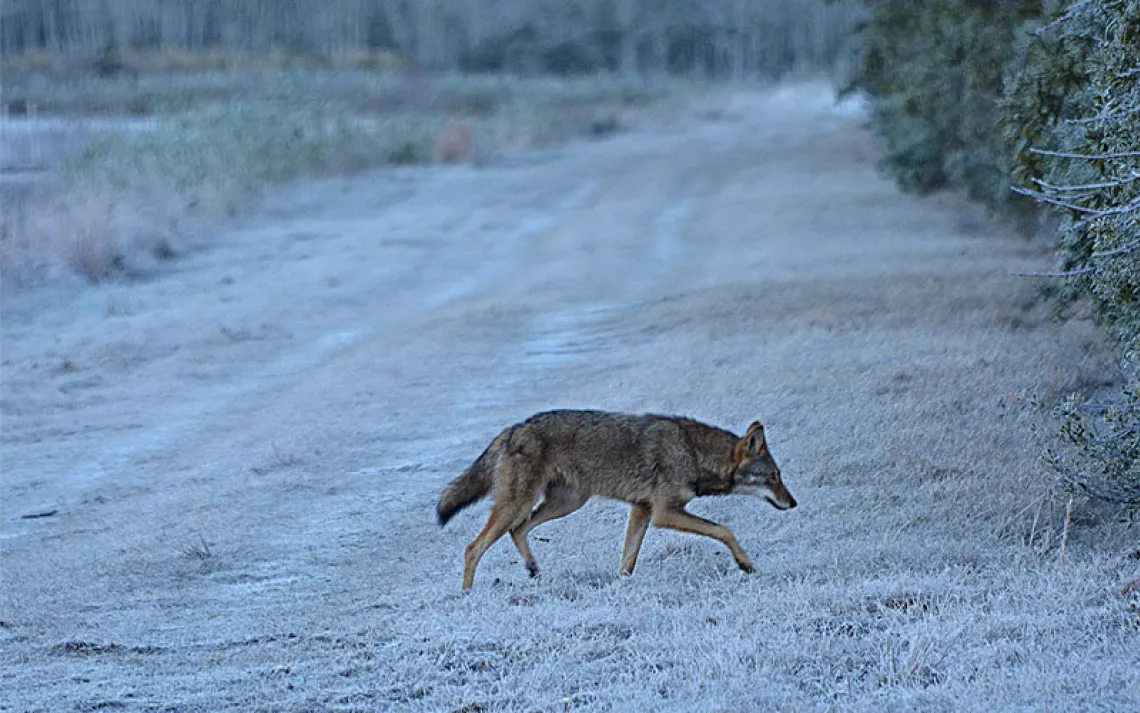
Paul Paquet, a senior scientist with Raincoast, has studied wolves since 1979, and to his eye, these ones are strange. “Something seems a little off to me,” he said, noting thinner coats and longer tails than he’s accustomed to seeing. These quirks, however subtle, might suggest a trace of coyote ancestry, common among the “coywolves” of eastern Canada but exceedingly rare in the West. “They’re likely a mix of coastal and Rocky Mountain wolves,” he said.
Whatever their pedigree, wolves are never safe in British Columbia. The provincial government has been destroying packs since 2015 with the stated intention of preserving endangered caribou—a practice challenged on both scientific and moral grounds—but wolves have been “managed” in one form or another since 1909. In the 1960s, this meant dropping poisoned bait from airplanes. More recently, it’s meant shooting packs from helicopters.
In most jurisdictions, hunters and trappers are free to kill wolves without a species-specific license, and while some bag limits exist, reporting one’s catch is mostly voluntary.
Provincial officials estimated that 9,187 wolves were killed in BC between 2012 and 2022. Elder and his tribal council have kept their pack a secret for exactly these reasons.
“There’s concern from hunters who don’t like the competition for elk,” Elder said. “Some said we should shoot all the wolves, but I said no. Wolves have the right to eat, just as we do.”
He hopes the wolves’ return to his territory will resemble their return to the Greater Yellowstone Ecosystem. After wolves were reintroduced to Yellowstone, their predation of elk helped restore overgrazed habitat. This allowed tree regrowth, stabilized stream banks, and shaded water, which increased beaver populations to the benefit of watersheds.
While the photos and videos collected by Raincoast have been of real scientific value, to Elder their revelations are more personal. One clip has stuck with him—a wolf wading into a stream, studying the frigid waters, then dunking its head, coming away with a salmon in its jaws. Elder knows this stream. A landslide destroyed it six years ago, and his nation had it restored at no small expense. The stream teems once more with spawning Chinook. That his nation’s work brought back salmon—and that those salmon are feeding wolves—makes him smile.
“I didn’t even know wolves were fishermen,” he said. “I just love it. There’ve been times when no salmon showed up, and those were sad days, but they’re coming back. All the wildlife out there—swimming, flying, walking on all fours—they’re our family. The salmon are here. The wolves are here. The elk are here. We’re here. I think we can all live together.”