 The Magazine of The Sierra Club
Montanans Are Making Space for Grizzlies
Wildlife corridors and conflict prevention help keep bears safe
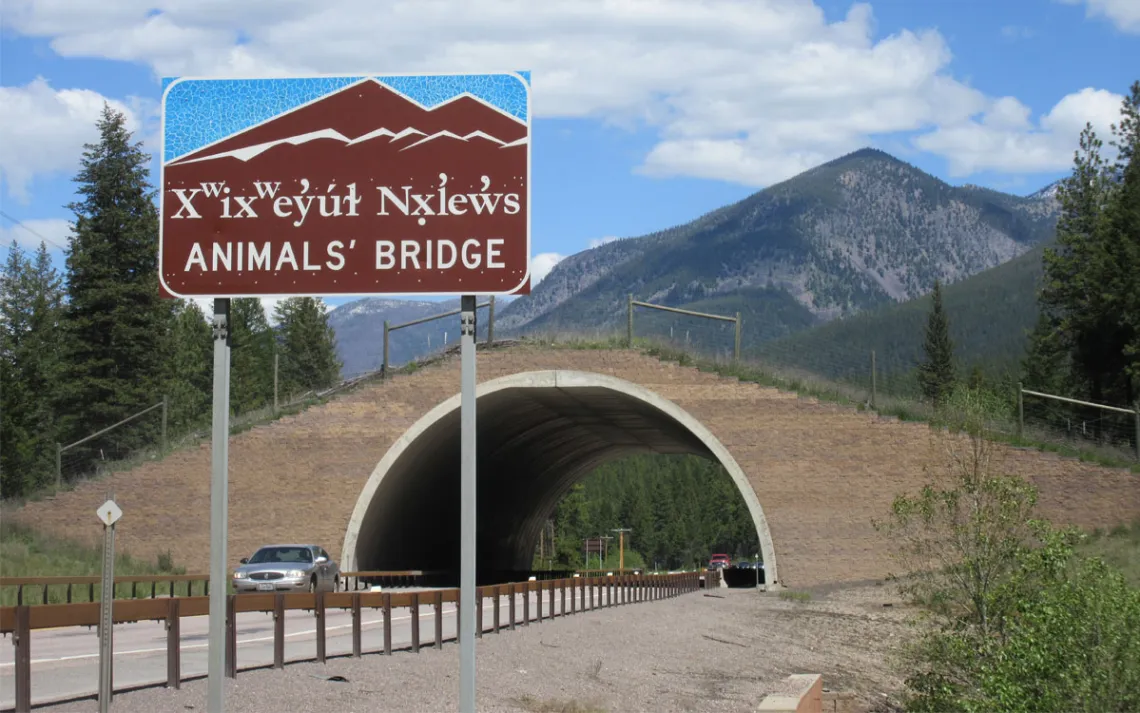
Photo by Christopher Preston
I was standing on a forested hillside in western Montana, looking down at the Clark Fork River as it slid under Interstate 90 a quarter mile away. To the north lay a patchwork of mountains, ranches, and residential development; to the south, the wild ridgelines of the Bitterroot Range. Mitch Doherty, the conservation director of Vital Ground, a small land trust based in Missoula that protects wildlife habitat, was teaching me to read the landscape like a grizzly bear.
“They just find themselves at these pinch points,” Doherty said. “They hit these barriers, they hit I-90, they hit the railroad, and they ask, ‘How do I get across?’”
We were overlooking a stretch of undeveloped land on both sides of the highway that includes 40 acres of floodplain Vital Ground owns and manages. A bear heading south from Glacier National Park to its isolated cousins in Yellowstone would stand a good chance of finding itself here. The parcel, which was covered in a thick gallery of cottonwood trees, provides a safe corridor for bears to pass under two interstate bridges spanning the river.
Vital Ground’s mission is to secure what Doherty calls “permanent infrastructure that can withstand any administration or anything that comes down the pike.”
A 2023 study found that over 80 percent of Montanans think that grizzly bears have a right to exist and residents must learn to live with them.
During the second Trump administration’s first four months in power, it rescinded a Biden-era executive order to protect 30 percent of US land and waters by 2030 and declared a national energy emergency that restricts federal agencies’ ability to protect wildlife on public lands. For at-risk species like grizzly bears, which already suffer about three to five deaths a year in the region from collisions with cars, the future just became a little more perilous.
Not all the news is bleak, however. A growing number of strategic land acquisitions north of here—near crossing sites on Montana Highways 2 and 89—along with increased efforts to promote coexistence, have enabled a steady expansion of the grizzlies’ range. Lisa Upson, executive director of People and Carnivores, an organization that helps residents live with large carnivores nearby, thinks the trend will continue. “I believe that grizzly bears will naturally recolonize the Bitterroot ecosystem,” she told me.
Upson isn’t out to change people’s values. But she wants those who live around grizzlies to have the tools for successful cohabitation. “When you help people,” she said, “that can open their minds.”
Upson’s Helena-based organization has been pivotal to the bears’ successful march southward. Her energetic team of conflict prevention specialists help ranchers and homeowners install electric fencing to keep bears away from pets and livestock. They can also pair landowners with guard dogs and “range riders”—people on horseback and ATVs who keep cattle and sheep safe.
Cohabitation efforts are spreading. Several towns in the region are on track to become Bear Smart, a recognition awarded to communities that have assessed the risks of expanding bear populations and created an action plan. Bear Smart communities manage attractants and educate people on how to successfully share space with the highly intelligent omnivores.
The key, said Upson, is to do the work before the bears arrive. Surveys suggest that the public is on board. A 2023 study found that over 80 percent of Montanans think that grizzly bears have a right to exist and residents must learn to live with them.
As in many western states, awareness and wildlife-friendly infrastructure are growing even as the region’s human population expands. The sweat and dollars invested are paying off. Sometime soon, if it hasn’t happened already, a male grizzly with genes from Yellowstone will raise its nose to the breeze and catch the scent of a female heading south from Glacier. Two populations, genetically isolated for a century, will become more connected.
The grizzly also has strong allies in the Confederated Salish and Kootenai Tribes (CSKT), which have jurisdiction over a large swath of landscape between I-90 and Glacier. When state agencies initiated a highway expansion on tribal land, the tribes insisted that the road remain permeable to wildlife and blend into the topography. The tribes have built one overpass across Highway 93 already and have federal funding for a second located 30 miles farther north.
“We have been trying to take care of these wildlife corridors for centuries,” Marcia Pablo of the CSKT Preservation Department said previously. “[The bears] can’t speak for themselves. We have to speak for them.”