Why Canada’s Grizzlies Are at Risk Again and How Tourism Can Help
Responsible bear viewing is a powerful tool for instilling advocacy and furthering conservation
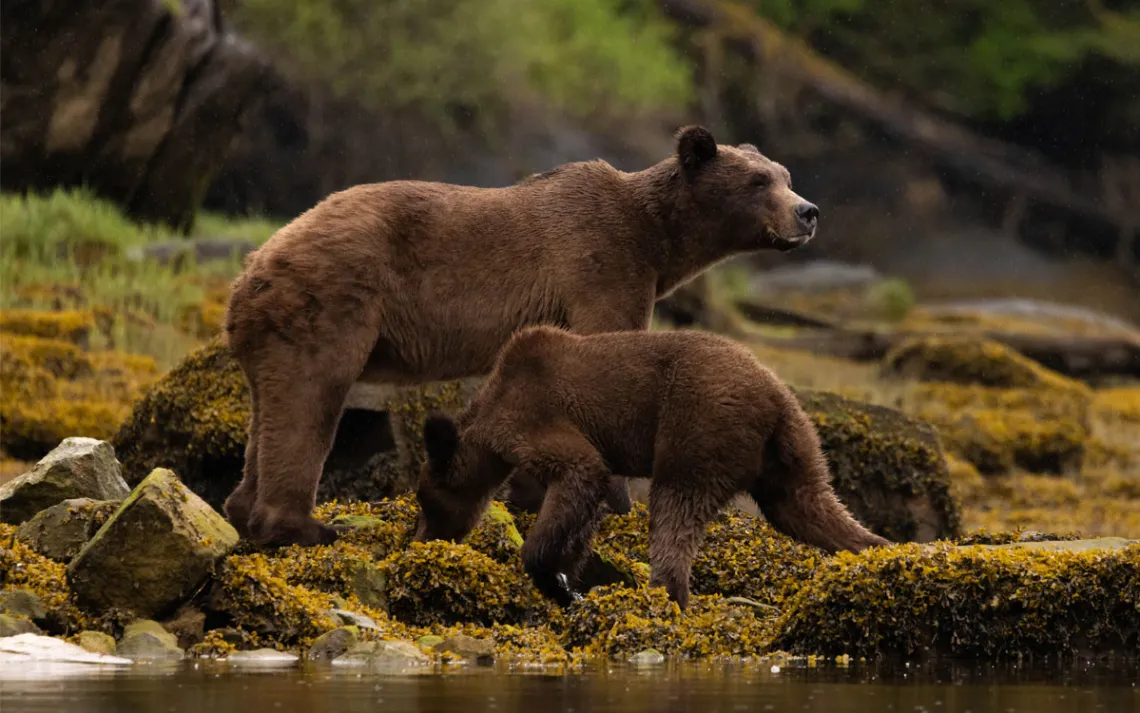
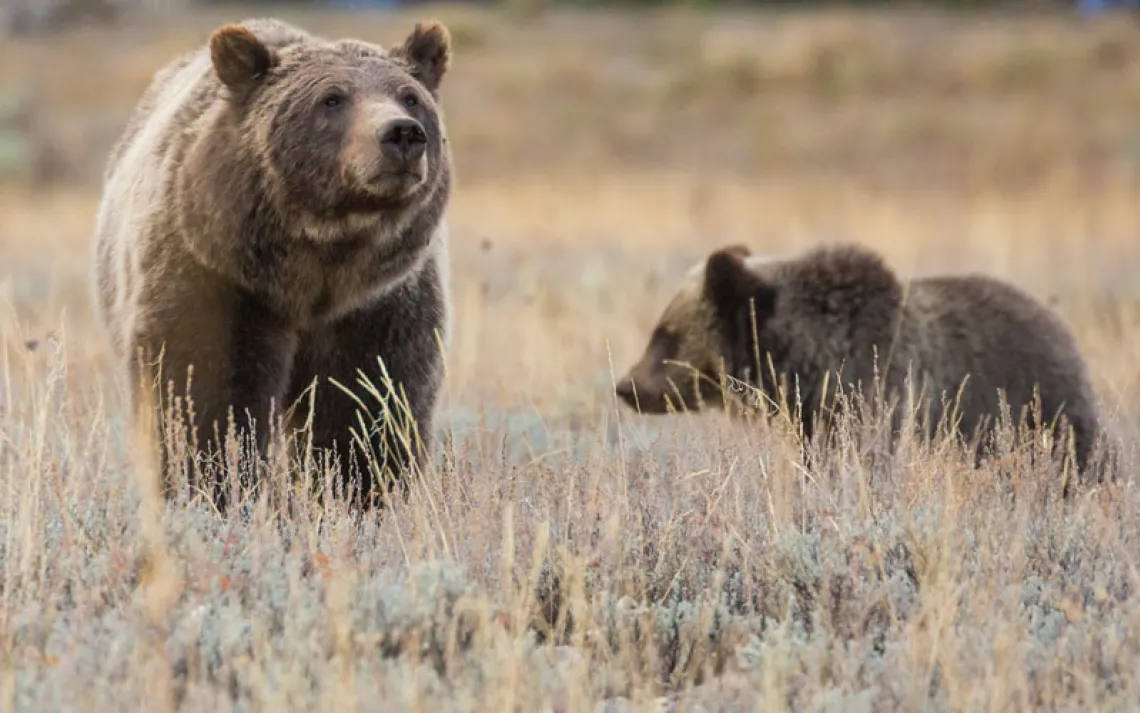
A mother bear and her cub forage along the coast | Photo by Dolf Vermeulen
In 2018, British Columbia celebrated a historic win for wildlife conservation: The province banned the grizzly bear trophy hunt.
The hard-won ban was led by scientists and conservationists as well as ecotourism stakeholders, who demonstrated that the economic value of grizzly tourism far outweighed that of hunting. As North America’s slowest reproducing mammal, grizzlies are particularly vulnerable to population decline and were a threatened species in the province at the time.
After nearly a decade of protection in British Columbia, grizzlies remain a species at risk in Canada. However, they could once again be in the crosshairs of hunters' muzzles. The province’s newly proposed grizzly bear stewardship plan has drawn criticism from conservationists for not meaningfully addressing climate change and habitat loss. Additionally, following a high-profile grizzly attack in Bella Coola in November 2025, the BC Wildlife Federation called for a lift on the ban as a solution. (Hunting was already reintroduced for “problem grizzlies” in neighboring Alberta in 2024.)
But it doesn’t have to be this way, say bear advocates. Tourism offers an alternative, more profitable model for helping mitigate human-grizzly conflict while furthering conservation efforts. “Human behavior remains one of the most significant drivers of conflict, largely due to unpredictability in how people manage attractants and conduct themselves within bear habitats,” said Mollie Cameron, operations manager at the Commercial Bear Viewing Association of British Columbia (CBVA).
Learning about proper bear behavior in a controlled setting could help educate people and even reduce conflict. Furthermore, these efforts could be used a template for human-bear coexistence across North America. Researchers at the University of Victoria, for instance, recently found that grizzlies near ecotourism sites in the Great Bear Rainforest were less likely to encounter conflict with people than those further downstream.
How tourism can help
Leaders from the CBVA were some of the key players pushing for the 2018 trophy hunting ban. The organization set the standard for sustainable bear viewing in the province. It also funds bear conservation projects and initiatives with revenue from tourism licenses granted to operators such as Khutzeymateen Wilderness Lodge, a floating lodge owned by Jamie Hahn, a former BC Parks manager.
The property sits on the edge of the Khutzeymateen Grizzly Bear Sanctuary, a roughly 110,000-acre protected area in the northernmost part of the Great Bear Rainforest. Just below Alaska, the sanctuary is home to roughly 60 grizzlies. Its establishment in 1994—and its expansion to include the Khutzeymateen Inlet Conservancy in 2008—aimed to protect the iconic keystone species and their habitat from logging, an effort led by scientists, conservationists, and Coast Tsimshian First Nations, who have called the region home for millennia.
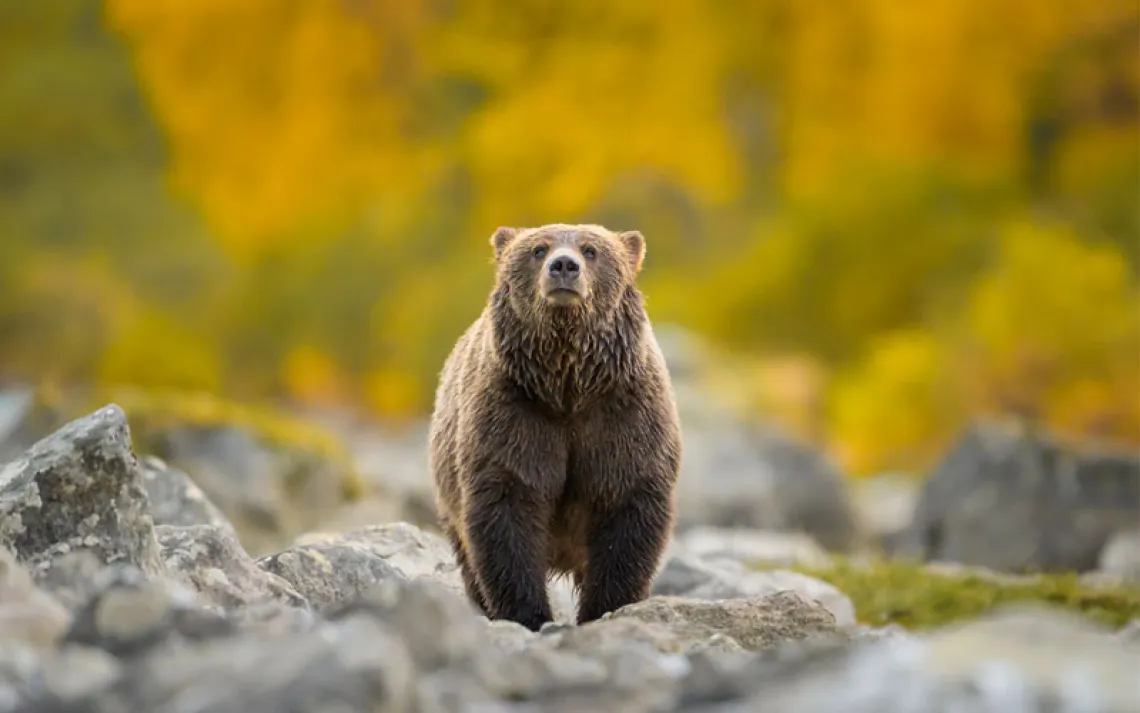
Here, the ocean kneels before mountains cloaked in a mantle of old-growth Sitka spruce, one of the largest continuous stands of the trees in the world. Mist clings to the soaring peaks and tumbles down slopes like smoke. During a recent visit to the lodge, while floating in an inflatable boat, I came within yards of a 300-pound, cinnamon-colored grizzly shoveling waxy sedge grass lazily into her powerful jaws. Her name is Heidi, and she is, in fact, one of the smallest bears in the sanctuary.
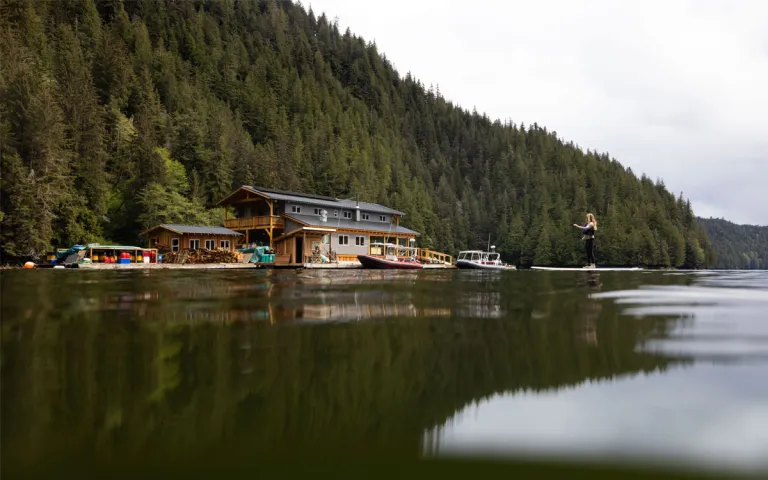
The floating lodge near the bear sanctuary. | Photo by Dolf Vermeulen
“I’ve seen people in tears watching a mom and cubs play,” Hahn told me after a day out on the Zodiac. “People come here and see that bears are actually very gentle, intelligent creatures if respected, and they can coexist with humans; it shifts something in your brain.”
Earlier that day, as a bald eagle wheeled through a gunmetal sky, we followed a seven-year-old male grizzly named Scout as he weaved in and out of the forest and swam along the shoreline. “We’re not trying to humanize them by giving them names,” said Hahn “But they are unique individuals with personalities.”
Out in the small boat, my Lax Kw’alaams guide, Gerren Henry, told stories about the struggles a mom and cub have faced, and how two siblings we spotted have hung out for years after being weaned. Allowing people to see these animals as family members cultivates empathy. It also counters the sweeping, alarmist claims made about an entire species by hunting advocates in the aftermath of grizzly attacks.
Continuing threats to a vulnerable species
In addition to failing to consider environmental factors, grizzly advocates are also concerned that the province’s stewardship plan could include regional advisory committees with hunting interests. “What you're getting is a situation where the loudest voice in the room wins,” said Karen McAllister, cofounder of NGO Pacific Wild, which spearheaded a 2023 open letter to address the inadequacies of the plan. “It’s not based on science but local politicking.”
In reality, 2025 saw the lowest number of black bear conflicts reported in the province since they started recording the statistics in 2011, and grizzly conflicts have remained the same with natural fluctuations. Hunting has also been repeatedly proven ineffective in reducing human-bear conflict. “What does a dead bear learn?” said Wayne McCrory, a bear biologist and director at the Valhalla Wilderness Society. “That experience is not being passed along to the bear population.”
Sanctuaries such as the Khutzeymateen are crucial for stabilizing grizzly populations, but this is the only one of its kind in Canada, acting as a stronghold for grizzlies in North America. The fact that the conservancy’s 60 bears represent one of the highest concentrations of the animals in the country points to the continued need to prioritize their protection.
While 85 percent of the Great Bear Rainforest is protected, other habitat such as the biodiverse inland temperate rainforest (one of only three ecosystems like it in the world) remain largely unprotected, and more corridors are needed. Alberta’s newly proposed crude oil pipeline to the BC coast would also run dangerously close to the Great Bear Rainforest, threatening grizzly habitat.
Learning how to coexist
New data on the economic revenue of grizzly tourism in BC would help drive home the value of conserving bears and their habitat. “Tourism is our number one resource that will keep going forever if we do it right,” said McAllister. “That’s obviously not the case with industrial extraction.”
Tourism can also potentially highlight the intrinsic value of these animals beyond any monetary gain. Learning about their Indigenous cultural significance and their role in ecosystem health (as fertilizers and seed dispersers) is an important part of that, something guests hear about with many bear-viewing operators in British Columbia. Some of these companies employ Indigenous guides or are owned and operated by First Nations, which often view grizzly bears through a "kincentric" lens, the idea that all natural elements of an ecosystem, including animals like grizzlies, are closely related. For the Lax Kw'alaams tribe, the grizzly is a sub-crest, a clan or family hereditary symbol. “One thing we hear often is that once we pass on, some of us are reincarnated into grizzlies,” Henry told me.
Long before there were wilderness lodges in the Great Bear Rainforest, there were clear, cold rivers and hills blanketed in berry patches where grizzlies lived and cared for their young. “Being there, you can imagine areas where bears have sat and took in the view or fished for salmon,” said McAllister. “It’s a reminder that we coexisted before, and we can do it again.”