 The Magazine of The Sierra Club
The Climate Crisis Is an Economy-Wide Threat. Investors Must Treat It That Way.
Why hasn’t the investment world responded more decisively?

Illustration by erhui1979/Getty Images
If you care about action on climate change or protecting your retirement savings, you should care about how our investment system works too.
The climate crisis isn’t just an environmental threat. It’s a growing danger to global economic stability—and to the long-term investments that millions of people depend on for their futures. That includes the public pension funds that provide retirement security to teachers and first responders, the college savings accounts that parents are building for their children’s education, and the 401(k)s many workers contribute to every month.
Yet most traditional investment strategies aren’t designed to address this kind of risk. They focus narrowly on maximizing returns by encouraging each company in a portfolio to maximize its own profits—even when those profits come at the expense of the broader economy, communities, or the environment.
Even many sustainability-oriented investing strategies follow this same logic—trying to limit their risk from individual companies while ignoring the outsize harm some companies actively cause. Investors can marginally protect themselves from the specific risks facing some corporate polluters by eliminating those stocks from their portfolios. But doing so does little to change those companies’ behavior or reduce the emissions that pose a far greater threat to the broader economy and most portfolios.
That approach might seem reasonable—if investors assume that markets will always rebound, and that portfolios diversified across many companies and sectors will keep growing steadily over time. But that assumption rests on a shaky foundation: that the environmental and social systems underpinning our economy will remain resilient and intact. As climate change accelerates, that assumption is becoming increasingly untenable.
Why economy-wide risks require a new approach
Take the example of a public school teacher early in their career. Each month, part of their paycheck goes into a pension fund—invested with the expectation that it will grow steadily over time. But that teacher may not retire for another 30 years. By then, the impacts of global warming are projected to significantly reduce global GDP and drag down stock values across the board.
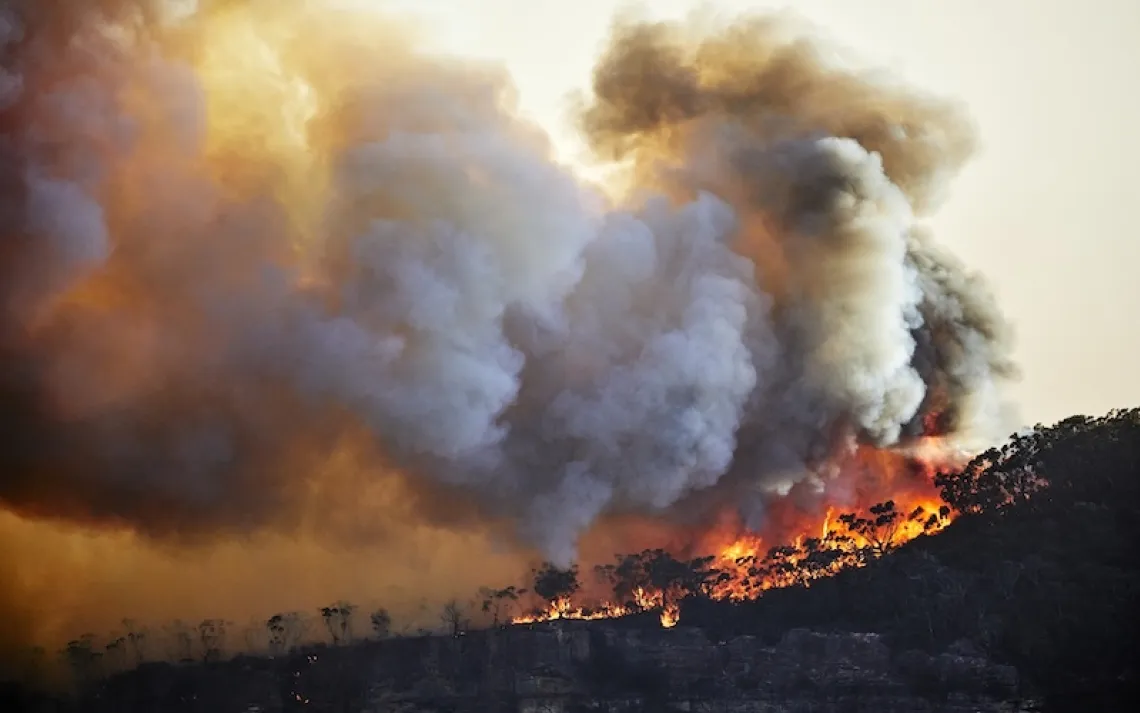
That damage isn’t inevitable. It’s being driven in large part by a relatively small number of major corporate polluters whose business models depend on continued fossil fuel expansion and unchecked emissions. When companies boost profits by offloading the costs of their pollution onto society—costs that show up as fires, floods, heat waves, and rising insurance premiums—they erode the foundations of long-term economic stability.
And for most investors—whose retirement funds and long-term investments are held in diversified portfolios—the strength of the overall economy matters far more than the success of particular companies. If climate change drags down the entire market, there’s no way to diversify your way out of it.
This is what investors call systemic risk. It is a threat that doesn’t just affect a few companies or sectors; it destabilizes the broader economy. Climate change is one of the clearest and most urgent systemic risks the world faces.
The case for system-level investing
So why hasn’t the investment world responded more decisively? One reason is that many investors and much of the financial industry still treat climate change as just another risk to specific companies—something to manage by shifting holdings or choosing greener-looking assets. In that view, it may seem sufficient to invest only in companies with lower emissions, stronger ESG ratings, or more climate-related disclosures.
But that logic breaks down when confronting the bigger picture. The greatest threat to long-term portfolios isn’t from holding particular stocks—it’s the continued rise in global emissions. And unless those emissions are reduced in the real world—not just in investors’ accounting systems—the damage will continue, and portfolios will bear the cost.
A new Sierra Club paper, The Long Term Will Be Decided Now: Why Climate Risk Demands System-Level Action From Investors, lays out a different path forward. It argues that climate change must be treated not only as a risk to individual companies but also as a threat to the entire economy and long-term portfolios. It also underscores that this risk is disproportionately driven by a handful of major corporate emitters.
That kind of risk can’t be mitigated by demanding better corporate risk disclosures, investing in greener stocks, or divesting from shares in polluting companies. It requires a shift in strategy: from avoiding risks at individual companies to actively reducing the real-world damage caused by major polluters that drives systemic risk.
How investors can drive real-world change
That’s the premise of “system-level investing”—an approach that focuses on shaping real-world outcomes, not just portfolio composition. It means using the full range of investor influence to accelerate decarbonization across the economy.
The paper identifies four key levers that investors must deploy strategically together:
1. Capital allocation: Shift financing away from fossil fuel expansion and toward clean energy, sustainable infrastructure, and other climate solutions.
2. Investment stewardship: Hold companies accountable through shareholder voting, direct engagement, and applying pressure as bondholders to influence corporate emissions.
3. Policy advocacy: Support strong public policies that drive decarbonization at scale and protect long-term economic stability.
4. Service-provider accountability: Ensure that financial intermediaries (like asset managers, proxy advisers, and consultants) meaningfully act on systemic climate risk, not just talk about it.
This holistic approach can be far more effective at reducing emissions, protecting the economy from climate breakdown, and safeguarding long-term financial security. Traditional investing tools—like ESG screening or shareholder divestment—may help manage risks to individual companies or serve symbolic purposes. But they rarely add up to systemic impact.
The goal should be to reduce climate risk—not just to try to avoid it—which requires investors to act in ways that actually drive emissions reductions at scale.
A financial imperative
System-level investing focuses on the outcomes that matter most: reducing emissions, stabilizing the climate, and strengthening the foundations of long-term economic growth. That’s not just a climate goal—it’s a financial imperative.
Investors cannot protect long-term portfolio value—or fulfill, in many cases, their ethical commitments—without confronting the systemic risks posed by climate change. Perpetuating a financial system that defers to short-term corporate profits over long-term global stability is no longer tenable. The window to act is closing, and the costs of delay are mounting.
To support a stronger, more sustainable economy, investors must prioritize credible impact over symbolic alignment and use their full influence to accelerate decarbonization.
The long term will be decided now. It’s time more investors started acting like it.