The Magazine of The Sierra Club
ICE Operations Around Public Lands and Other Spaces Keep Visitors Away
Minnesota residents describe avoiding parks after Operation Metro Surge
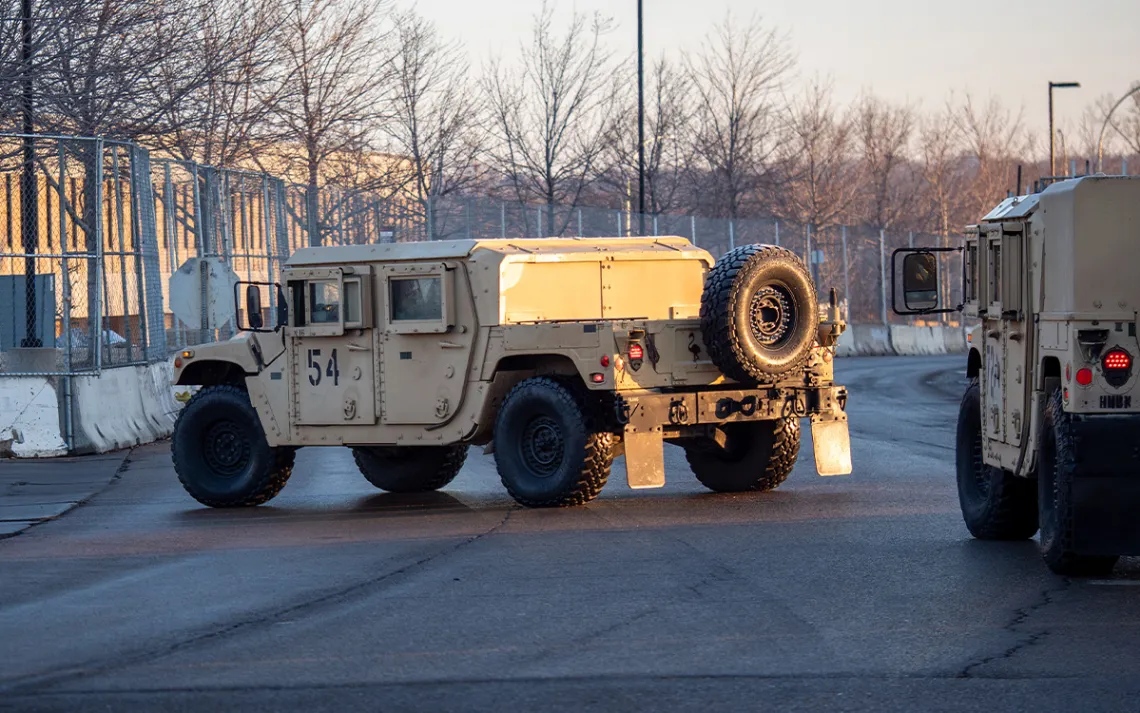
Minnesota National Guard vehicles arrive at the Bishop Henry Whipple Federal Building in Minneapolis on February 14, 2026. Photo by Jason Whitman/NurPhoto/AP.
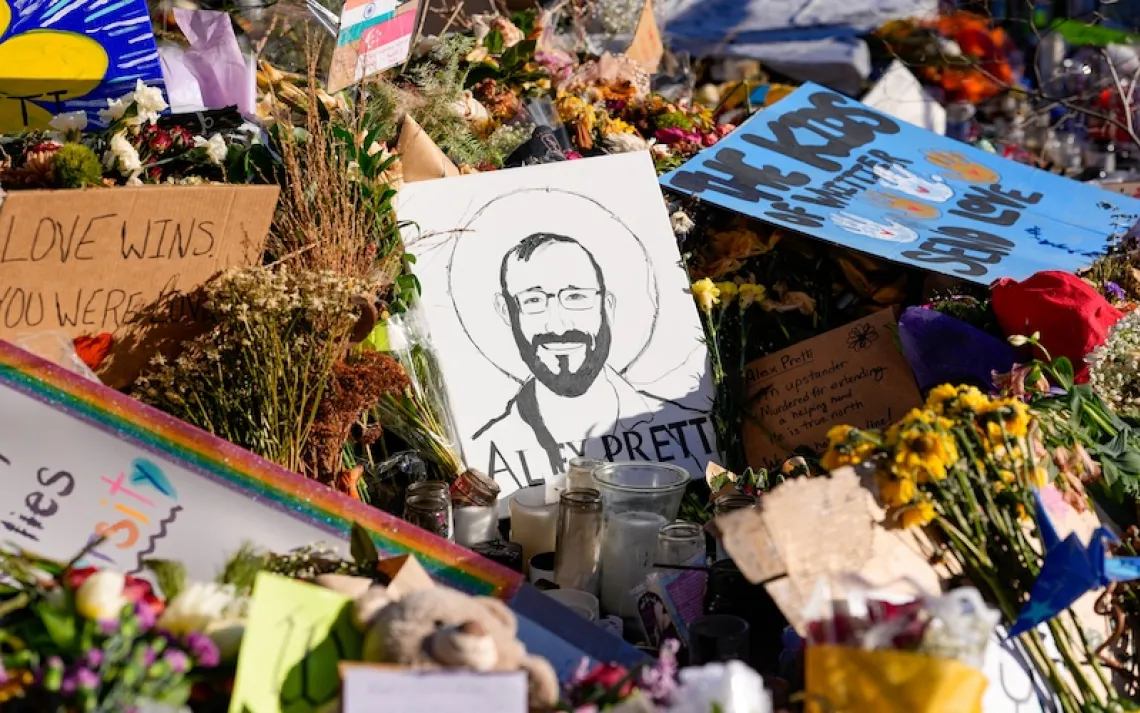
It’s been three months since the federal government announced it was pulling out of Minneapolis after Operation Metro Surge left residents reeling. According to federal estimates, approximately 4,000 people were arrested during a government action that brought 3,000 agents to the state and led to the deaths of two Americans, Renee Good and Alex Pretti.
Now, many are struggling to trust what they once took for granted—taking kids to school, visiting public lands for a hike, even just going out for groceries.
The University of California, San Diego’s US Immigration Policy Center (USIPC) conducted a survey of nearly 1,400 residents in Minneapolis and Saint Paul. Of those residents, nearly 30 percent in Minneapolis and 20 percent in Saint Paul reported interacting with federal immigration agents during Metro Surge. Further, although officials discussed Metro Surge as targeted enforcement, survey data illustrates that agents routinely stopped residents with no apparent connection to a specific investigation.
At the height of the operation, there were frequent reports of ICE agents staging in public areas like parks.
“It scares the hell out of you,” said Minneapolis resident Ann Hill, who leads the nonprofit Twin Cities Food Justice. “I was born in Iowa on a farm. I'm as ‘American’ as it counts. But it is still very scary.”
In Saint Paul, that included places where people often go to connect more to nature, such as Battle Creek Trailways—a city and county park. Saint Paul Parks and Recreation saw a notable decrease in use across several recreation center locations, according to Clare Cloyd, an employee there.
Cloyd confirmed to Sierra that residents felt uneasy or unsafe when federal immigration enforcement used park land for their activities.
The Sierra Club’s North Star Chapter had to cancel multiple outings scheduled for Battle Creek due to ICE presence during Metro Surge as well.
When public land feels militarized
Kay Carvajal grew up in south Minneapolis and says she was raised in the Minneapolis park system. Today, she holds a seat on the Minneapolis Park and Recreation Board (MPRB). She describes park land as a sacred place for residents to disconnect.
When ICE agents began staging, apprehending people, and deploying tactical gear in Minneapolis parks, she and other community members organized to support local residents impacted by what felt like the wholesale militarization of their parks.
“It’s this feeling of, ‘These are our parks. Don’t mess with them. Don’t touch them,’” said Carvajal. “You’re not abducting our neighbors in our parks. This is our home. Don’t touch it.”
Multiple members of MPRB interviewed for this story said fewer people visited the parks during Metro Surge. They specifically cited a noticeable drop in youth programming numbers due to fear of interactions with agents.
Cheniqua Johnson, a Saint Paul City Council member, said people are still choosing to stay away from parks and other public settings due to fear of potential ICE presence. Typically, the council member hosts events for her constituents at public spaces like the Battle Creek Recreation Center. This year, she’s held them only at private businesses and churches.
“The last thing I'd want for someone to experience, after already experiencing so much during Operation Metro Surge, is that they come to engage with a council member, and then they're having an interaction with ICE that I didn't anticipate,” she said.
Both Saint Paul and Minneapolis city councils have passed ordinances since December 2025 to address concerns about federal immigration agents using city-owned property.
How to move forward?
On February 12, the federal government announced it was pulling out of the area. Estimates suggest there are now between 500 and 650 agents in the state. But the reduction in force has offered little comfort to Minnesotans. Residents aren’t returning to public places or work. The area’s economy is still suffering.
“It’s really important for people to know that while it sounds like there’s been a drawdown of agents, in many, many cases there hasn’t been a drawdown of fear,” said David, a legal observer who trains others for the nonviolent advocacy organization Monarca. He requested that he be identified by his first name only.
The City of Minneapolis released a report that found Operation Metro Surge left 76,000 people, “mostly immigrants, refugees, American Indian/Native American, and Black/African American and people of color,” in urgent need of assistance. Estimates of the economic harm of the operation now hover around $203 million or more. In response, local and state governments are trying to set aside nearly $20 million for impacted people and businesses.
The economic fallout for the park system is still unverified, but few dispute the notion that fewer people are visiting public parks after Metro Surge.
“A family I'm supporting is still too scared to leave home,” said Mary Blitzer, deputy director of the Sierra Club North Star Chapter. “This whole experience of living in Minneapolis and seeing what our federal government is doing has driven home how unlawful the Trump administration is. We see the same playbook being used to weaponize the federal government against our environment and communities. We have to keep standing up for climate, democracy, and justice.”
People are committed to supporting each other, David said.
“We’re family now because of this,” he said.