 The Magazine of The Sierra Club
In Praise of Dark Skies
Preserving darkness supports the wellness of both humans and wildlife

A Leadville starry sky. | Photo courtesy of @nedwarner
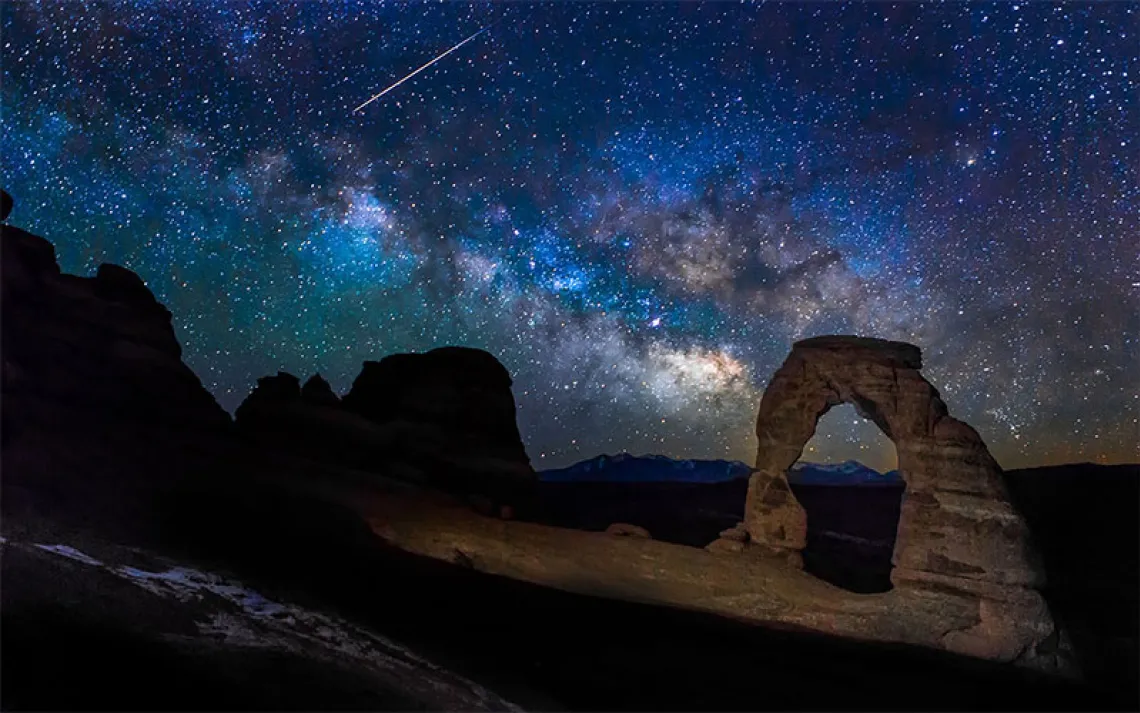
Imagine looking up on a dark night to see a star-filled sky that seems to stretch out to eternity. That experience has inspired awe across generations—from our ancient ancestors, who etched the image on cave walls, to modern poets imagining the Milky Way in verse.
Unfortunately, far too few communities get to have that experience because of light pollution clouding the skies. Thanks to our overly lit urban towns and cities, all too often what we see when we look up is a murky scrim overhead.
Enter noctourism, or nocturnal tourism—a new enthusiasm for travelers seeking awe-inspiring experiences under a dark night, especially at locations that enjoy an official DarkSky International designation. DarkSky “certifies communities, parks, and protected areas around the world that preserve and protect dark sites through responsible lighting policies and public education,” as part of the their International Dark Sky Place (IDSP) network.
The town of Moab, Utah, is often referred to as the gateway to Arches National Park and Canyonlands National Park, both designated as International Dark Sky Parks. “We value people coming to our community—that’s a big part of our economy,” says Alexi Lamm, Moab’s sustainability director who helped steer the town to its 2024 designation as an International Dark Sky Community (IDSC). “Being able to give people that dark sky experience in our surrounding wild areas meant that we as a city needed to manage our lights as well. Keeping that dark sky means that people who love it can keep it and people who visit here can love it too.”
Designated or aspiring DarkSky communities like Moab; Bee Cave, Texas; Leadville, Colorado; and Groveland, Florida, assume a moral and economic responsibility to maintain their valuable darkness, which unregulated development would likely destroy with lighting “trespass.” With a trove of resources—including model ordinance forms and a DarkSky Approved listing of compliant lighting fixtures—the nonprofit DarkSky International works “with communities who are fortunate to still have natural darkness as part of their brand,” says Ruskin Hartley, its CEO and executive director. “We are putting into place the steps to ensure that they're protected, and we're not just bringing our bad lighting practices from our cities into our rural areas.”
Achieving that designation isn’t easy, but it may literally put a destination on the map for coveted tourist dollars. Dark sky tourists usually need to spend the night, which adds up in lodging, food, gasoline, and other expenses. A 2023 Utah State University study revealed that nearly 62 percent of the state’s visitors took part in night sky viewing activities. “Non-local tourists who value dark skies will spend $5.8 billion over the next 10 years in the Colorado Plateau,” according to a 2019 Missouri State University study.
Along with DarkSky, these communities also seek to counteract the “perception that more people automatically equals light pollution,” Hartley adds. He shares the example of how millions of people visit the Grand Canyon yearly and navigate it safely with lighting that complies to make it an International Dark Sky Park. “We're not about no light—it's about using it responsibly,” says Hartley.
DarkSky’s principles of responsible astrotourism address how both residents and visitors can make the night sky-viewing tourism work for all. Working with the Illuminating Engineering Society, IES, an organization of professionals dating to 1906 that “seeks to improve the lighted environment by bringing together those with lighting knowledge and by translating that knowledge into actions that benefit the public,” DarkSky also issued five principles of responsible outdoor lighting that recommend all lighting to be “useful, targeted, low-level, controlled, and warm-colored.”
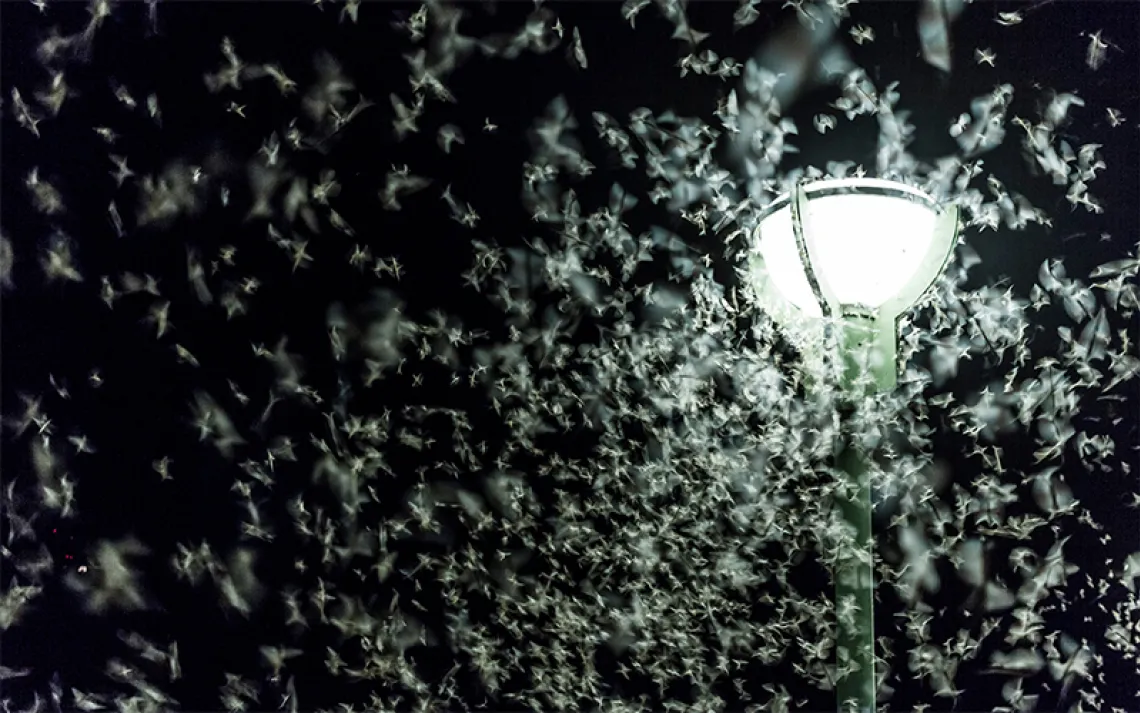
Such statements and their scientific rationales are part of the toolkit that community or government members who aspire to DarkSky designation use in their widespread educational pushes. The benefits of dark sky lighting include saving energy and money, reducing light pollution (which negatively impacts human health), and minimizing wildlife disruption. These arguments often make the dark sky concept more saleable to stakeholders, including businesses, residents, and developers in these often booming areas.
Fourteen miles west of Austin, Texas, the town of Bee Cave became an IDSC in 2023. It’s a “gorgeous area filled with creeks and rivers and wineries, and the people that live out here really have a love of nature,” says its mayor, Kara King. “People that come here for tourism, they don't want to see the bright lights of Austin or San Antonio. They’re blown away by how we're retaining our closeness with nature that really defines where we live.” King enjoys watching meteor showers from her own back patio.
Being a DarkSky community is so much a part of Bee Cave’s identity that new businesses moving to the area are eager to comply. “It's kind of a bragging right,” says King. “They want to comply because they want the community to embrace them.”
Widespread education is key to building community support, says Lamm. Moab’s educational push included art shows, star viewings, and “a lot of media outreach to try to convey that dark skies didn't necessarily mean dark streets. If it's something that residents want and understand, it's going to be easier for everybody,” she says.
Not all recently designated DarkSky communities are where you’d expect them. Located 30 miles west of Orlando and near the 560,00-acre Green Swamp, a wetland essential for Central Florida’s aquifer health, the city of Groveland became an IDSC in 2023. “We are the first in Florida and the Southeast US to have this certification, so it’s a heavy lift every day to teach our development community and really everybody in Groveland,” says Andrew Landis, the town’s conservation and strategic initiatives division manager.
“Outdoor lighting and light pollution can kind of seem like an abstract concept,” says Gabrielle Huffman, Groveland’s natural resource specialist. “We’ve had to prioritize educating the developing community and also staff. You really need buy in from not just the community but staff across the city as well.” They particularly focused on their public safety workers, including police and firemen.
Many mistakenly believe that having more and brighter lighting translates into safer streets. Dark sky advocates dispute that claim with studies showing how brighter lights can create glare that disrupts our night vision and inadvertently creates shadowy, potentially unsafe spots. Landis shared that their police chief now responds to inquiries by saying “that lighting in the right place is safer than just lighting everything up bright white.”
“We see [our DarkSky designation] as a big piece of the city's economic development program going forward,” says Landis. Within a week of Groveland’s certification, people were showing up and driving around looking for a place to stargaze. They quickly turned “a little triangular leftover parcel” formerly used for overflow parking at a city park into a place to stargaze and are working to find and formalize a designated park.
Many DarkSky communities host nighttime celebrations to increase awareness and also emphasize the joy in noctourism. A surprising 700 people showed up for Groveland’s first star party that featured local astronomy groups with telescopes. In 2024, 2,500 people registered for the star party and over 60 percent of those came from outside of Lake County, where Groveland sits. They’ve had to pause the star parties to search for a new, better-suited venue. Moab hosted several art events and an ice-skating party with guests dressing up as constellations. In partnership with the US Forest Service, Leadville also promotes four nearby star parties a year.
Building community support, advises Lamm, means finding partnerships with local nonprofits and vocal advocates. For Moab, the partnership with the Friends of Arches and Canyonlands was essential to community engagement efforts. The nonprofit has also applied for grants using the environmental and money-saving benefits of dark sky lighting as a selling point and offered rebates to residents to help them switch out their non-complying fixtures.
“Finding local champions is really important,” echoes Landis. Marty Proctor, now a DarkSky delegate, helped to spread the word at meetings in both Groveland and Lake County municipalities. Another “community champion” was photographer Steve Miller who, after researching 24 ordinances across the world along with Landis, helped to write Groveland’s.
Initially, Lake County—where Leadville, Colorado, is located—wanted to become a designated DarkSky Preserve, but it wasn’t big enough to meet that criteria. The town applied for a grant through the state for a dark sky mentor to guide them. The town has traditionally been an affordable home for workers in posh ski resort areas, like Vail, Aspen, and Breckenridge, according to Adam Ducharme, Lake County’s tourism and economic development director. “About 75 percent of our community is open space, and it's protected open space,” says Ducharme.
“What I always say is I'm most interested in high values visitors, so not high value,” says Ducharme. “High values meaning someone who's interested in dark skies or astrophotography. They tend to have a respect for nature and open space and rural communities. They tend to be the kind of people who will help us keep our place beautiful for a long time. It’s exactly the kind of tourism that we're interested in attracting.”