
What’s Next for Global Climate Action After Trump’s Treaty Pullout?
The future of global climate cooperation is more uncertain than ever
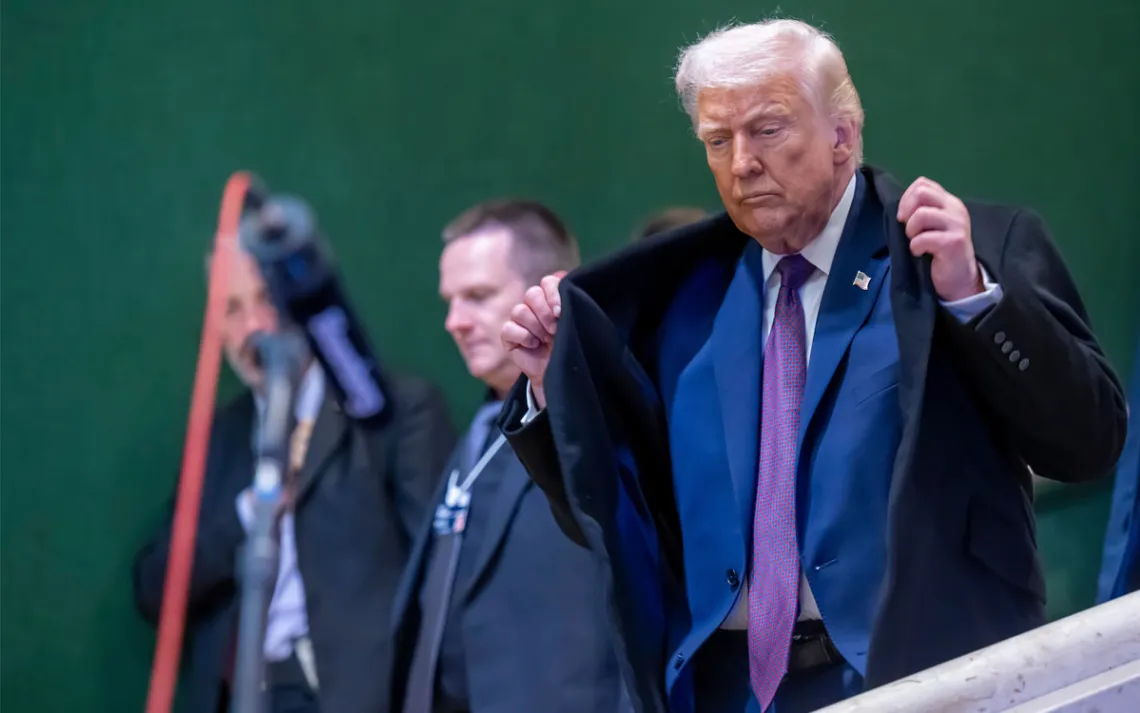
President Donald Trump at the World Economic Forum Annual Meeting in Davos, Switzerland, on January 22. | Laurent Gillieron/Keystone via AP
On January 7, President Trump announced that the United States would withdraw from 66 international organizations, conventions, and treaties, including 31 affiliated with the United Nations. Though many are environmentally focused, the list also includes groups with missions involving human rights, peace, trade, and women’s rights. One particularly striking item on that long list was the UN Framework Convention on Climate Change, the most important climate treaty in the world and the foundation for every global climate action of the last 30 years.
Former Environmental Protection Agency administrator Gina McCarthy called the departure announcement “short-sighted, embarrassing, and foolish.” Mary Robinson, the former president of Ireland, called it “unbelievably stupid.” The Sierra Club’s executive director, Loren Blackford, said, “Donald Trump may talk tough, but time and again he proves incapable of leading.”
Where does that leave the future of climate policy and greenhouse gas reduction?
The Trump administration has made moves to distance the United States from international climate agreements before, pulling out of the Paris Agreement once in 2017 and again in 2025, after President Biden rejoined the agreement during his term. But the UNFCCC is more than an agreement—it’s a full treaty, ratified unanimously by the Senate and signed into law by Republican President George H.W. Bush. Even without the US, it has 197 member states, more than the UN itself. The United States would be the first country ever to leave the treaty.
Many question whether Trump even has the authority to make this change. Article 2 of the US Constitution grants the president the power to make treaties, with Senate approval. However, the framers did not include a similar process for how to leave them. That leaves constitutional scholars divided over the legality of Trump’s decision. Some say that if the Senate has to ratify a treaty, it should also have to ratify a departure. This is the view of several environmental organizations, which may sue the administration to block the departure.
"Because the US entered the UNFCCC with advice and consent of the Senate in 1992, it’s our legal view that it also must be exited using the same process in reciprocation," Jean Su, energy justice director at the Center for Biological Diversity, told Reuters.
But others claim the executive branch’s generally wide-ranging powers over foreign affairs give the president the ability to leave treaties unilaterally, or at least, that they are not explicitly barred from doing so by anything in the Constitution.
The Supreme Court had a chance to weigh in on the issue in 1979. Senator Barry Goldwater sued then-President Jimmy Carter over his decision to leave a treaty with Taiwan. The Court refused to decide one way or the other. Nearly 50 years later, it may come down to another Supreme Court, this one largely appointed by the same sitting president who will be the defendant in the case.
Some contend that if a US president can leave a treaty, another president may be able to simply rejoin it, since the Senate ratification would still apply. The head of the UNFCCC, Simon Steill, made it clear that the treaty organization itself would allow it. “The doors remain open for the US to reenter in the future, as it has in the past with the Paris Agreement,” he said in a statement. Executive authority, once granted by the Court or ceded by inaction, doesn’t go away when the office changes hands.
Each of the 66 organizations listed in the executive order have their own rules about how countries can leave them. The UNFCCC, for example, requires a year from formal declaration of departure, so it would not take effect until at least next January. Some of them require as much as three years, meaning that the US would remain for the rest of the second Trump term. A few have no rules at all for governing departures, which will leave even more unanswered legal questions.
The announcements came as a surprise to many at the UN, including top diplomats who told the Associated Press that they learned of the action through social media, with no notice or official communications.
Many experts and opponents of the departures say that there is one clear winner in all this chaos. If the United States makes its abdication of climate responsibility official, it hands the reins of climate policy, green energy, and all the economic and political power tied up in both to another global superpower: China.
“Withdrawing from the UNFCCC is an abandonment of America’s opportunity to drive the global economy into the future, ceding jobs and economic growth to China and other countries,” Blackford said in a press statement.
In another statement to CNN, former Secretary of State John Kerry called the departure “a gift to China and a get-out-of-jail-free card to countries and polluters who want to avoid responsibility.” World Resources Institute director David Widawsky said it was “a strategic blunder that gives away American advantage for nothing in return.”
The United States is already far behind China on production of new green energy. In the first half of 2025, China installed more new solar power than the rest of the world combined. This week, only a few days after a new high-seas treaty came into effect, the Chinese government proposed hosting the secretariat of the treaty in Xiamen. As the United States hands over the soft power of international climate and environmental leadership, China appears more than happy to pick it up.
Some question how much American membership matters. The Trump administration has already stopped participating in international climate action. The administration has stopped paying its dues, amounting to over 20 percent of the treaty’s total funding. The United States is also the world’s biggest oil and gas producer, and also the largest exporter of fracked gas. We produce more crude oil than any country, ever.
Consequently, some experts have wondered whether removing such a massive petrostate from a leadership position on climate could have a bright side. Cornell climate scientist Daniele Visoni told Inside Climate News, “the only thing that this government is doing is depriving themselves of the opportunity to influence these reports in any way,” and suggests that the pullout could keep the US from being a cheerleader for fossil fuel interests.
COP30, held last year in Brazil, provided a test case for this theory. The United States sent no official delegation to the conference, which some believed might produce a less compromised agenda. But that’s not how it turned out. COP30 was widely seen as ineffective, resulting in some voluntary pledges but little measurable progress.
Just because the federal government has turned its back on climate action doesn’t mean the United States is out of the fight. Over both Trump terms, the role of states, cities, and other jurisdictions has grown to fill the gap. When the administration chose not to send a delegation to COP30 last year, California did. While the Trump administration may deny the scientific truth of climate change, 33 states, including Republican-led coastal states like South Carolina and Mississippi, have some sort of climate resilience and adaptation plan in effect, according to a report from the Brookings Institution.
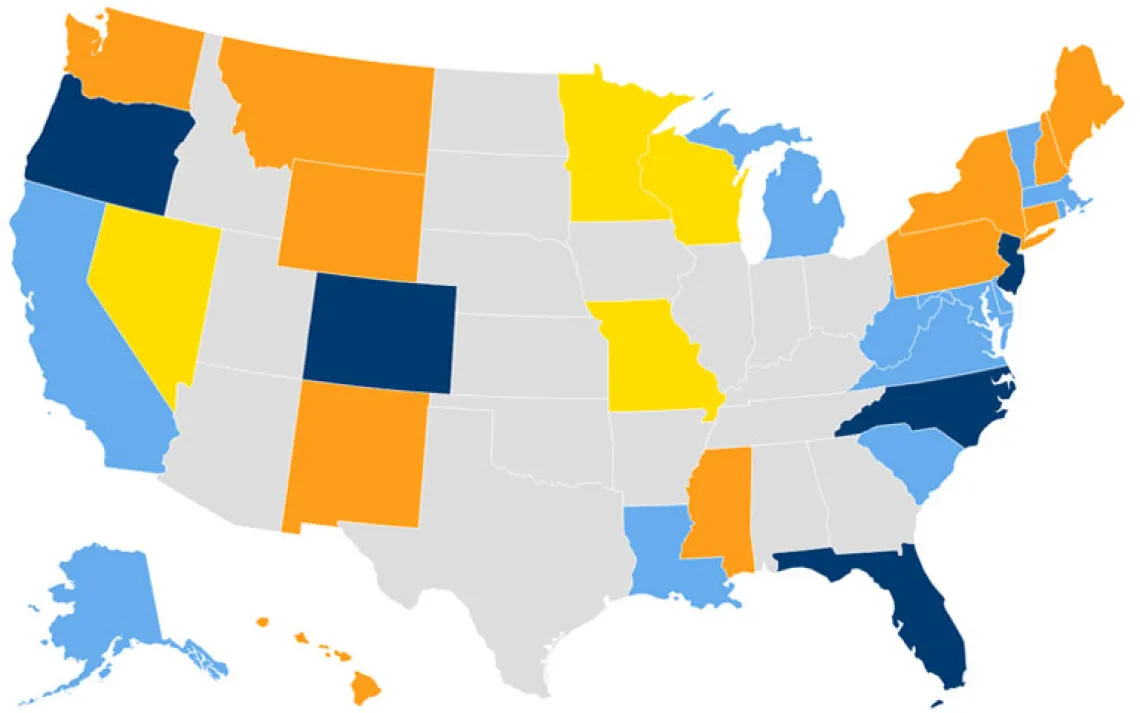
Brookings analysis of state climate plans compiled by the Georgetown Climate Center from 2008 to 2022. | Image courtesy of the Brookings Institution
Based on polling and local action, it seems that the American people understand the importance of climate action, even if the American president does not. In a poll last year, 65 percent of US registered voters recognized a link between climate change and their cost of living. A 2024 poll found that in 47 of the 50 states, a majority of voters were worried about climate change. In the absence of federal leadership, people power can move smaller-scale local elections and issues forward.
The future of global climate policy is more uncertain now than it has ever been. What is known is this: The United States has stepped back from its responsibilities on climate and handed that leadership role to China. But no president, no matter how reckless, can undo these basic truths of physics and economics: Climate change is real, and green energy is cheaper than fossil fuels. President Trump may be giving up our place at the table, but the rest of the world, and American cities and states, can still take meaningful action.