First Energy Wants to Build New 1,200 MW Gas-fired Power Plant
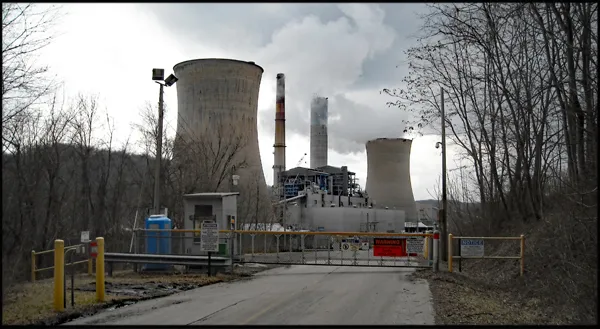
The big news this summer will be efforts by FirstEnergy to build a 1,200 MW gas-fired power plant at Fort Martin near Morgantown. FirstEnergy subsidiaries, MonPower and Potomac Edison, filed an application for a “Certificate of Public Convenience and Necessity” with the WV Public Service Commission (PSC) in February seeking authorization to build the plant and to charge ratepayers for it.
Those costs include “Generation Projects Surcharge” (GPS) as well as “Abandonment Authority.” The GPS means that ratepayers start paying for it before they have even begun construction, and years before it starts generating electricity. The Abandonment Authority means that ratepayers reimburse FirstEnergy for all costs (plus enough to give the company a healthy profit) even if the utility must abandon the project before it is paid off.
ARCH2 Is Back (Or Is It?)
In late April, the U.S. Dept. of Energy (DOE) finally announced the results of its 11-month review of over 2,200 DOE-funded projects. DOE intends to retain or modify its funding agreement with the Appalachian hydrogen hub, also known as ARCH2. No information is available regarding what “modification” means, but it could involve revising the amount of funding awarded to the project or changes to the cooperative agreement outlining the hub’s plans.
Political and industry support for ARCH2 is greatly reduced. Little of the hub’s planned hydrogen production appears to be in active development. Plus, DOE support for low-carbon energy has dropped under President Trump, and many developers have stalled or dropped plans outright.
When the application for ARCH2 was approved, various participants claimed they would produce up to 2,100 tons per day. However, since the announcement of the award, companies such as CNX, EQT, and Fidelis New Energy have dropped or slowed plans for their hydrogen facilities. These three companies likely would have been responsible for an estimated 97% of the hub’s planned production, meaning that almost none of ARCH2’s planned production is in active development. The remaining five producers would likely produce a negligible amount of hydrogen. ARCH2 has not shared a meaningful project update in over a year and a half.
In reality, the hydrogen hub concept was merely a ploy to use more fracked gas. With the onslaught of data centers, the gas industry is moving its marketing efforts to the development of gas-fired power plants to power those centers. That is because gas companies have already invested billions in gas reserves. They need new markets, or that money is lost.
Carbon Capture and Sequestration
Several proposals to capture carbon dioxide from power plants and sequester it deep underground remain in development, driven largely by lucrative tax credits. But wells to inject carbon dioxide are expensive and technically difficult to maintain.
Last year, the EPA approved a plan for the WV Dept. of Environmental Protection to regulate such wells as part of a “Class VI” Underground Injection and Control program. The Sierra Club is challenging that decision, and we continue to monitor Class VI well permit applications, especially in the Northern Panhandle and Mason County. To learn more, email jkotcon@gmail.com.