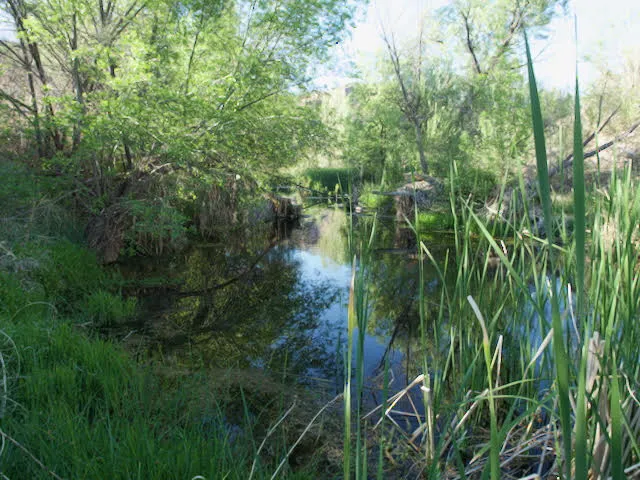
Upper Verde River by Jennifer Martin
Saving Arizona’s Upper Verde River: A Call to Action
The Verde River is more than just a river. It is a lifeline for Arizona–a vital artery pulsing through our state’s heart, sustaining wildlife, communities, and livelihoods. Yet, as highlighted in the Sierra Club Arizona Water Sentinels' recent Going with the Flow report update, the upper Verde River is in peril. Without decisive and immediate action, one of Arizona’s last remaining perennial rivers could vanish, leaving behind a drastically altered landscape and a diminished ability to support the life it has nurtured for centuries.
The numbers are sobering. Groundwater pumping and climate change have reduced the Verde River's base flow by more than half compared to predevelopment levels. Del Rio Springs, once the historical headwaters, has been reduced to a trickle–just 5% of its original flow. Six miles of the upper Verde have already dried up, and projections suggest that the base flow at critical points could reach zero within a few decades. These declines threaten not only the river itself but the intricate web of life it supports.
This crisis is not just an environmental tragedy; it is an economic and cultural one as well. The Verde River sustains over 700 jobs and generates $100 million in annual economic value in the Verde Valley alone. It provides 40% of the Phoenix area’s surface water supply and supports recreational opportunities that attract visitors from across the state. For Indigenous communities like the Yavapai-Apache Nation, the Verde River is more than a resource–it is a spiritual and cultural foundation.
The challenges are immense, but the destruction of the upper Verde is not inevitable. We know the causes: unregulated groundwater pumping, over-allocation of water resources, and the mounting impacts of climate change. The solutions, while difficult, are within reach–if we summon the political will to act.
Groundwater Management: A Long-Overdue Priority
Arizona’s current water management policies fail to adequately protect our rivers. Groundwater pumping in the Big Chino and Little Chino aquifers–the primary sources of the Verde’s flow–continues unchecked. We need stronger groundwater protections across the state, addressing the widespread overpumping that is depleting aquifers faster than they can recharge.
Local governments also have a role to play. The Yavapai County Board of Supervisors and municipalities like Prescott and Prescott Valley must lead the way in curbing overconsumption and ensuring sustainable development. Projects that export water from the Big Chino aquifer to fuel urban growth should be re-evaluated in light of their devastating impacts on the river.
Climate Action and Community Engagement
The Verde’s plight is a microcosm of the broader water challenges facing the American Southwest and regions around the world. While reducing carbon emissions and addressing climate change are global imperatives, local measures can make a difference. Communities must be involved in crafting water policies that balance human needs with ecological health. Tribal nations, environmental advocates, and underrepresented voices must have a seat at the table.
A Moral Imperative
The Verde River’s decline is not just a technical or political issue–it is a moral one. As Yavapai-Apache elder Vince Randall poignantly asked, “When are you going to learn to share with all living things?” The river sustains us all, human and non-human alike. Its loss would be an immeasurable tragedy; a failure of stewardship that would haunt future generations.
We still have a chance to turn the tide. The question is whether we will act boldly and swiftly enough to save the upper Verde. This is a pivotal moment for Arizona. Let it not be the moment we allowed one of our last living rivers to die.
Now is the time for action, advocacy, and accountability. The Verde River’s future–and our own–depends on it.
Jennifer Martin is the Arizona Water Sentinels Program Manager for the Grand Canyon Chapter