Ironwood Forest National Monument
Getting to Know Ironwood Forest National Monument
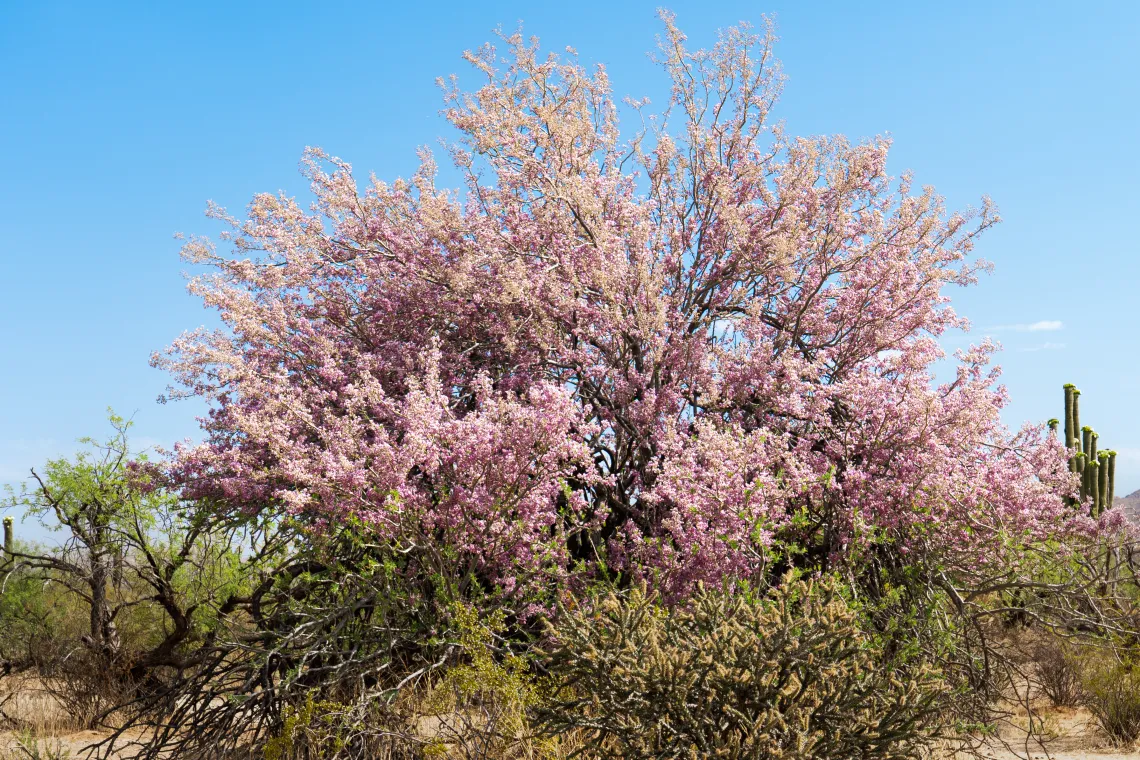
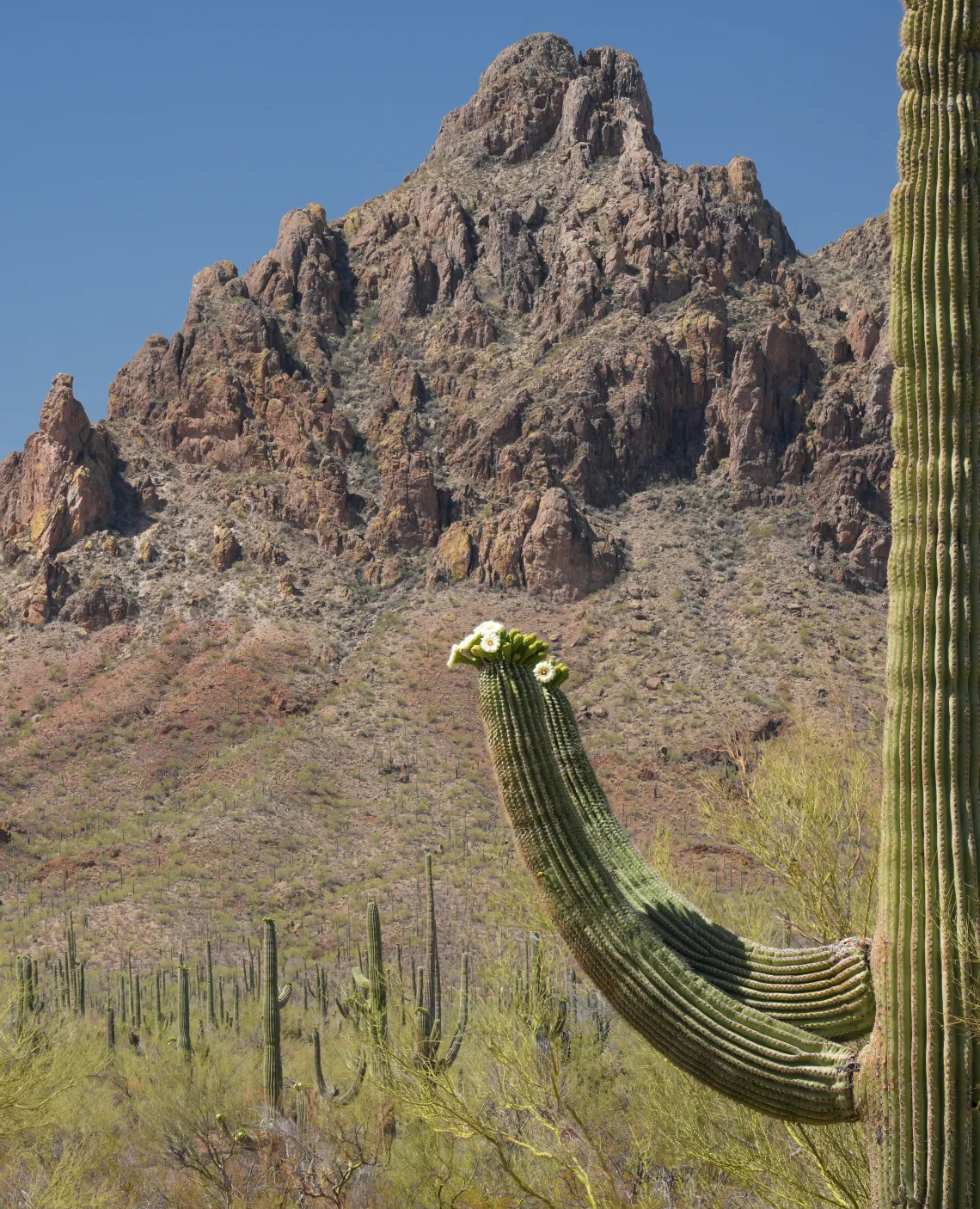
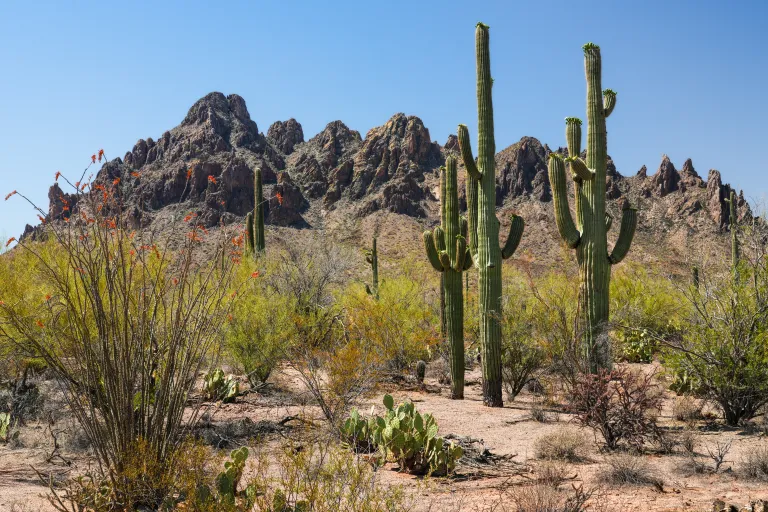
In 2012, only weeks after moving to Arizona, I visited Ironwood Forest National Monument for the first time. I was searching for a field site to conduct my dissertation research on the parasitic plant desert mistletoe, which provides fruit, nectar, and pollen for many birds and pollinators. By then, I’d already fallen in love with this critical, often-maligned native species, along with the unique beauty of the Sonoran Desert it inhabits. But Ironwood Forest immediately struck me as extraordinary. Over the years, I’ve seen the monument explode with purple flowers in dense stands of gnarled, ancient trees. I’ve learned the names of a hundred different plants that spring up after a good winter monsoon. And I’ve spent dozens of nights camping near the base of the monument’s “crown jewel,” Ragged Top–sometimes solo under the stars, sometimes celebrating holidays with friends, and always waking to the shrieking of Gila Woodpeckers.
Along with the keystone species for which it is named, Ironwood Forest is home to over 600 species, including threatened or endangered bats, cacti, and owls, along with the last viable indigenous population of desert bighorn sheep in the Tucson basin. It contains hundreds of documented Hohokam and Tohono O’odham archaeological sites, thousands of petroglyphs, and three particularly important areas listed on the National Register of Historic Places. After decades of grassroots efforts from biologists, geologists, archaeologists, tribal groups, and neighboring communities, Ironwood Forest National Monument was designated in 2000 by Presidential Proclamation and now spans about 190,000 acres, 129,000 of which are managed by the Bureau of Land Management. Its continued protection is critical to preserving 5,000 years of human inhabitance and millions more of ecological and geologic history.
Spread of invasive species such as buffelgrass, and a more than fourfold increase in visitation since 2019, threaten the pristine nature and solitude that first drew me to Ironwood. Yet no threat looms larger than mounting pressures to reduce or eliminate the monument in the interest of extractive industry. In 2017, the Trump administration targeted the monument for the benefit of at least two mining companies. ASARCO (American Smelting and Refining Company), a subsidiary of Grupo México and responsible for 20 superfund sites, has long lobbied to expand their adjacent Silver Bell Mine. Liberty Star Uranium & Metals Corp hopes to explore “untapped mineral potential” within the monument to appease Canadian investors. In part due to public opposition, these efforts in Trump’s first term failed, but history is repeating with the 2025 executive order entitled Unleashing American Energy. Trump’s existential and legally questionable plans to dismantle Ironwood and five other monuments in the West would be disastrous. In southern Arizona, we would see wildlife corridors severed, increased air pollution, depletion of water resources, and destruction of cultural sites. It is imperative that local communities continue to fight, as the greedy and shortsighted only need to win once to destroy these places forever.
Kelsey Yule, PhD is an ecologist and member of the Sierra Club Borderlands Committee