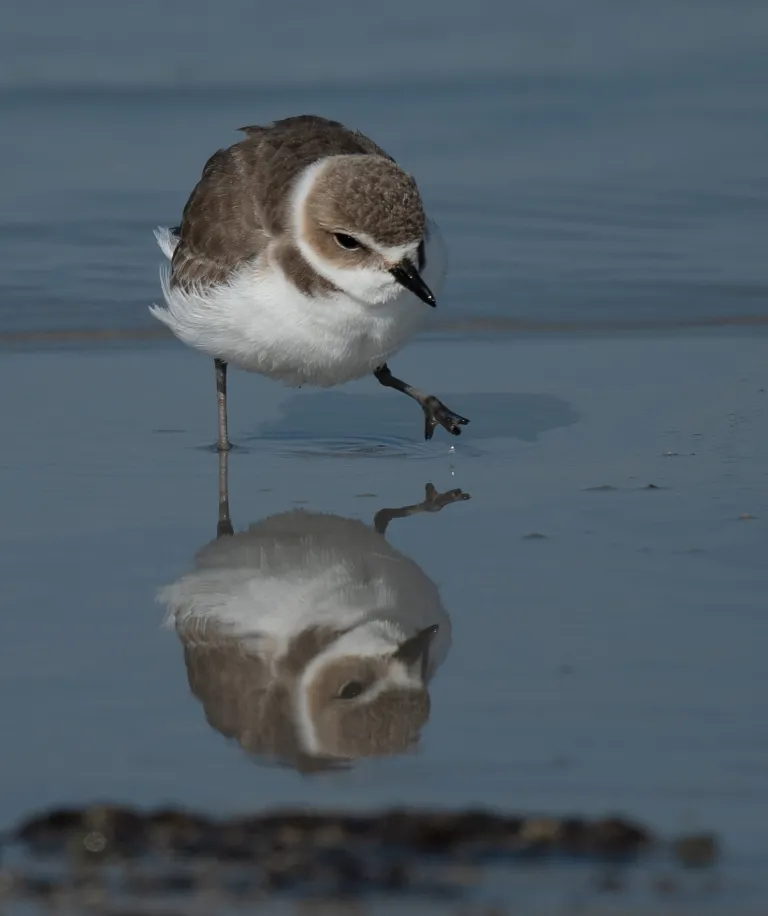
Snowy Plover Photo by Connie Misket
Migratory birds face habitat loss from climate change and development. Birds need to find resources along their flyways so a system was developed to track them and find out where they go and where they stop. This is the Motus (Latin for movement) tracking network, and radio-tagged birds (and bats and some insects) can be tracked across continents using detection stations. By mapping detections, it is possible to both find the key habitat locations and resources that birds need and focus funding to keep those habitats healthy and preserved.
Since 2020, I have maintained a Motus station at Cibola National Wildlife Refuge next to the Colorado River. My interest was in tracking tagged birds using the Pacific Flyway that runs from the Arctic down to the tip of South America. In the summer of 2024, I upgraded the station so it could detect more types of birds. When I first checked the station log, I was stunned to see that Snowy Plovers had been detected. This is a threatened species that primarily lives along the Pacific coast on beaches and mud flats from Washington south to Mexico. Snowy Plovers are tiny shorebirds that are at risk from beachfront development, especially in California. Why were they at the Colorado River? Arizona Game and Fish has been installing Motus stations along the Colorado River, and the flight map showed that the plovers were tagged at the Great Salt Lake in Utah and followed the Colorado River south to the Gulf of California, where there are more stations. Extremely light weight transmitters are attached to the birds with special backpacks that do not affect flight, and the trailing antenna does not affect activity in the air or on the ground. Conservationists with Tracy Aviary in Utah have been monitoring the Snowy Plover population for some time, but the migratory patterns were unknown. In 2024, they tagged birds for the first time. The Cibola station was upgraded just in time to detect the plovers’ radio frequency tags as they passed by. In 2024 and 2025, migratory Utah plovers have shown that they will travel to both California and Mexico, meaning the critical shoreline habitat they need to reach depends on the Colorado River. The map shows the 2025 plover tracks in relation to the Colorado River.

In California and Mexico, conservation efforts continue to support these shorebirds. At Vandenburg Space Force Base 250 breeding pairs use three beach areas, and access to the beaches is closed from March until October to prevent nests from being disturbed. At abandoned salt production ponds in Ceuta Bay, Mexico, 70 to 80 nests are typical, and fences have been permanently installed to keep visitors and animals out of nesting areas. In addition, vegetation and water catchments have been added to help the plovers and other birds during periods of severe drought.
Over time more species of tagged birds will be detected, proving the importance of maintaining the Colorado River water flow to birds and the larger ecosystem in Western North America.