Colorado has spent 50 years widening highways. Let’s try something that will actually work?
TLDR: Submit a comment in favor of public transit HERE.
The next CDOT hearing on the future of our transportation sector (!!!) is December 17, 2025 at 10 AM. Email Herman.Stockinger@state.co.us at least 24 hours in advance to reserve a spot to give public comment!
In 2025, Colorado will decide how to spend tens of billions of dollars in transportation funding over the next decade. This is a real fork-in-the-road moment: one that will determine whether we keep repeating the same mistakes or finally build some people-first infrastructure.
Be honest: How has your transportation experience been in the great Rocky Mountain State?
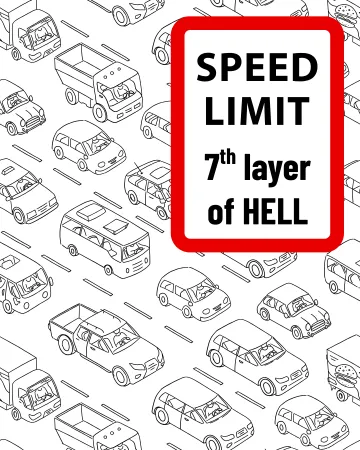
Mine’s been kind of… rocky.
So, I’m sitting in my green Subaru Outback, inching forward, then stopping again in bumper-to-bumper traffic. I glance around. Every car around me holds exactly one person. Hundreds of us, tailing each other at a snail’s pace.
A 15-minute trip has somehow mutated into 30 minutes. Drivers are stressed. Accidents make things worse. Horns. Brake lights. More waiting. More cortisol. Polluting the air of people living near these monster roads. It feels like highway purgatory.
Whatever this is… it cannot possibly be the most effective way to travel.
That’s a fairly typical weekday afternoon experience if I dare drive near the city. Maybe you can relate.
We built a transportation system that requires everyone to drive everywhere for everything. And now, our endless-lane model is collapsing under the weight of its own inefficiency. Yet, CDOT wants to keep expanding highways to solve a problem created by… expanding highways. I hate it. You should too.
I think I hate it because I know exactly what the alternative can look like.
For half of 2015, I lived in the Netherlands. I bought a $50 bike, a bus pass, and, when necessary, a train ticket. And with those three things, I could get anywhere I needed to go. I never needed a car. Why? Because buses ran regularly. Stops were accessible. Bike paths were prioritized over traffic. The air was cleaner. I was in great shape. And traveling didn’t feel stressful. It felt normal.
Coloradans deserve a future like that. One where our transportation system prioritizes people over semi-trucks and lobbyist interests. Something DIFFERENT from what we’ve been doing.
CDOT says it wants something different:
- safer roads,
- more transportation choices,
- lower GHG emissions,
- and more transit service statewide.
Those goals are real. They’re written into CDOT’s Policy Directive 14 and Governor Polis’ 2035 Transportation Vision. But a plan is only as real as the budget behind it. And their proposed budget doesn’t line up.
Under the current budget, highway and road capacity projects make up the vast majority of spending, with only 4% going to transit. While there are some multimodal projects in the project pipeline, they only represent a sliver of CDOT’s budget, making statewide goals harder to achieve.
Highway expansions do not work. This has been proven over and over again. Expanding highways just incentivizes more driving, which ends up quickly refilling that new lane, adding more pollution and failing to fix anything long-term. We just end up with five lanes of traffic jams instead of four.
The I-270 Expansion
One particularly insidious expansion proposal is around I-270. Why is it insidious? Let’s take a look at it.
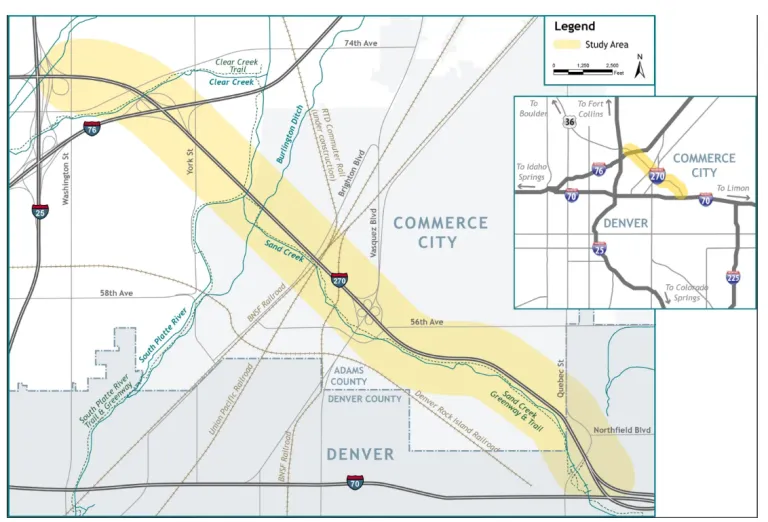
This relatively small, 7-mile highway corridor is the worst of all worlds. Our friends at Green Latinos have already said it best:
“Timing aside, widening I-270 is a bad idea. For more than a decade GreenLatinos and the residents of North Denver and Commerce City have been raising our voices for cleaner air and healthier neighborhoods. We’ve documented how highway traffic — especially in conjunction with nearby industrial facilities like the Suncor refinery — concentrates pollution in front-line communities, and we’ve pushed for transportation solutions that prioritize health, not mere vehicle throughput. As GreenLatinos’ community work and reports make clear, widening a highway that slices through these neighborhoods will only worsen the pollution burden that residents already shoulder.” - Ean Thomas Tafoya
Can we stop slicing these communities with more lanes that cater to major industrial facilities? It’s a 7-mile highway that is directly harming real people with extreme pollution that will only get worse if additional lanes are added. When we are talking about increasing respiratory issues, heart attacks, cancer, and childhood asthma rates for these communities… is adding more lanes worth the $725 million price tag? The answer can’t be anything but no, right?
LET’S TELL CDOT TO GET THEIR ACT TOGETHER
About 30% of Coloradans don’t rely on a personal vehicle to get around. At the very least, Colorado should spend at least 30% on projects that support non-driving transportation modes. Bike and walking paths, buses, rail, and more. These are real investments that would go toward lowering vehicle congestion, not adding more capacity for more traffic.
Investing in regional and local transit, biking, and pedestrian infrastructure would:
- Make Colorado more affordable.
- Reduce traffic-related deaths and injuries.
- Improve community health.
- Expand transportation choices for all.
- Hold CDOT accountable.
The remaining 70% of their budget should go to fix-it-first initiatives that maintain our roads and bridges. Our current infrastructure is crumbling, even dangerous in some cases. CDOT should focus on creating better infrastructure for the people they are meant to serve.
HOW YOU CAN STAND UP AGAINST A FUTURE OF INFINITE LANES