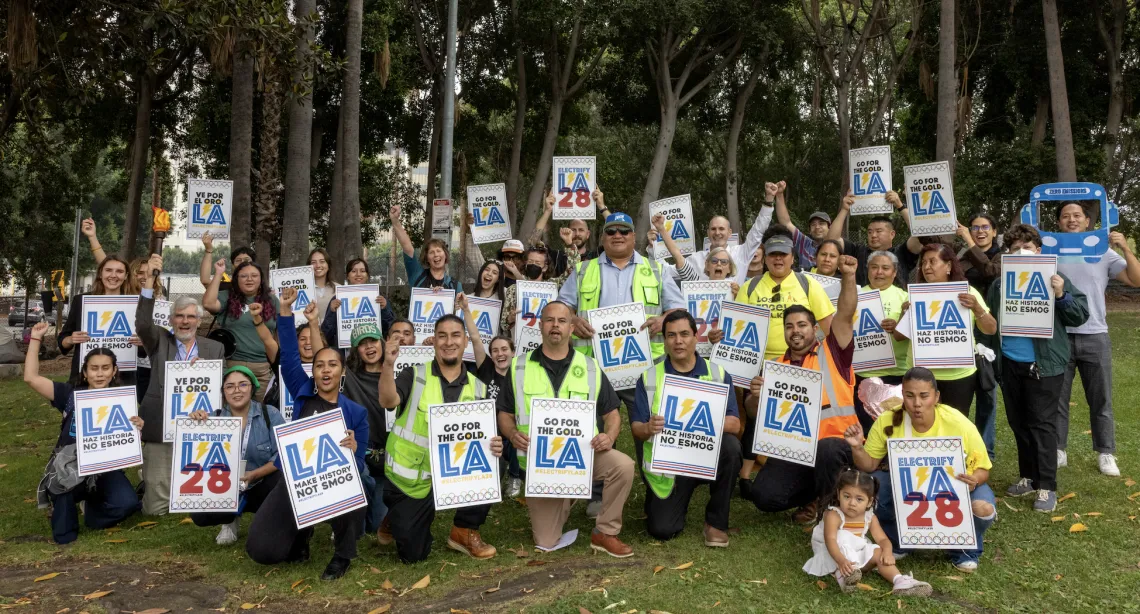
Every day Angelenos take the bus to get to work, attend school, run errands, and meet up with friends. Last month, the LA Metro Board took a big step toward making those daily trips cleaner and healthier by approving the purchase of 220 new battery-electric buses. This $338 million investment is one of the largest electric bus purchases by a U.S. transit agency and will more than double the number of electric buses in Metro’s fleet once they’re delivered. It’s an important step toward putting zero-emission transit buses on the streets of Los Angeles.
At a moment when federal clean transportation policy and funding is under attack, LA Metro is stepping up with this major win for Angelenos. We know too well that Los Angeles County continues to face some of the worst air pollution in the country, receiving an F on the American Lung Association’s State of the Air 2026 report for its poor air quality. Electric buses can help change that. They produce no tailpipe pollution, reduce noise and greenhouse gas emissions, and provide a cleaner, quieter ride for passengers. These benefits are especially important for communities that have long been overburdened by transportation pollution.
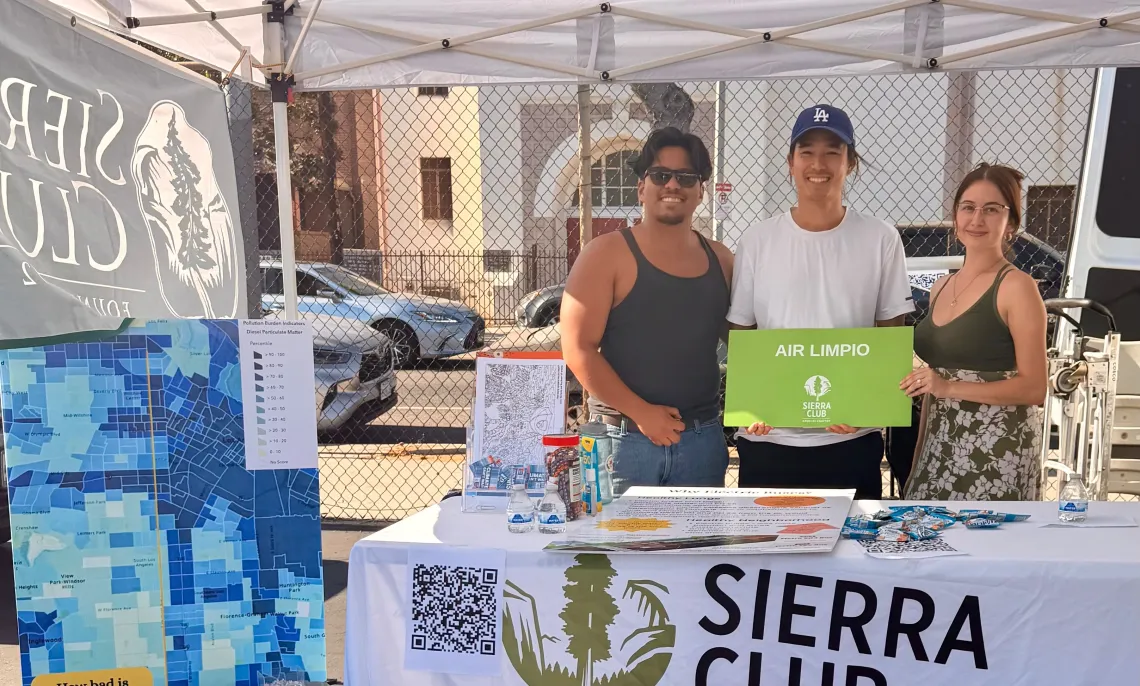
This is not a win that happened overnight. This was a fight that started before my time at Sierra Club. With the uncertainty of what would happen in D.C at the time (2016), advocates agreed that the best response for California was to continue pushing for programs and policies that would provide clean air, equity, and good jobs.
The formative years of the Los Angeles County Electric Truck and Bus Coalition (previously known as LA County Electric Bus Coalition) championed the pathway to a zero emission future by collecting petitions, attending board meetings, holding press conferences just to name a few actions. It was a collective effort by community members like South LA parent Nancy White Horse and then-high school student Milton Paez; Sierra Club volunteers Kent Minault, Darrell Clarke, and Ray Pingle; and environmental and labor partners EarthJustice, Food & Water Watch, Jobs to Move America, and IBEW These efforts lead to a promise by LA Metro in 2017 to electrify 100 percent of its fleet by 2030. Almost nine years later and our advocacy work, once again, continues to lead the momentum for a cleaner, more equitable public transportation system.
The new buses are expected to begin arriving in 2028, but there is still work to do. We will push for buses to first hit the roads in environmental justice communities most impacted by pollution. We’re also looking ahead to opportunities to strengthen job quality and worker protections as Metro continues electrifying its fleet. Some labor partners raised concerns about this procurement, including the selection of a nonunion manufacturer and about the transparency of the process for evaluating labor commitments. With additional bus purchases still ahead, we want to see future investments prioritize good manufacturing jobs and accountability to workers and communities. We will continue to advocate to ensure equity is centered at every step towards a cleaner future.
This includes continuing to push for improvements along the Vermont Transit Corridor, which runs along Vermont Avenue between Sunset Boulevard and 120th Street. Metro plans to transform this corridor into a bus rapid transit (BRT) line, with the goal of opening before the Summer 2028 Olympic and Paralympic Games.
The Vermont corridor is one of the busiest bus routes in the region, serving approximately 38,000 weekday riders. Communities in South LA along this route experience disproportionate burdens from air pollution and associated health conditions, including higher rates of asthma and cardiovascular disease. Electrifying buses along this corridor will benefit community members long term and provide much needed relief.
Sierra Club’s Activist Academy cohort members want to take this opportunity to uplift the need of prioritizing electric buses in communities like this one. Metro has already committed to zero-emission service on the Vermont corridor. We want to make sure that commitment is delivered, alongside more frequent, reliable transit that better serves all Angelenos. It is imperative to improve public transit along one of the busiest bus routes in the region.
The new electric buses represent a major step toward a cleaner, healthier, and more equitable Los Angeles, but the work doesn't stop here, the movement continues. We’ll keep pushing to ensure electric buses reach the communities that need them most, that workers benefit from good jobs and strong protections, and every Angeleno has access to reliable, pollution-free public transportation.