Trump Administration Renews Effort to Block the Nearly Completed Revolution Wind
Half a billion dollars in annual savings are in jeopardy for New England ratepayers
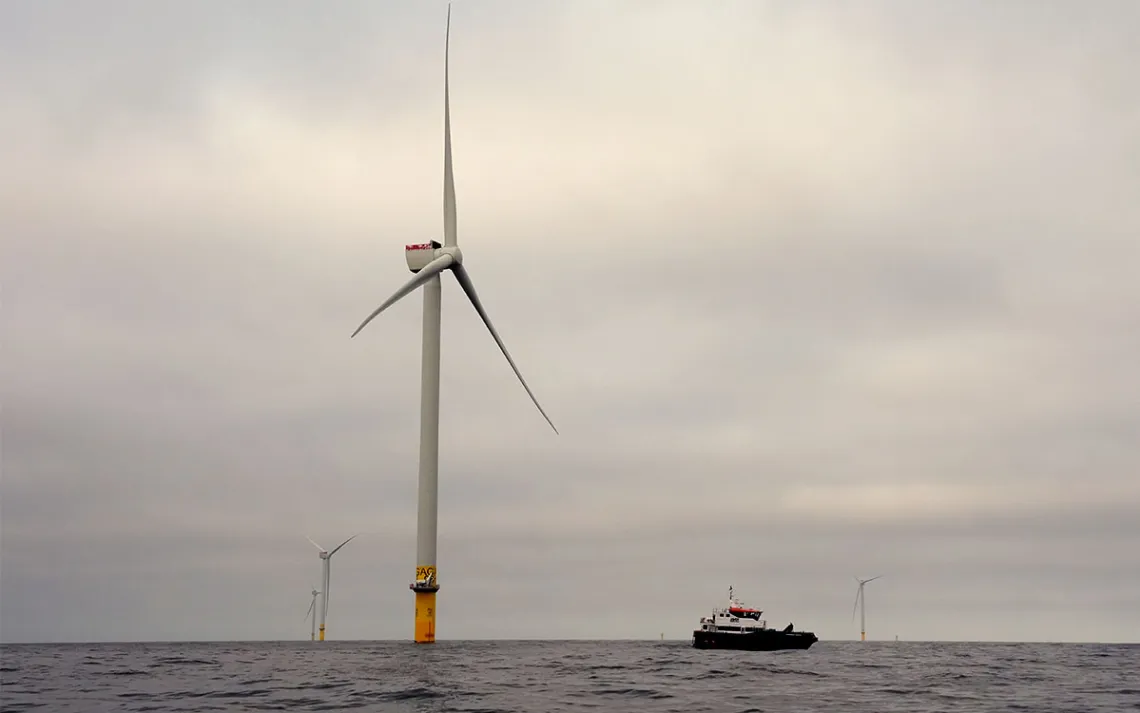
Revolution Wind offshore wind farm off the coast of Rhode Island in April. | Photo by Joshua A. Bickel/AP
The Trump administration has renewed its campaign to torpedo a Rhode Island offshore wind farm called Revolution Wind, even though the project is nearly complete and would provide much-needed electric power to hundreds of thousands of homes.
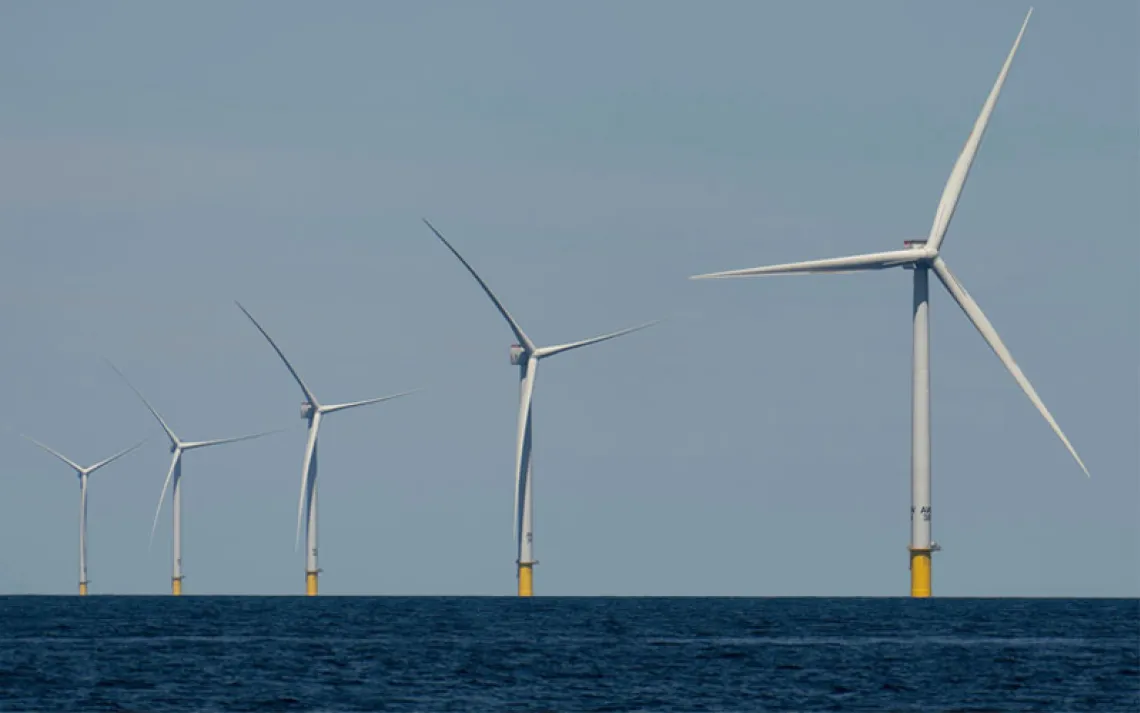
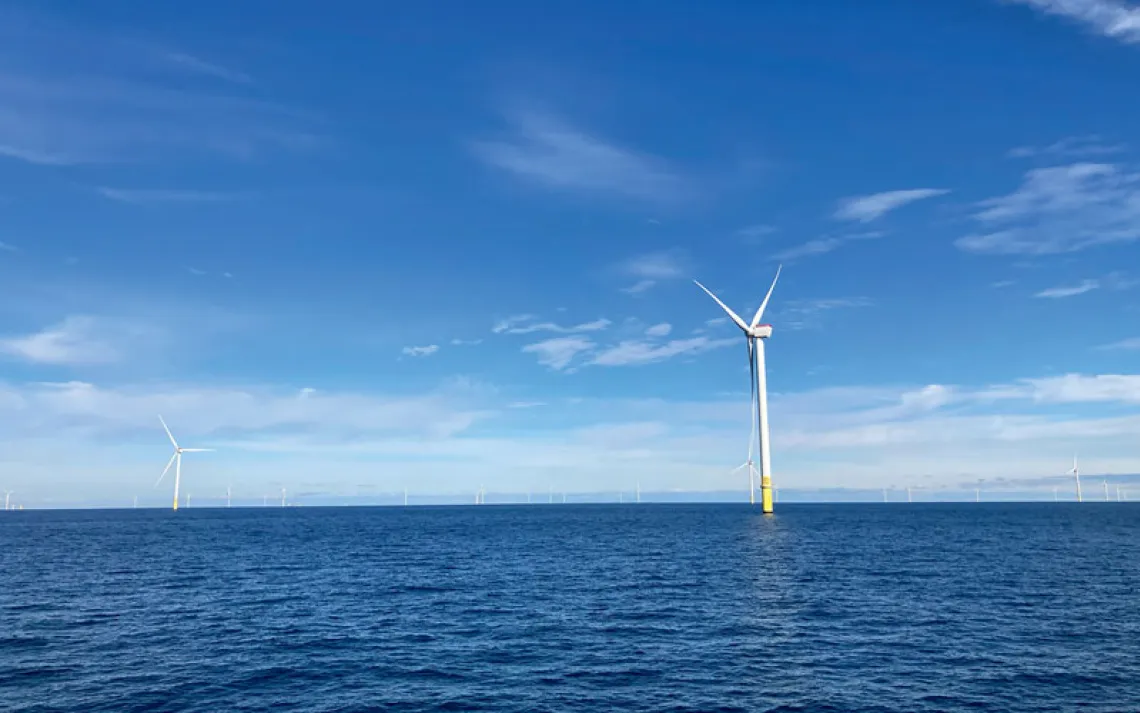
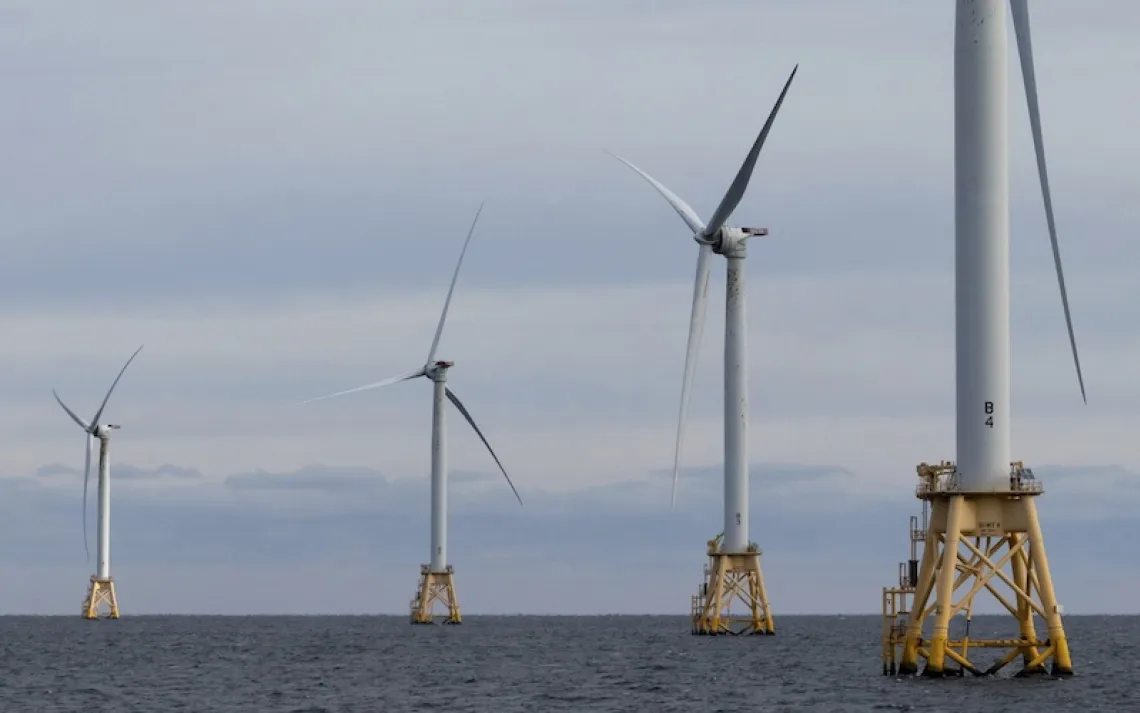
Revolution Wind, a 704-megawatt development located about 15 miles south of the Rhode Island shore, wrapped up installation of its 65 wind turbines last month. The project began delivering initial power to the grid in March and is expected to be fully operational by the end of the year.
According to project developers, Revolution Wind is designed to generate enough electricity to power over 350,000 homes and businesses, serving utility customers in Rhode Island and Connecticut. It is the first multistate offshore wind project in the United States, and one of just a few utility-scale offshore wind farms in the country to start operating.
An analysis from the Connecticut Department of Energy and Environmental Protection estimated that Revolution Wind would save New England ratepayers half a billion dollars a year in electricity market costs by 2028.
Trump’s Department of Justice is trying to prevent that from happening.
The DOJ said in an October 9 court filing that the court should remand the Department of the Interior’s approval of a construction and operations plan for Revolution Wind so that the agency can “reevaluate its compliance with the Outer Continental Shelf Lands Act.” The filing argues that the Department of the Interior under the Biden administration erred in approving the plan in 2023. It comes as part of a case initially brought in 2024 by the anti-wind group Green Oceans against the Department of the Interior and several other federal agencies challenging their approval of Revolution Wind and another offshore wind project called South Fork Wind.
Before Donald Trump returned to office for a second term, the Biden administration had worked to jumpstart the nascent offshore wind industry, approving nearly a dozen commercial-scale projects and setting a goal of deploying 30 gigawatts of offshore wind by 2030. Trump, who has long expressed disdain for wind power, set out to demolish that progress, though courts have since rebuffed some of his moves. Trump has baselessly attacked wind energy as a “con job” and the most expensive form of energy, and has even claimed that wind turbine blades would “poison the ground.”
Last December, a federal district court in Massachusetts struck down Trump’s day one directive that halted all federal leasing of wind projects and suspended their permitting pending a government review. Two weeks later, the Department of the Interior announced an immediate pause on the leases of five offshore wind projects under construction, including Revolution Wind. The projects were able to resume construction following preliminary court rulings against the Trump administration’s stop-work orders.
An analysis from the Connecticut Department of Energy and Environmental Protection estimated that Revolution Wind would save New England ratepayers half a billion dollars a year in electricity market costs by 2028. Trump’s Department of Justice is trying to prevent that from happening.
Revolution Wind overcame an additional stop-work order issued by the administration in August 2025 when the project was 80 percent complete. The administration had also previously tried to stop construction on a project called Empire Wind, located offshore of New York.
In addition to stop-work orders, the Department of the Interior has moved to reconsider or revoke its approvals of several already-permitted offshore wind projects, including the Maryland Offshore Wind project and Massachusetts’s SouthCoast Wind. Last November, a judge ruled that the agency could reevaluate its construction and operations plan for SouthCoast Wind, which was granted in the waning days of the Biden administration.
The Trump administration’s latest request to reconsider the approval of Revolution Wind is pending in a case before Judge Royce C. Lamberth of the US District Court for the District of Columbia. Lamberth has already issued preliminary rulings against the administration in separate litigation brought by Revolution Wind challenging the two stop-work orders.
“We’re optimistic that he just rejects this application outright,” Nancy Pyne, senior adviser for offshore wind at the Sierra Club, told Sierra.
Environmental advocates and some elected officials in Connecticut slammed the Trump administration’s renewed attempt to try to block Revolution Wind.
“Pulling the plug on a wind farm that’s already spinning would be one of the most expensive temper tantrums in history, and New England families would pay for it.”
“Why challenge something that is already darn near complete?” Xavier Boatright, deputy legislative director for the Sierra Club, said in a statement. “The answer is that Trump wants to help his buddies in the fossil fuel industry bolster profits by eliminating their competition instead of delivering the affordable, clean energy Americans need.”
“Trump has tried to kill Revolution Wind twice and lost. Now he’s a sore loser trying to flip the board after the game is over,” said Evergreen Action executive director Lena Moffitt. “Pulling the plug on a wind farm that’s already spinning would be one of the most expensive temper tantrums in history, and New England families would pay for it.”
The power produced by Revolution Wind is expected to meet about 5 percent of Connecticut’s electricity demand, state officials say. Canceling the project could result in $125 million added costs for Connecticut ratepayers, which equates to about $41 annually, or $3.44 monthly, per household, according to CT Insider.
Senator Richard Blumenthal (D-Conn.) pointed to the current fuel price shocks driven by Trump’s decision to launch a war with Iran in arguing that clean, homegrown sources of energy like offshore wind are needed now more than ever.
“If there's one lesson from Trump's mindless warmongering, it's that we need to break our dependence on foreign imports of fossil fuels and embrace alternate sources of energy,” Blumenthal said. “Revolution Wind is expected to generate clean and affordable energy for thousands of Connecticut homes in just a few weeks—Trump must back down and drop his unhinged and unwarranted opposition to these projects.”
Some observers, including the Washington Post editorial board, have suggested that the Trump administration’s latest attack on Revolution Wind could risk derailing a proposed bipartisan permitting bill. When the administration tried to halt construction on the project and four others late last year, senators Sheldon Whitehouse (D-RI) and Martin Heinrich (D-N.Mex.) responded by saying that permitting reform talks were “dead in the water.”
This time, the senators have not indicated a retreat from the permitting bill discussions, saying in a joint statement: “Frankly, we need to get permitting certainty in law, and this proves it. In the meantime, the administration needs to start showing good faith progress on wind permits.”
Last month, several Democratic members of Congress gathered in front of the US Capitol to speak out against Trump’s continued attacks on offshore wind, including deals with developers amounting to nearly $4 billion to cancel 12 offshore wind leases.
While Trump’s continued efforts to stymie offshore wind have been frustrating, the sector has still been making progress, Pyne noted.
“South Fork wind farm off the coast of Long Island just delivered incredibly strong performance numbers during the summer heat wave,” she told Sierra. That project, which came online in 2024, has been consistently delivering clean power to New York ratepayers. And several other offshore wind projects will soon join South Fork in becoming fully operational.
“Vineyard Wind completed construction. Coastal Virginia Offshore Wind is getting close and will be operational sometime next year. Revolution is done,” Pyne said. “So, we’re getting to the point where we’ll have six offshore wind farms built, spinning and generating clean, affordable power for US ratepayers.”