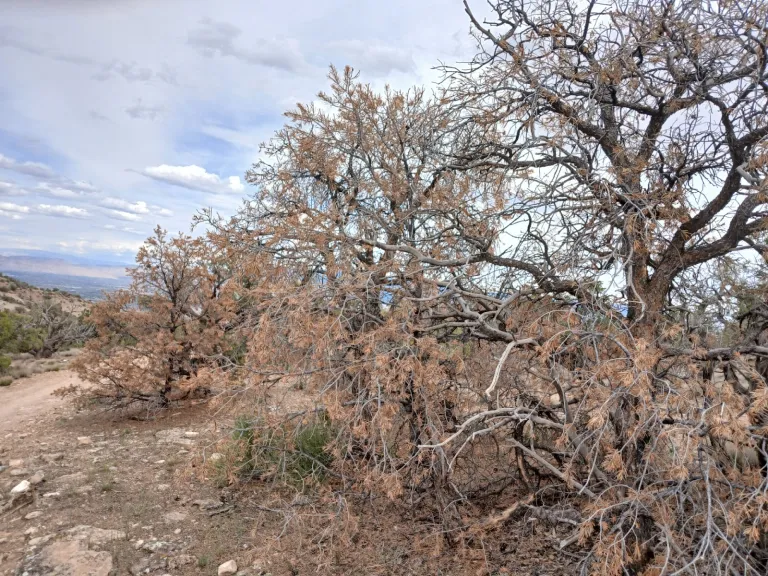
The Western Slope Group of the Sierra Club is situated right in the area of Colorado experiencing its worst drought ever recorded. What are the visible signs? Out hiking the local trails, pinyon pines are dying, probably from a combination of beetles and lack of rain or snow. The spring flowering of native plants is meager. The Colorado River, usually full and racing in April, is at a low level and running languidly. Most of Grand Junction has irrigated yards; the Redlands area, over by the Colorado National Monument, uses Gunnison River water. Residents are still waiting for irrigation water turn-on to green-up their grass and keep trees alive.
On the news, reports were that Colorado had only reached 25% of its usual water precipitation this year. A week later, that number dropped to 23%. Reports from Ute Water are that household water supplies from Grand Mesa are enough for a year and a half, as the reservoirs up there are being kept full. That’s good, but the irrigation water system is separate from the household water system here. What about the yards full of shade and fruit trees, flowers, shrubs and grass? Residents have heard only of voluntary restrictions, and to water enough to keep the trees alive.
What about the farmers? Fruit orchards, vineyards, row crops, alfalfa, and hay are already getting their water, mainly from the Colorado River through extensive canals. It’s working for now, but what about later in the summer when it is hotter and drier, and the river flows dwindle even more? Irrigation water in most of the Grand Valley comes from high in the Rockies, where the worst drought is still ongoing. Colorado River Law rules that much of the River’s water must go to downstream states. It is all already allocated, so irrigation water will be even more limited than before. Farmers will have to use less.
The big question is, to a nature lover, what about wildlife? There is a lot of wildlife here that needs water too. Desert bighorn sheep, pinyon pines, canyon wrens, the glorious wildflowers and fish like humpbacked chubs also need their share to survive.
Coloradans east of the divide use some of the western slope’s water, too, through the many transmountain diversion pipelines that carry water east under the mountain crests. These impact the amount of water flowing down westward from the high mountains. Eastern Slope folk also need to conserve water to help residents, farmers, and wildlife over here on the western slope.
Looks like everyone should pray for a whole lot of rain.
Betsy Greslin
Colorado Sierra Club Western Slope Group