Who Gets to Graze in the West?
A federal decision has propelled a Montana nonprofit into the center of a dispute over conservation and public lands
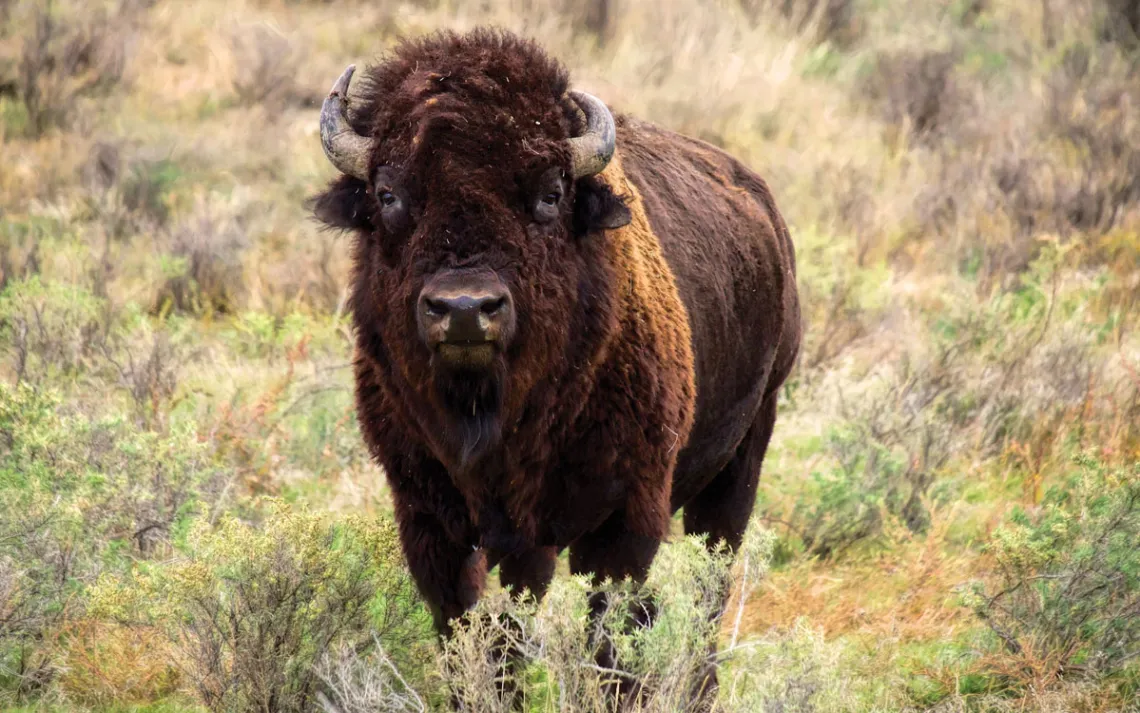
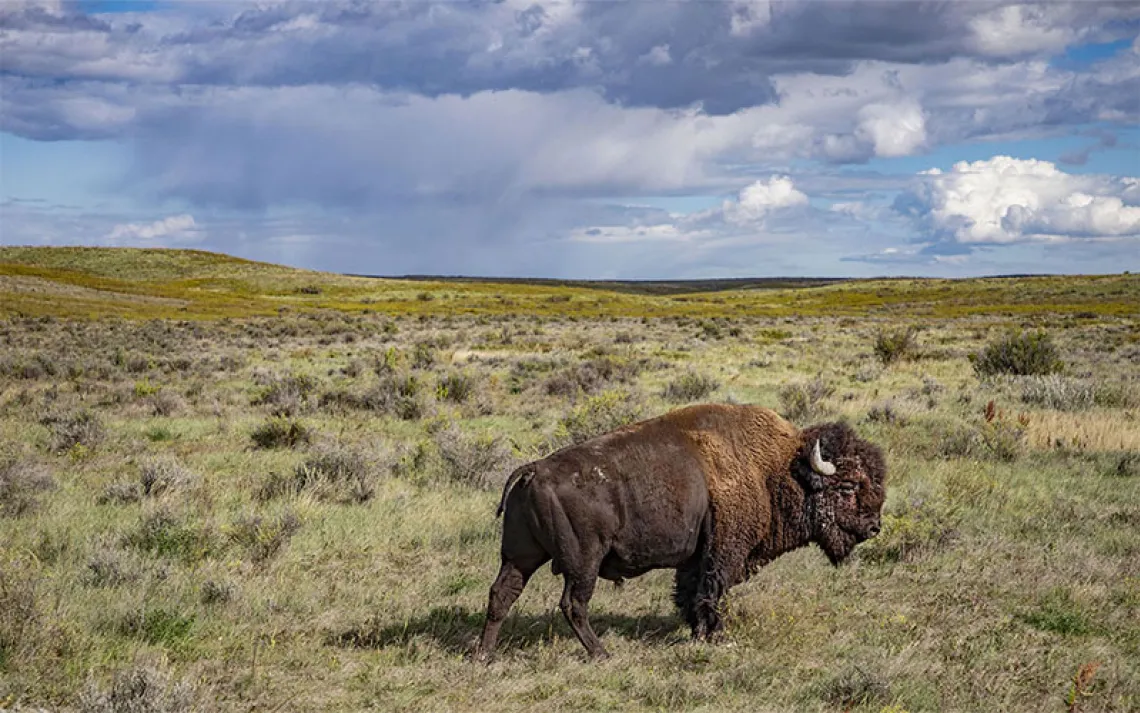
A bison on American Prairie grazing lands. | Photo courtesy of the American Prairie
In north-central Montana, Phillips County stretches from the Little Rocky Mountains to the Canadian border in a sweep of high plains. With roughly 4,200 residents dispersed across 3.2 million acres, the area averages less than one person per square mile across its capacious landscape. But a recent federal decision has ordered 950 of its other shaggy residents—the native American bison—off the county's federal allotments, which the animals have long called home.
The bison’s eviction notice comes from the Bureau of Land Management, an agency within the Department of the Interior that leases grazing allotments across the Great Plains. However, under Interior Secretary Doug Burgum, the agency proposed rescinding a nonprofit’s grazing permits on federally authorized land—an announcement that escalated a long-running dispute over Montana ranching interests and whether bison intended for restoration should be treated differently than cattle on public land.
Currently, the BLM’s final decision only applies to the bison on seven grazing allotments in Phillips County, managed by American Prairie, a nonprofit that has worked to restore herds and grassland ecosystems for the past 20 years. But the dispute has stoked fear among other conservation groups, tribal nations, and private landowners about where bison (also known as buffalo) fall under the federal government’s new interpretation of a nearly century-old grazing law.
“They’re suddenly changing the rules,” said Beth Saboe, director of public affairs at American Prairie. “And important to note that they’re changing the rules without anything having changed in our management. Nothing has changed in our herd health. Nothing. It’s politically motivated.”
How it all started
In 2019, American Prairie requested permission to graze bison on 63,000 acres of public land in Phillips County. For decades, the BLM has issued permits for buffalo held by tribes, conservation organizations, and private livestock producers, and in 2022, American Prairie bison were granted those same rights. But before the nonprofit could exhale, the plan was swiftly appealed by the State of Montana, the North and South Phillips Grazing Districts, and the Montana Stockgrowers Association.
American Prairie’s vision of restoring native prairie habitat and free-roaming bison has long been controversial among local cattle ranchers and Republican elected officials, who see the organization as a threat to the region’s agricultural economy and way of life. The grassroots movement “Save the Cowboy”—which has stamped anti–American Prairie Reserve signs across Phillips County—believes the nonprofit’s goal of acquiring millions of acres of land will displace farming and ranching communities. Since ranchers have endured and made a living in northern Montana’s harsh conditions for generations, they feel they should take priority, and they suspect that the American Prairie is trying to push them out.
American Prairie argues that fears of displacement are misguided. The organization says it leases more than 500,000 acres (of its total of more than 600,000) to 25 ranching families who run about 8,000 head of cattle.
Ultimately, the argument boils down to the minutiae of ambiguous wording penned under the Taylor Grazing Act of 1934, a Dust Bowl–era federal law created to regulate grazing on public lands. In May, the BLM concluded that bison managed by American Prairie weren’t up to snuff when it comes to the act’s definition of “domestic livestock” managed primarily for “production-oriented purposes”—criteria the BLM defined as animals “intended for use primarily for the meat, milk, fiber, or other animal products.”
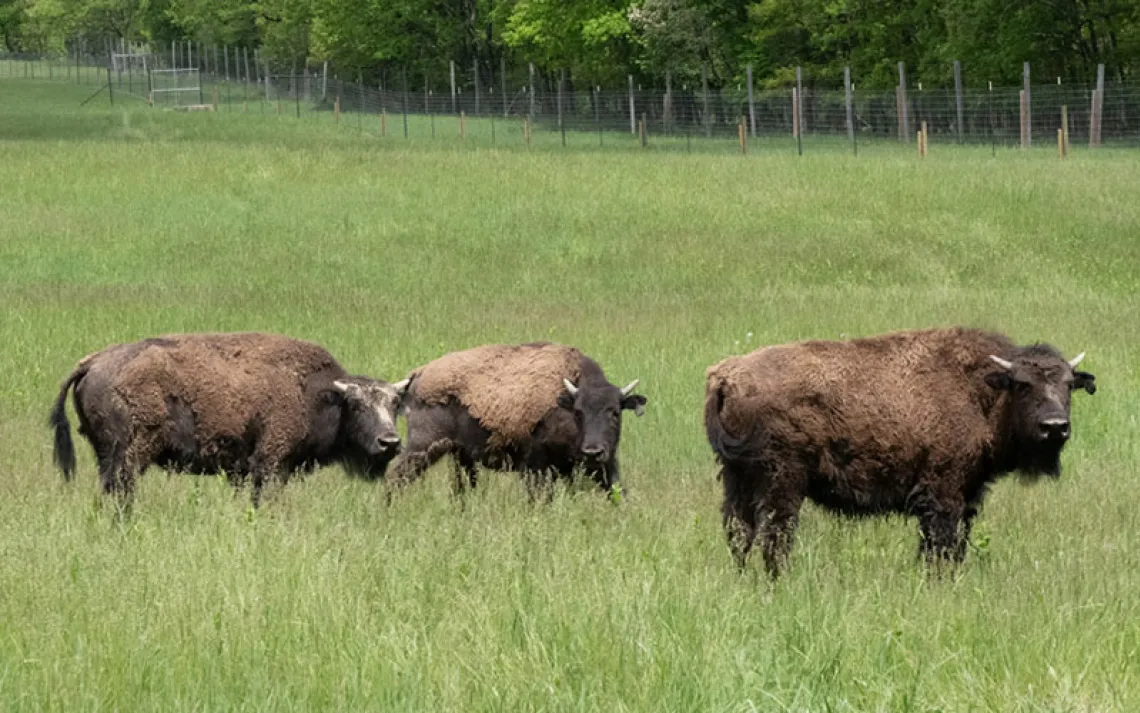
But here’s where things get slippery. Pro-bison attorneys say that the term production-oriented is not mentioned anywhere in the Taylor Grazing Act. With the exception of the herd in Yellowstone National Park that migrates into Montana in winter, all bison are also classified as livestock by Montana state law, based on a law passed in 2021. Similar to cattle operations, American Prairie's bison are closely managed through fencing, disease testing, and coordination with neighbors and agencies. Additionally, its program has donated more than 22,000 pounds of bison meat to food banks and helped feed Montana families through public harvests.
The agency’s decision, however, centers less on the actual animals and anchors more to the nonprofit's perceived “intent” for managing them, which the BLM argues is primarily for conservation, not production, stating “it is clear that American Prairie intends to keep its bison as wild animals to further its conservation goals.”
“They are now positioning a new interpretation of the Taylor Grazing Act, which, to our knowledge, has never been interpreted this way,” said Saboe.
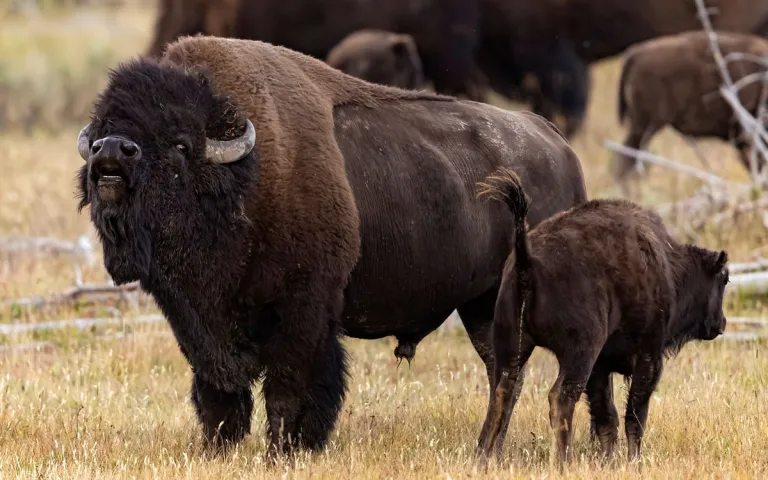
Photo courtesy of American Prairie
A moving goal post
Tribal groups were also troubled over the suddenly nuanced interpretation of the act. In February, the Coalition of Large Tribes (COLT)—an intertribal organization representing more than 50 tribes and more than half the Native American population—was one of several entities that filed a protest after the BLM issued its proposed decision earlier this year.
“We actually broke down the Taylor Grazing Act, and we were able to show word-for-word that they made stuff up,” said OJ Semans Sr., executive director of the Coalition of Large Tribes. “They inserted things that were not even intended into it.”
Over the past two decades, conservation groups, tribal nations, and public and private sectors have worked to reestablish herds after European settlers overhunted and slaughtered 30 to 60 million bison that once stomped across the Great Plains. At the turn of the 20th century, the species hovered on the brink of extinction, but thanks to collaborative conservation efforts, numbers have started to rebound. Bison restoration initiatives have not only worked to preserve the “near threatened” and “ecologically extinct” species, but also to rematriate herds back to Indigenous communities who have long depended on buffalo culturally, spiritually, and economically, including for food sovereignty.
“We considered buffalo relatives,” said Semans. “We followed them out of Wind Cave when we came from the stars.”
The BLM reassured that the cancellation of American Prairie’s permits is not a sweeping federal ban of bison from public lands and “does not affect other permit holders, treaty rights, tribal grazing authorizations or tribal bison herds.” While COLT was “heartened” by the Interior’s language, the group warned that the legal reasoning remains dangerous.
“This results-oriented decision is really about preserving cheap grazing opportunities for cattle ranchers, who are currently enjoying record prices for beef,” said Semans in a statement. “This decision could be used to prevent tribal bison herds grazing on federal lands in the future by creating a completely unjustifiable preference for cattle. That would be a calamity.”
The implications could also impede decades of ecological efforts to restore grassland health. As a keystone species, bison shape prairie habitat through their intrinsic movements that have been scientifically linked to numerous environmental benefits. Studies show that by grazing, bison create a patchwork of vegetation boosting bird diversity; their wallows hold water and support distinctive plant communities; and even their waste and hirsute coats disperse seeds across the landscape, enriching the soil that supports other vital wildlife.
The unknown future
In Phillips County, where agriculture is the primary economic driver, the BLM’s decision has been celebrated among cattle-ranching communities and Republican elected officials. The Montana Stockgrowers Association president Lesley Robinson praised the BLM’s reversal in a statement, saying it restored allotments “back to their intended usage for production livestock grazing.”
Governor Greg Gianforte also welcomed the decision, calling it “a victory for the rule of law and the generations of Montanans who have stewarded our lands with care.” Only days after BLM announced the rescinded permits, the DOI finalized its repeal of the Public Lands Rule that cancels conservation rules in favor of development.
Saboe, a fourth-generation Montanan with ranching and farming on both sides of her family, said she took the job with American Prairie because she wanted to bridge the perceived divide.
“Having experience in both worlds gives me a unique perspective and understanding of the concerns, values, and goals on each side, which I hope helps create more productive conversations and common ground,” she said.
If the decision stands, American Prairie says they might have to spend millions of dollars moving the 2,000-pound animals to other deeded land with expensive, specialized fencing. As a last resort, they may be forced to cull the size of the herd to nearly half.
For now, American Prairie says its bison will remain in place while they explore their options, including legal avenues such as filing an appeal of the decision.
“We have much more in common than most would think,” said Saboe. “And there are opportunities to work together.”