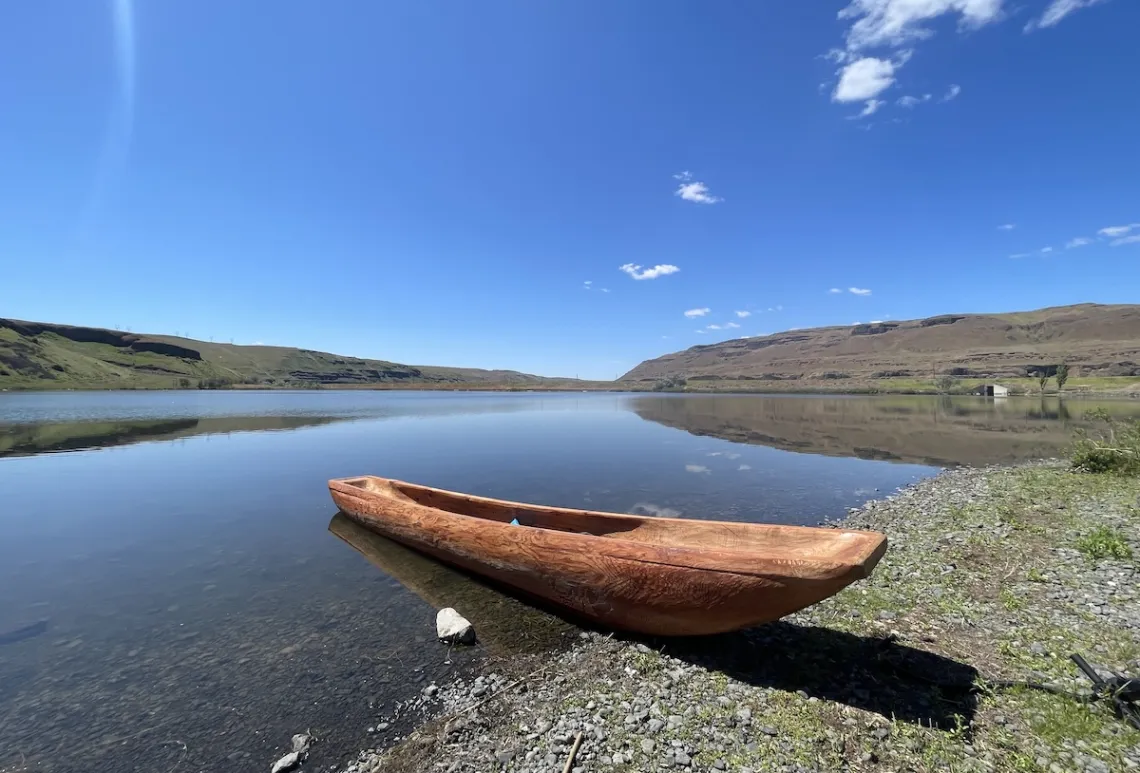
All photos by Alice Weston
by Alice Weston
Central & Eastern Oregon Organizer
Sierra Club Oregon
Somehow, I find myself already coming up on six months at the Sierra Club Oregon. It has been a whirlwind of learning and connecting with environmental advocates around Central and Eastern Oregon and the Pacific Northwest as a whole. I have been humbled to find such a passionate and kind community willing to invite me in and answer my endless questions. From forest protections to nuclear policy, I have already learned so much from our dedicated and knowledgeable volunteers and staff members.
One campaign that I am particularly excited to support is the Columbia River & Snake River Salmon Campaign. This campaign advocates for the breaching of the four lower Snake River dams (LSRDs) as a crucial step toward re-establishing salmon runs, honoring indigenous treaty rights, and restoring the ecosystem for future generations. Recently, I was invited to join the WOWYICKMA NAHKHEEUM NUSHWA: Healing Snake River Canoe Journey & Camp led by Khimstonik, where I began to learn how Central and Eastern Oregonians, who live in the Columbia & Snake River watershed, can contribute to these efforts.
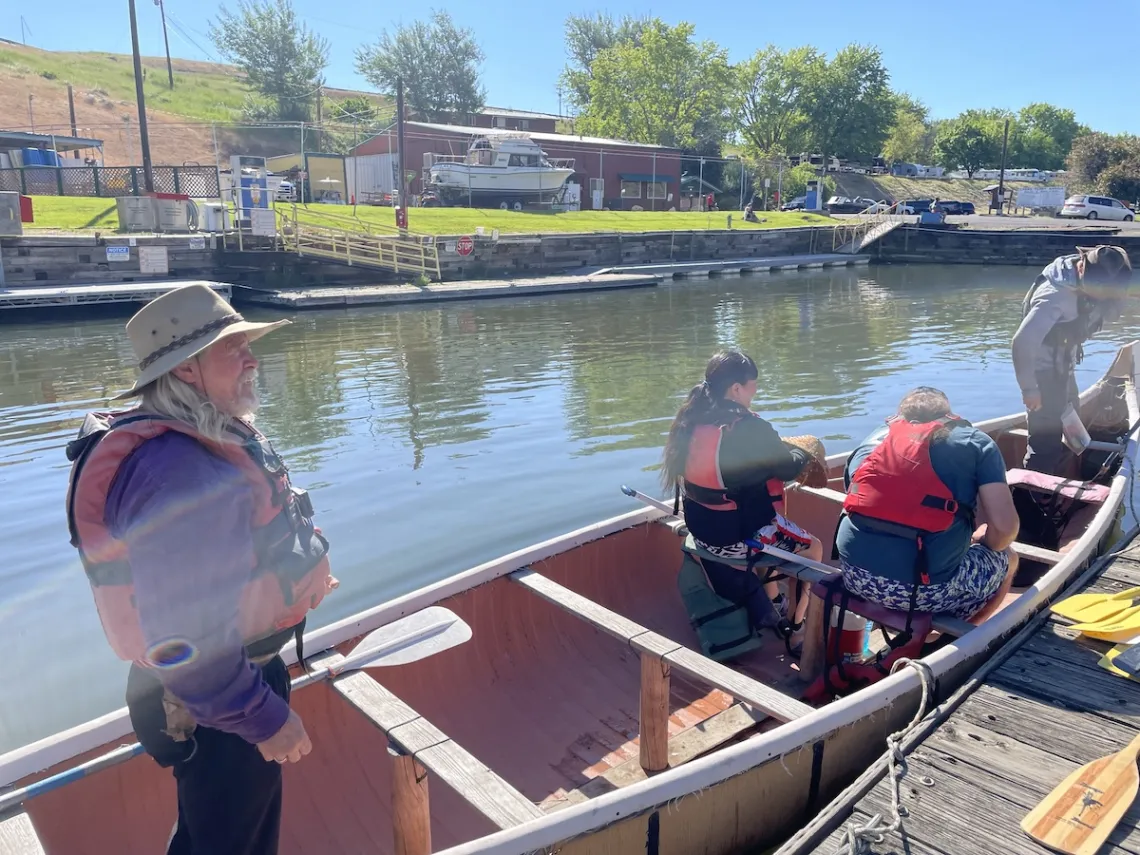
Khinstonik is an Indigenous-led grassroots community organization whose mission is to empower the Lower Snake River Palouse through cultural revitalization, environmental stewardship, and advocacy for Tribal and non-Tribal community partnership. Ione Jones, the Executive Director of Khimstonik, describes the mission of the healing journey and camp to be a place and space where, “Our stories were passed down with the intention for us to remember that as long as we kept a connection to the Creator, shared resources provided from the lands and waters, that we would always be able to feed ourselves, our children and elders - our communities. To heal we need opportunities for our original peoples and persons to return, live the lives our ancestors fought on our behalf to retain our spirituality.”
The canoe journey truly embodied this sentiment, serving as a gathering place to learn, create, and support the community while passing on knowledge to younger generations. Families, friends, and advocates came together for a multi-day canoe journey down the river, celebrating indigenous culture and history along the way. I am grateful for the opportunity to participate in the camp and journey for two days as we began our trip down the river.
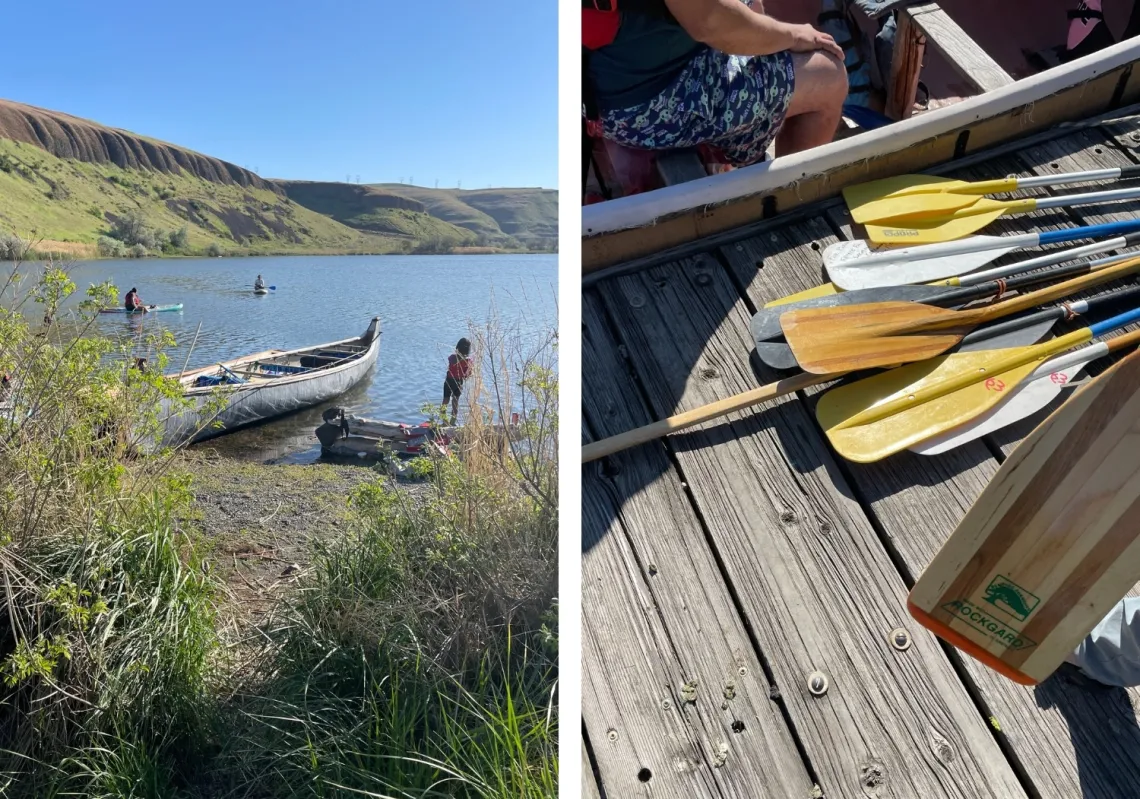
During the journey, I learned about and witnessed the past and ongoing harm caused by the Lower Snake River dams to the Palouse people, the Yakama Nation, the Umatilla Tribe, the Warm Springs Tribe, and the Nez Perce Tribe. The impact of this history was evident in the landscape, which was mainly devoid of native plant life. Along the way, our group planted dogsbane - a short branching shrub with fragrant flowers - as an act of rematriation. We also heard stories about the rivers' abundance prior to the construction of the dams. People reminisced about riverbanks and sandbars that have since been submerged by the stagnant reservoirs created by the dams.
While the history of this place is most recently that of harm and destruction, during the healing canoe journey, I heard about what the river was like before and what it could be. There was joy in the envisioning of a shared future where salmon is again abundant and the river runs free. I am grateful for the opportunity to share in that hope and to share that vision with you here.
I plan to continue to learn more about how environmental advocates can support indigenous-led efforts to reclaim and restore the Lower Snake River. I would love to invite anyone who is also interested to reach out, share resources, and ask questions with me. If you are interested in learning more and possibly becoming a volunteer, we have a few ways you can get involved. We have a longstanding group that has been working on the Snake River damn removal and they are always looking for support. You can learn more about their work here. You can also support Khimstonik financially.