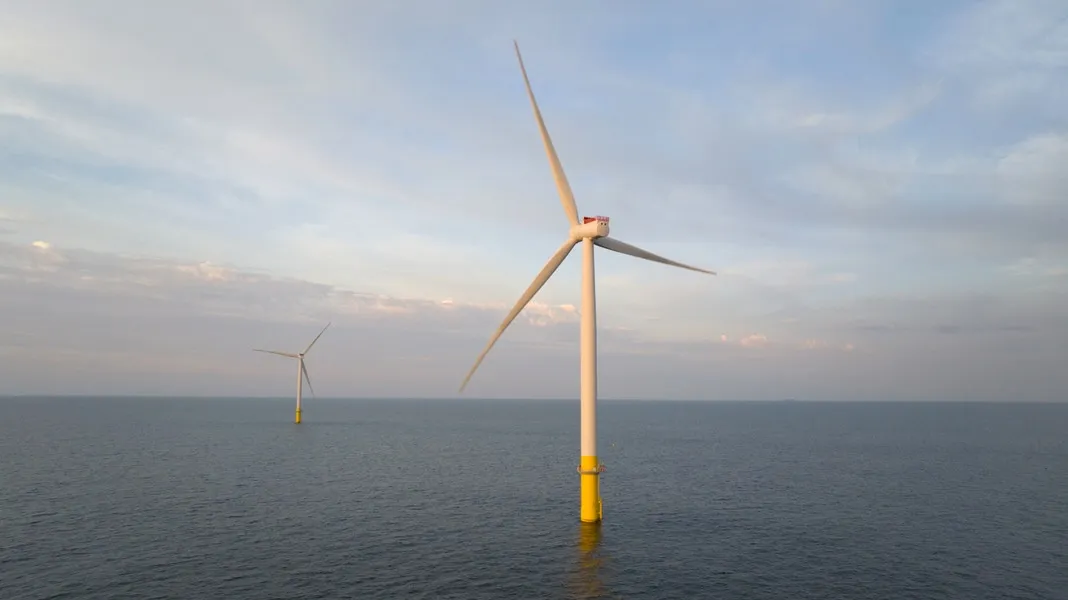
Turbines offshore of Virginia, courtesy Jimmy Olivero
To slow the onslaught of global climate change we must stop burning fossil fuels and switch rapidly to clean, renewable energy. So, it is noteworthy that by utilizing floating offshore wind turbines, the waters dozens of miles off Southern Oregon’s coast could hold the potential to power over half of Oregon’s homes with renewable electricity. That’s every home in the state that isn’t in the Portland metropolitan area. The ocean winds that blow off of Southern Oregon and Northern California are so strong and consistent that this is one of the best possible areas for offshore wind energy in all of North America.
Considering Oregon must get to 100% net-zero electricity by the year 2040 as required by state law, offshore wind energy could help enormously by displacing polluting fossil fuel power plants we currently depend on. But what are the costs of adding floating wind turbines to this rugged, rocky, and relatively undeveloped part of the west coast? That is the question that local Tribes, fishers, environmentalists, community members, and the state’s Department of Land Conservation and Development’s “Roadmap Roundtable” have been working together to address. Hydroelectric dams that threaten salmon extinction in the Columbia/Snake River basin remind us that just because a power source is renewable does not guarantee that it is good for local communities or the environment.
The waters dozens of miles off Southern Oregon’s coast could hold the potential to power over half of Oregon’s homes with renewable electricity. That’s every home in the state that isn’t in the Portland metropolitan area.
In 2024, the Oregon legislature passed House Bill 4080, which mandated the creation of an in-depth plan for any proposed offshore wind development. For the past 18 months, the Roundtable has been meeting to build out four different scenarios for how to approach the potential of 3 gigawatts of new floating offshore wind energy in Oregon. By 2040, those 3 gigawatts could meet one-quarter of the projected energy needs of Oregonians. Approaching finalization, the Offshore Wind Energy Siting Roadmap will be presented to the state legislature by January 1, 2027. Included will be four potential scenarios: two that include offshore wind development and two that do not.
There are some serious infrastructure constraints and significant cultural and economic realities that are grappled with in the Roadmap. Tribal sovereignty, wildlife protection, port development, and community benefits are a few of the topics that have been advocated for by community members and included in the Roadmap.
Here are a few considerations that Sierra Club Oregon has advocated to be included in the most recent draft of the Roadmap:
- Prioritize Tribal Nations’ sovereignty and cultural connections to coastal and marine ecosystems. Provide funding for their consultation in all steps of the offshore wind development process.
- Mandate investments in local communities through enforcement of community benefit agreements (financial payments, housing funds, fisheries mitigation funds, community grants programs, local hiring requirements).
- Connect to the coastal power grid to increase local energy resiliency and lower electricity prices on the coast before exporting power elsewhere. When power is exported, ensure costs stay low for local communities and provide investment in local energy infrastructure.
- Plan for housing strain, service pressure, and the risk to Indigenous communities from an influx of workers to build the infrastructure needed. (an issue identified by the movement for Missing and Murdered Indigenous People)
- Collect significant baseline environmental data on whale and seabird migration corridors, fish habitats, and the California Current Large Marine Ecosystem.
- Mandate that developers will not cause significant harm to irreplaceable ecosystems, including cumulative impacts from different phases of development.
- Create adaptive management plans throughout the 30-year project lifecycle.
- Codify Oregon’s environmental “no backsliding policy” to protect against federal damage to species protections, habitat protections, and cumulative effects.
- Protect fisheries through binding agreements, including by guaranteeing Tribal ceremonial and subsistence fishing protections.
- Plan for decommissioning from day one to restore habitats when the technology has reached its retirement date.
- Pursue a pilot-scale project before green-lighting full commercial-scale development.
- Fund state-led Tribal and community engagement.
Sierra Club Oregon is committed to working with the Oregon Department of Land Conservation and Development, coastal communities, Tribal nations, the fishing industry, and other impacted communities to ensure that offshore wind development in Oregon sets a national standard for not just responsible clean energy development, but also for environmental stewardship and community benefit.
Though the Trump Administration will likely never allow federal waters off of Oregon’s coast to be leased for offshore wind development, future Presidential Administrations will want to pursue the energy and economic benefits that can come from floating offshore wind. We will continue to help build a strong roadmap for offshore wind in Oregon and share information to educate Oregonians about the issue – so that when the time comes for considering offshore wind, we will be ready.
If you're interested in getting involved in this conversation, email Sierra Club Oregon Organizer Richie Scott.