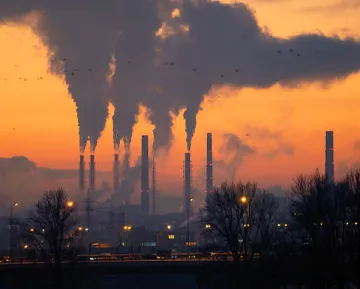
I consider myself an avid supporter of climate justice— after all, if I weren’t, I would not be interning for the Sierra Club. But being so passionate about climate justice means I can go down rabbit holes of information on the horrifying things powerful groups have done to make it difficult for us to protect the resiliency of our ecosystems. One example of this is Big Oil. Big Oil, referring to a collection of international oil monopolies such as BP, Shell, or Chevron, have had a stronghold on global politics and economics ever since the Industrial Revolution. These companies’ only goals are to keep their profits up, but at what expense?
The environment of course.
Today, I will share some of the horrifying ways oil companies have manipulated public perception, research, and politics, through both money and misinformation. I split this into three sections plus a conclusion, each section giving some brief findings that I collected when writing a research paper on this topic last year.

Liar, Liar
Bottom line: Oil companies are like a toxic ex-gaslighting (no pun intended), lying, being non-committal, and making false promises.
In 2024, Congress Democrats in the Senate Budget Committee and House Oversight committee conducted a hearing on how oil companies have fueled the climate crisis in the last fifty years. The findings were shocking. These oil companies may have known as early as 1959 about the climate crisis, but chose to do nothing about it. This hearing found that in the 1970s, Exxon recognized that “[t]he present trend of fossil fuel consumption will cause dramatic environmental effects before the year 2050” but instead “devised a campaign of climate change denial orchestrated to delay the enactment of greenhouse gas-reducing policies in the United States and globally” in 1988, in order to protect the company’s economic interests.
In 2015, at COP21, a United Nations summit on climate change, 195 countries joined the Paris Agreement, an agreement to keep global emissions levels low enough that the earth warms less than 2 degrees Celsius, therefore averting the potential of a climate disaster. After this, Shell, Exxon and Chevron made pledges to follow the Paris agreement by reaching net zero emissions by 2050. In 2020, BP made a similar pledge to reach net zero emissions. These pledges used language that sounded environmentally friendly but was ultimately misleading, in a process known as “greenwashing”. To no one’s surprise, these oil companies rolled back on these statements, exposing their own lies and lack of genuine concern for climate change. Specifically, BP revealed that the Paris agreement was meant to enable a “flexible transition from one political regime to the next” and that “no one is committed to anything.” Similarly, Shell stated that the “2050 target is currently outside our planning window,” and a study found that Chevron’s current emission patterns sets the world on course to warm 3.2 degrees, not 2 degrees, like they had previously pledged.
False Advertisements
Bottom line: Oil companies never wanted to transition to renewable energy.
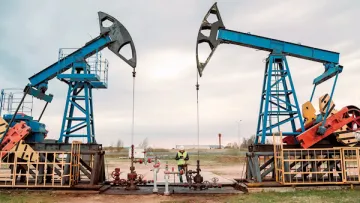
In recent years, oil companies have continued to roll back on their pledges. According to the Guardian, as of 2023 to 2024, BP, which had previously planned to cut 35 percent of their production, lowered that goal to 20 to 30 percent, and Exxon withdrew investments in algae, a (renewable) biofuel while doubling investments in shale oil. Shell also “cut production” just by selling off their oil fields to other companies rather than shutting them down.
Oil companies invest massive amounts in oil drilling, but much less in renewable energy. As of 2025, BP plans to cut 5 billion dollars in renewable energy investments and instead spend 10 billion more in oil and gas, which is a 60 percent increase which will produce 387,000 more metric tons of carbon dioxide annually. Shell spent $175 million advertising that they were developing research in algae fuel, but in actuality only spent $350 million researching it, and eventually slashed that funding, too.
The Man Behind the Curtain
Bottom line: If you’re a climate activist, you should probably learn what the API is, because they probably like the anonymity.
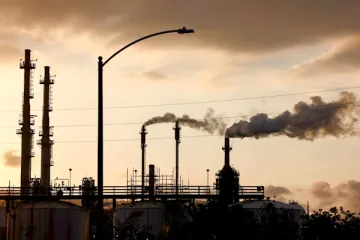
The American Petroleum Institute, or API, is the US’s oil lobby. In 2024, API spent over 6 million lobbying for the oil and gas industry. Furthermore, API’s CEO Mark Sommers pledged to block many of Biden’s environmental plans back when Biden was president. API has also committed actions such as filing lawsuits to prevent EPA electric vehicle legislation, and opposing offshore oil restrictions. Finally, the Institute, like the individual oil companies, claims that oil and natural gas is “essential to supplying energy” and will “continue to lead” even if every nation meets the goals of the Paris Climate Agreement. (This is not true— scientists have found that fossil fuels need to stay in the ground in order for the world to have even a 50 percent chance of meeting the Paris agreement)
Conclusion
Oil companies have committed corrupt, concerning actions that hinder environmental progress, and it all comes down to money and greed. The purpose of this is not to make you feel guilty for driving a gas car (our infrastructure is so car-centered and EVs are expensive!), or to feel overwhelmed and angry, but to be aware. Be aware that we’re not just fighting our past actions, we’re fighting present forces trying to escalate the climate crisis for profit.
Feel free to do some research yourself. I included my sources below. I especially recommend checking out the “Denial, Disinformation and Doublespeak” hearing I referenced earlier, as that is from where I sourced much of my findings.
Works Cited
“API Opposes Further Restrictions to Offshore Oil and Natural Gas Development.” API, American Petroleum Institute, 5 Jan. 2025, www.api.org/news-policy-and-issues/news/2025/01/05/api-opposes-further-restrictions-to-offshore-oil-and-natural-gas-development.
“API, Coalition Partners File Lawsuit to Protect American Consumers from EPA’s Electric Vehicle Mandate.” API, American Petroleum Institute, 13 June 2024, www.api.org/news-policy-and-issues/news/2024/06/12/api-coalition-partners-file-lawsuit-to-protect-american-consumers.
Becker, Cathy Cowan. “Megabanks Have Committed $6.9 Trillion to Fossil Fuels since 2016.” Green Business Network at Green America, Green America, 5 July 2024, greenamerica.org/blog/megabanks-have-committed-69-trillion-fossil-fuels-2016.
“Climate Action Framework.” API, American Petroleum Institute, www.api.org/climate. Accessed 15 Apr. 2025.
Hogue, Cheryl. “Most Fossil Fuels Must Remain in the Ground to Meet Paris Agreement Goals, Researchers Say.” Chemical & Engineering News, American Chemical Society, 10 Sept. 2021, cen.acs.org/environment/climate-change/fossil-fuels-must-remain-ground/99/web/2021/09.
“How Did Oil Come to Run Our World?” BBC Bitesize, BBC, www.bbc.co.uk/teach/articles/zn6gnrd. Accessed 15 Apr. 2025.
Laville, Sandra. “Top Oil Firms Spending Millions Lobbying to Block Climate Change Policies, Says Report.” The Guardian, Guardian News and Media, 22 Mar. 2019, www.theguardian.com/business/2019/mar/22/top-oil-firms-spending-millions-lobbying-to-block-climate-change-policies-says-report.
Noor, Dharna. “Big Oil Quietly Walks Back on Climate Pledges as Global Heat Records Tumble.” The Guardian, Guardian News and Media, 16 July 2023, www.theguardian.com/us-news/2023/jul/16/big-oil-climate-pledges-extreme-heat-fossil-fuel.
“The Paris Agreement.” United Nations Climate Action, United Nations, www.un.org/en/climatechange/paris-agreement. Accessed 15 Apr. 2025.
Root, Tik. “Oil Companies Are Dropping Renewable Goals - and More Importantly, Expanding Fossil Fuels.” Grist, Grist, 7 Mar. 2025, grist.org/energy/oil-companies-are-dropping-renewable-goals-and-more-importantly-expanding-fossil-fuels/.
United States, Congress, Cong., House Committee on Oversight and Accountability, Senate Budget Committee . Denial, disinformation, and doublespeak: Big oil’s evolving efforts to avoid accountability for climate change, Congressional Research Service, 2024, pp. 1–17. 118th Congress, 2nd session, report.