An Old Disease Decimates the Wolves of Yellowstone
Wyoming cuts its wolf hunting quota in half until researchers understand the implications of canine disease
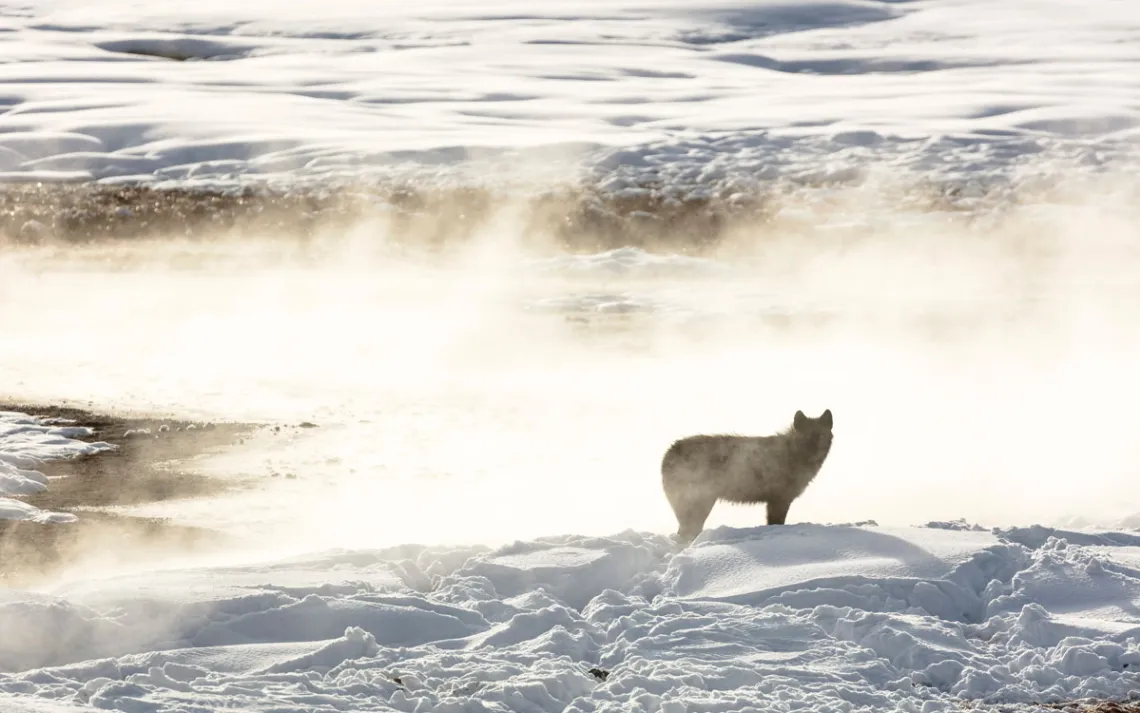
A wolf from the Wapiti Lake pack in Yellowstone National Park. | Jacob W. Frank/National Park Service via AP, File
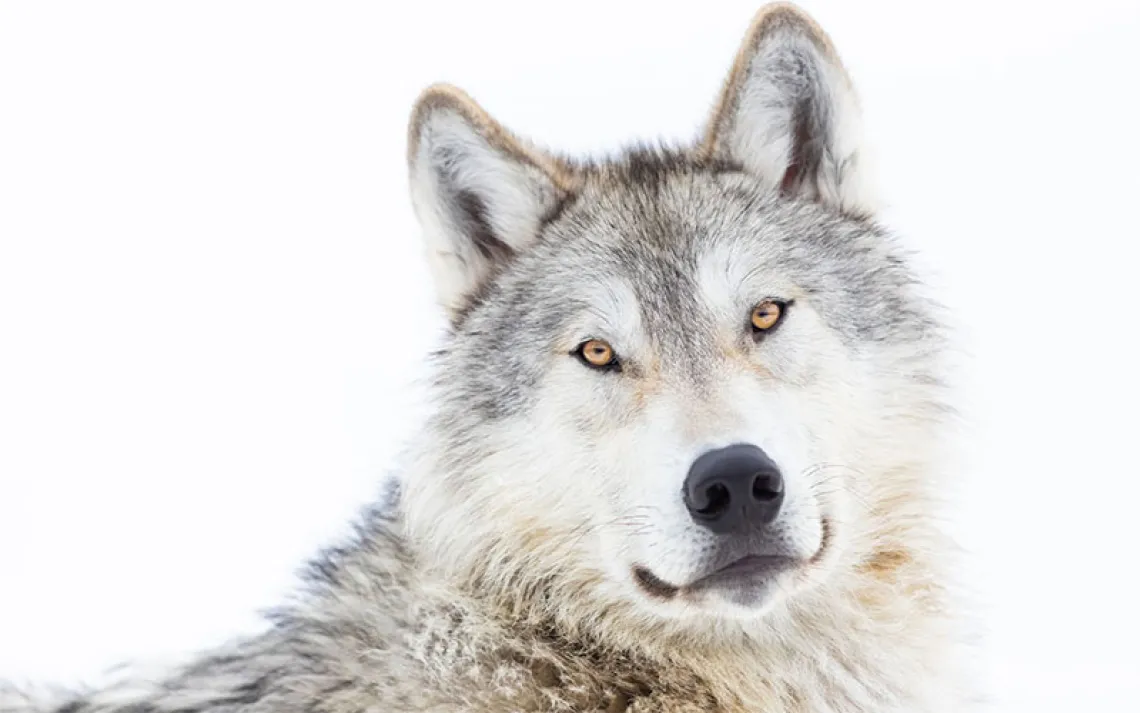
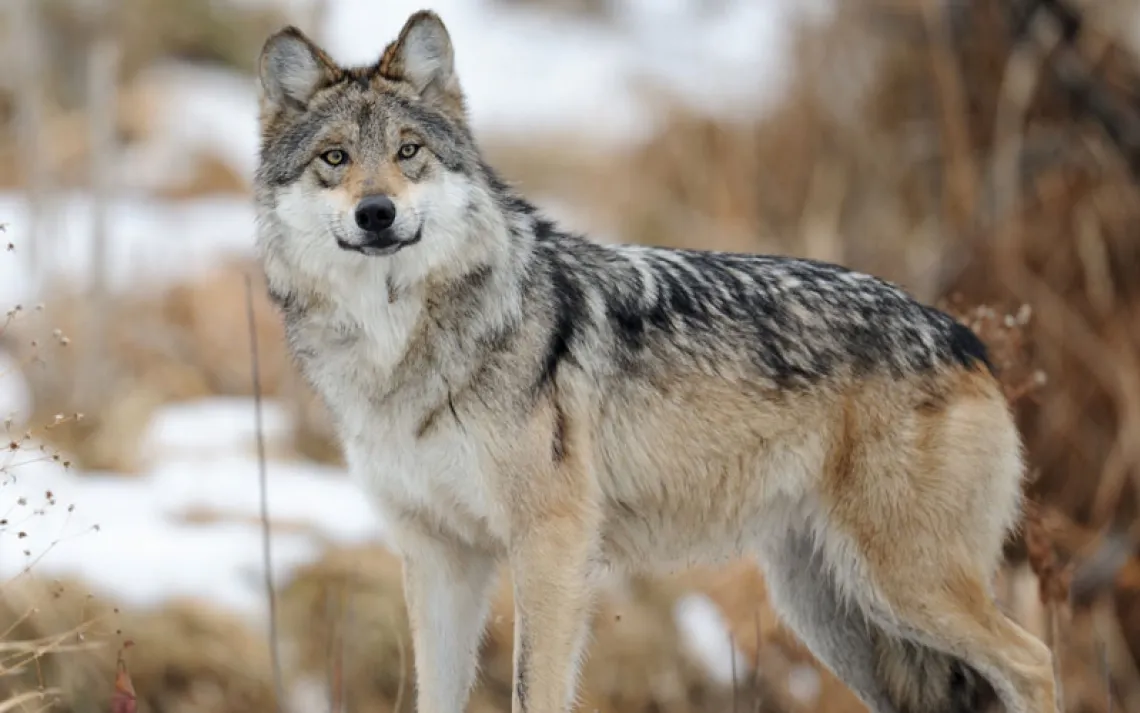
America's most famous wolves are dying at an unprecedented rate. According to Wyoming Game and Fish, the wolf population in Yellowstone National Park and the surrounding area has dropped to its lowest level in 20 years. Only 84 wolves remain in Yellowstone, down from 108 last year. Wolves elsewhere in the state fared even worse. In the Wolf Trophy Game Management Area (WTGMA), an area that is more than double the size of Yellowstone to the west and south of the park, biologists estimate that there are fewer than 132 wolves.
This is one of the lowest levels since wolves were reintroduced in 1995. The probable cause, say biologists, is canine distemper virus (CDV). They detected the disease in 64 percent of all wolves tested in the WTGMA.
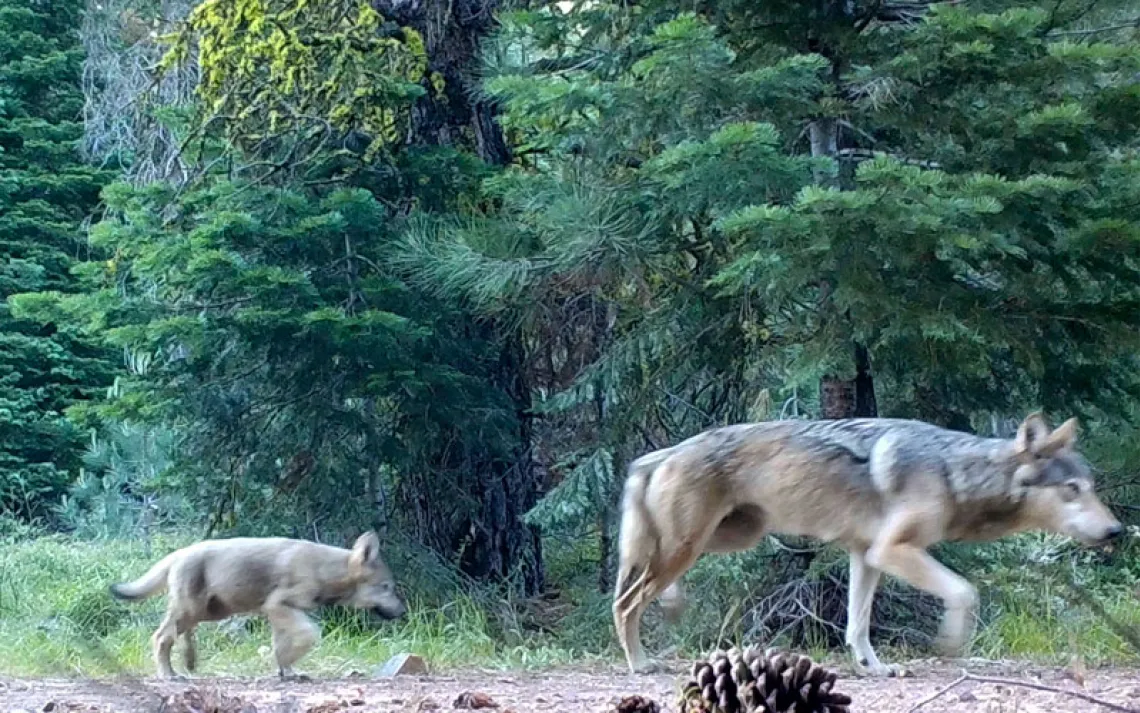
Wolf pups were particularly hard hit. Only about a third of the state's 87 documented pups born in 2025 survived to the end of the year. While adult wolves, like adult dogs, have a good chance of surviving the measles-like virus, it’s extremely lethal to pups, whose immune systems aren’t fully developed. In Yellowstone National Park, the percentage of surviving pups was just 17 percent, the fewest since 1996. And this number was almost certainly undercounted, researchers say, as aerial and ground monitoring can’t count pups born underground who don’t emerge from the den. The most dire news came from the Wapiti pack, one of the most studied packs of wolves in the world, in which all 10 of the pups born last year died.
Ken Mills, wolf management specialist with the Wyoming Game and Fish Department, said that what’s particularly concerning is the fact that past outbreaks have occurred at times when the wolf population was high and the disease could more easily spread through close contact. That’s not true this time, leaving researchers scrambling for answers.
“Last year’s density wasn't particularly high and would not have portended an outbreak to the degree that we measured,” Mills said. “So there are probably some other factors going on.”
Test results are expected later this summer, said Linda Veress, ranger and spokesperson for Yellowstone Public Affairs. If tests do confirm distemper and wolves survive, that could bode well for future population growth. “Any wolf that survived the current CDV strain has a high likelihood of now having immunity to that strain, increasing survival odds if exposed again,” Veress said.
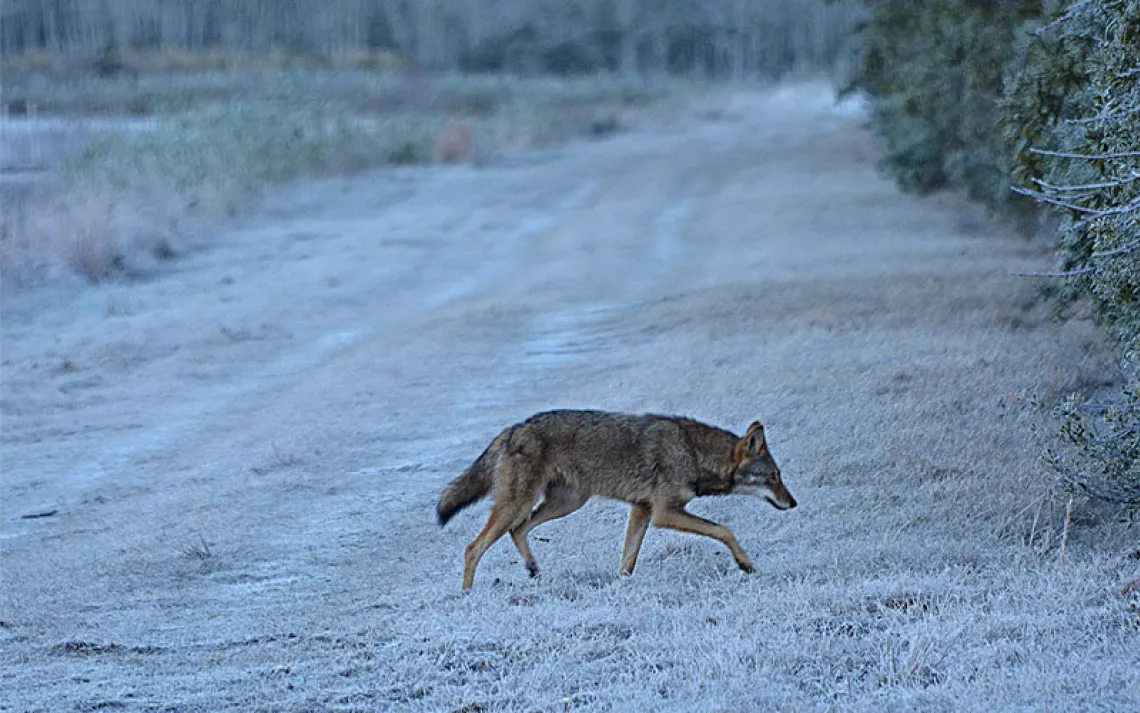
As for where the distemper outbreak came from, officials believe it most likely jumped from another infected species. Coyotes, foxes, bears, and smaller animals, including skunks, raccoons, and ferrets, are also susceptible to CDV, creating a reservoir from which the virus spills over in periodic outbreaks. “It doesn't take much if the conditions are right for it to begin passing back into the wolves and spreading,” Mills noted.
In a surprising twist, researchers discovered a few years ago that wolves with black coats have more robust immunity to distemper, and this protective genetic variation is causing the proportion of black wolves to increase across the West. The problem, though, say scientists, is that black wolves have lower reproductive rates, which has led Yellowstone's wolves to adopt an interesting evolutionary strategy in which black wolves are more likely to choose a gray mate and vice versa, keeping the balance about 50/50, but leaving fewer immune when the virus sweeps through.
While this year’s outbreak was severe, canine distemper virus isn’t the primary cause of death among Wyoming wolves; most of Yellowstone’s wolves die because of conflict with other wolves, or they are killed by hunters when they stray beyond the park’s boundary. Hunting and other human causes, such as vehicle accidents, account for 80 percent of Wyoming wolf deaths outside the park, according to Wyoming Fish and Game.
The first months of a wolf pup’s life are also extremely precarious; born blind, deaf, and without the acute sense of smell, they’re vulnerable to a host of factors, including weather, pack size, accidents, and availability of prey. The health status of their mother also plays a critical role, said Veress, who explained that while some of the packs that produced no pups may have been exposed to disease, others may have had mothers with failed litters because they were too old, too young and inexperienced, or couldn’t find enough food.
In an urgent response to the high 2025 mortality, Wyoming officials announced earlier this month that they will slash the number of wolves available to hunters to half of last year’s allowance. The proposed cap on the number of wolves killed during the 2026 hunting season will be 22. It’s the fewest number permitted since the state began allowing wolf hunting after wolves lost protection under the Endangered Species Act in 2012 and again in 2017 after a brief respite.
Currently, plans call for the hunting season to open on September 15 and run through the end of December, but that could change if numbers continue to drop. “We’ll be counting wolf pups this summer and trying to observe what reproduction looks like,” Mills said. “And that will give us a better idea going into the hunting season, whether it looks like we're on track or if the population is behind our expectations.”
Wolf populations are taking a hit in other parts of the West as well; the US Fish and Wildlife ordered Colorado to pause its two-year effort to reintroduce wolves to the Southern Rockies, claiming that the state failed to file the correct paperwork to obtain wolves from outside the US (Colorado had planned to get its next group of wolves from British Columbia). The beleaguered program was under fire after only 12 of the 25 wolves reintroduced in 2025 survived to the end of the year, the rest killed by ranchers, wildlife agents, cars, and traps. The program’s overall survival rate currently stands at 61 percent, below the program’s announced 70 percent minimum success rate.
Meanwhile, Idaho’s wolf population has declined from 1,550 in 2021 to 1,235, according to the most recent estimates, largely due to increased legal hunting. The state has a target of reducing the statewide population to 500 wolves. And in neighboring Montana, in 2021, state lawmakers passed a host of measures that greatly liberalized wolf hunting. Now, hunters are allowed to use night-vision goggles, the hunting season has expanded by a month, and the number of wolves an individual hunter can kill has increased.
In other words, disease may be the least of wolves’ worries.
However, a population drop like this year’s, due to CDV, is unlikely to have a lasting impact on Wyoming’s wolf population. “If you look at what’s occurred in Yellowstone over the last 30 years, each time distemper recurs, it’s a one-year outbreak, and the population moves on,” Mills said. “And that’s what we’re expecting for the wolf population outside Yellowstone too—they shouldn’t miss a beat.”