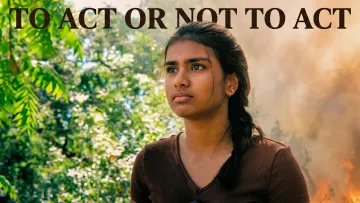
What happens when Shakespeare’s most famous soliloquies are given new meaning by a generation facing a rapidly changing climate?
That’s the idea behind the Shakespeare Climate Action Project, a new project featuring student interns performing contemporary adaptations of four of Shakespeare’s great speeches. Four hundred years ago, Shakespeare wrote about human blindness, ambition, and consequence. Today, those words can sound less like history—and more like a warning.
The project began with Hamlet’s “To be, or not to be,” transformed into “To Act, or Not to Act,” a meditation on the consequences of climate inaction. The second, adapted from Macbeth’s “Tomorrow, and tomorrow, and tomorrow,” explores what happens when tomorrow becomes an excuse for putting off action today.
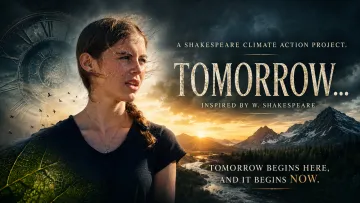
From the beginning, the project was a creative collaboration between the student interns and me. I had some background in Shakespeare from my years teaching at Silverado Middle School, where my students and I performed several Shakespeare plays. For these climate adaptations, we held a few rehearsals together, then took the cameras outdoors and into the community to shoot the scenes. The students weren’t simply performing someone else’s script—they helped bring these centuries-old words into a very contemporary conversation about climate change. Their passion about the subject comes through.
Both films—about four and a half minutes each—have now been completed and feature our talented student interns performing outdoors amid the landscapes they are helping to protect.
Watch the videos:
To Act, or Not to Act
Tomorrow, and Tomorrow, and Tomorrow
Two more adaptations are planned: King Lear’s “Blow, winds, and crack your cheeks” and The Tempest’s “Our revels are now ended.”
There is also a larger idea behind the project. We are exploring the possibility of bringing the four films together with short interviews with the student performers and other connecting material into a half-hour documentary for public television. The individual monologues, however, will remain stand-alone films that can be shared in schools, at community events, and through social media.
The goal is not simply to put Shakespeare into a climate-change setting. It is to ask whether words written four centuries ago can help us see our own choices—and our relationship with the natural world—in a different way.