The rivers flow not past, but through us, thrilling, tingling, vibrating every fiber and cell of the substance of our bodies, making them glide and sing.” John Muir
I remember looking over the old bridge on my street and being struck with awe. Swimming beneath me was an extraordinary Chinook salmon run. Jumping over rock structures and ferociously swimming against the current head-on, these fish had journeyed from beyond the Golden Gate Bridge and upstream to the freshwater river I had grown up alongside. I stood there in astonishment to realize that something so remarkable was happening just beyond my home.
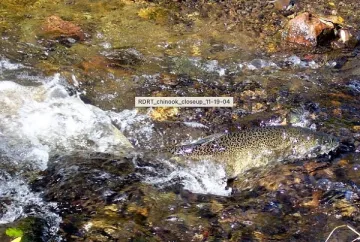
Growing up in Calistoga, the Napa River and the wildlife it supports have always been a part of my surroundings. Whether it is by the pack of yipping coyotes dashing across the yard, the pair of snow-white egrets wading through the marshes, or the lone red-tailed hawk soaring overhead, the Napa River reminds us that even in the places we know best, there is a living world that exists beyond our attention. It was this salmon run that changed my awareness.
These fishes' journeys depend fully on adequate spawning grounds and the ability to move freely between saltwater oceans and freshwater rivers. It is particularly amazing how these fish, after spending their adult years at sea, can find their way back to the small freshwater streams in which they were born. However, this natural cycle is fragile and easily susceptible to human interference. Barriers, dams, and bridges can have cascading negative effects on the fishes’ abilities to migrate home and reproduce.
However, these challenges have not gone unnoticed. All across the Napa Valley, restoration projects have been underway, working to reconnect these salt and freshwater ecosystems. Recently in St. Helena, the Sulfur Creek Fish Passage Restoration successfully removed a failed fish ladder and bridge, restoring more than three miles of suitable habitat for native fish species. Now, hopes are high for the gradual return of native trout and salmon to the local valley and strong fish runs this late fall and spring. For more information on the Sulfur Creek restoration, click here.
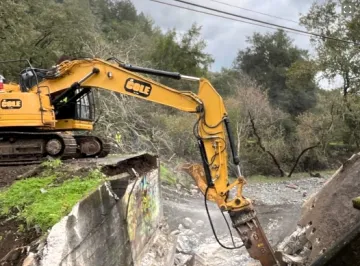
Beyond St. Helena, restoration efforts are being made across the county. The Napa County RCD was recently awarded $440,000 from a grant and plans on restoration of approximately 100 acres of wetland habitat alongside Suscol Creek. Through this process, the organization hopes to remove a concrete dam along the creek, opening up 1.5 miles of steelhead trout habitat and securing a clear passage for these migratory fish to travel through. On a larger scale, another exciting effort is underway. The RCD’s Watershed Fish Passage Program received a whopping $6.7 million from NOAA (National Oceanic and Atmospheric Administration) and another $900,000 from the California Wildlife Conservation Board. This restoration program is targeting the removal of five high priority artificial fish barriers in the county, with the intent on restoring connection between the local waterways and the Pacific Ocean for Napa’s four native anadromous fish: Steelhead trout, Chinook salmon, Pacific lamprey, and River lamprey. Though at different scales, these efforts share the same goal: restoring the complex and essential ecosystems that countless species count on for their survival.
Restoration requires great patience, as it takes years of planning, research, and collaboration to recognize that ecosystem restoration is a shared and human responsibility. While the effects of these efforts may not be immediate, it is small progress that holds the power to restore the waterways to what they once were. Environmental responsibility does not necessarily begin with clear understanding or ambition. For me, it began with standing on a bridge and watching dozens of fish swim beneath my feet. That one moment opened my awareness to the remarkable cycles and systems of life that had previously escaped my attention. It also presents a valuable thought: perhaps it is the moments where one changes their perspective that real progress begins. Maybe it is then we can realize our home is more than where we live, but something worth protecting and fighting for.