 The Magazine of The Sierra Club
Flowers May Dominate the World One Day
Here's why
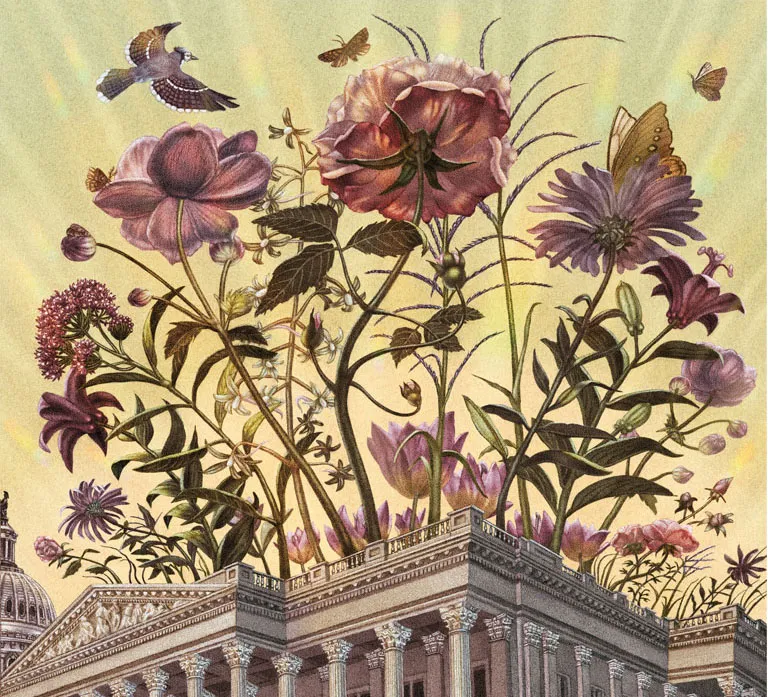
In the United States, fall is a political season. It’s also a blooming season. Depending on where you live, your days may be brightened by the yellow plumes of goldenrods; the purple, pink, and white bursts of asters; or the hardy magenta bouquets of tall ironwood. During an early-autumn stroll in a shady eastern forest, you might spot a narrow, two-foot-high stalk hung with faded purple flowers resembling leggy insects. This is the crane-fly orchid, one of the plainer members of the sprawling orchid family and, to author David George Haskell, an exemplar of the revolutionary potential of flowers.
To humans, the flowers of the crane-fly orchid are inconspicuous; we spot the plant more easily in winter, when it unfurls a single dark-green leaf to catch the scarce sunlight. To owlet moths, however, the mild scent of crane-fly orchid blooms is a loud and clear promise of nectar nearby. When a moth uncoils its proboscis and begins to sip from a crane-fly orchid, as Haskell writes in his book How Flowers Made Our World, the distinctively asymmetrical structure of the flower nearly guarantees that one of the moth’s eyes will collide with a very sticky pair of pollen sacs. If the moth, undeterred, visits another flower, it may encounter petals positioned to slap its other eye with pollen. Haskell reports that Tennessee photographer Ken Childs has documented owlet moths carrying more than half a dozen sacs glued to each eye. Temporarily dimmed vision is, apparently, a small price to pay for such delicious drinks.
Later this fall, when the crane-fly orchid’s fruit pods mature and dry out, they will split and release their tiny seeds, sending thousands of embryos into the wind. Those that land on decaying wood will recruit a new set of helpers, drawing nutrients from strands of wood-digesting fungi that enter through its root hairs and coil within its cells. Some crane-fly orchid embryos depend on these fungi for years, sometimes repaying them with sugars or other nutrients.
In these intricate interactions, is the crane-fly orchid practicing cooperation or exploitation? “We cannot spin a simplifying moral conclusion from orchid lives,” Haskell cautions. But we can gape at the evolutionary creativity of the orchid family: Its seemingly infinite variations on what Haskell describes as “deep relationship and extreme specialization” have made orchids, by most counts, the most species-diverse plant family on Earth.
Haskell, a biologist beloved for his lyrical writing in books including Sounds Wild and Broken and The Forest Unseen, is well aware that flowers know neither morality nor political party. But How Flowers Made Our World is nonetheless a political project, a call to look closely at the lives of flowers—rare and weedy, wild and cultivated—and draw inspiration from their transformative force.
The first traces of flower pollen appear in the fossil record about 130 million years ago. By a hundred million years ago, Haskell writes, flowers “were the foundation of most habitats on land.” This takeover, Haskell argues, was the result of savvy networking. When flowers began to attract moths, butterflies, and birds with sweet scents and bright colors, they turned onetime plant predators into plant partners, triggering the rapid diversification of both flowering plants and their pollinators. Our hominin ancestors were drawn out of the forests and onto the savannas—partly because of grasses, the humblest of flowering plants—where they began to distinguish themselves by controlling fire and making tools. Later, humans domesticated grass species for agriculture, distributing them around the world.
“Today, 90 percent of all plant species on the planet are flowering plants,” writes Haskell. “Without them, humans could not have evolved, nor would we feed ourselves today.”
And yet, Haskell points out, Western cultures generally overlook or underestimate flowers, dismissing them as decorative, fragile, or otherwise stereotypically feminine. Natural history museums, while celebrating the “Age of Dinosaurs” and the subsequent “Age of Mammals,” reserve little fanfare for flowers, which not only survived the mass extinction event that killed the dinosaurs but also thrived soon afterward. They may well outlive our own species, Haskell imagines, and adapt to a vastly different planet. “It is their genius to make the world productive, diverse, and life filled,” he writes, “usually through odds-defying acts of physiological nimbleness and cooperative work with others.”
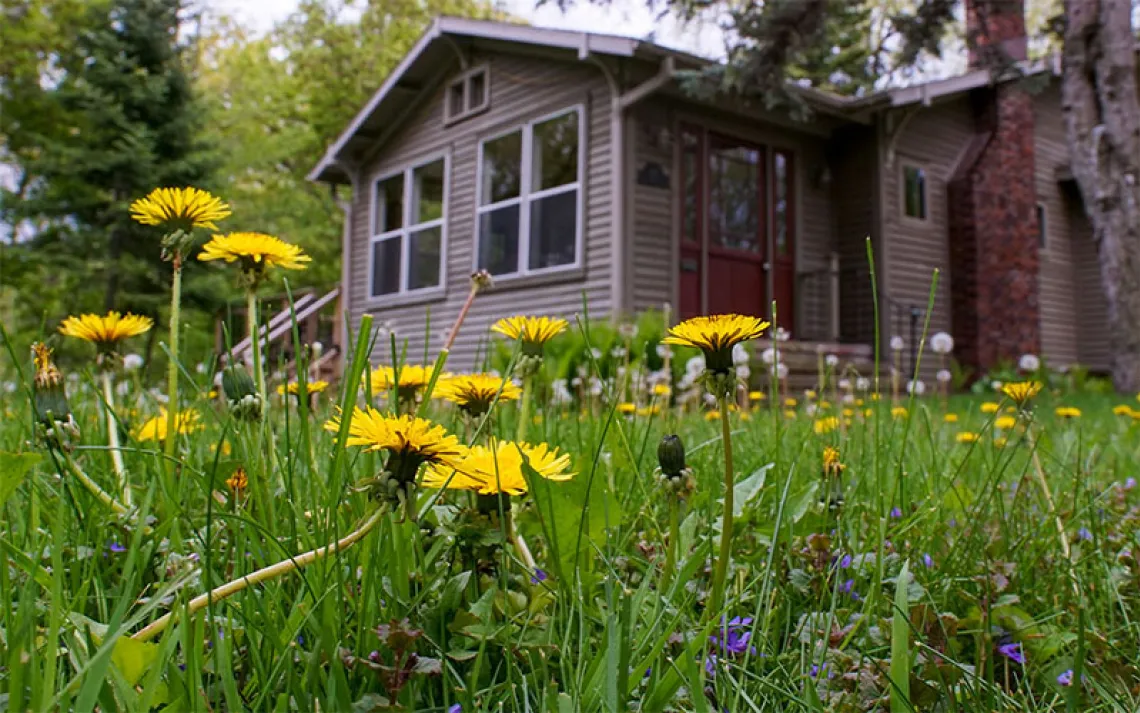
During his botanical travels, Haskell paid a visit to the Brooklyn Museum, which in recent years has converted the strips of lawn near its front entrance into garden beds thick with wildflowers. The flowers bloom throughout the growing season, uplifting the museum’s hundreds of thousands of annual human visitors and providing food to local and migratory insects and birds.
Having warned that flowers themselves follow no moral code, Haskell observes that flower gardens reflect—and even create—human values. The formal gardens of French kings were an expression of monarchical power, while publicly accessible, ecologically savvy gardens like the Brooklyn Museum’s express a more democratic impulse. As Rebecca McMackin, a designer of the museum’s garden, puts it, “Everyone should have access to butterflies and birdsong.”
Another champion of the world-changing potential of gardens is the renowned scientist, author, and Potawatomi citizen Robin Wall Kimmerer, who started Plant Baby Plant in 2025 in direct response to the political slogan “Drill, baby, drill.” Through the initiative, she hopes to grow support for community gardens and foster connections among gardeners. By doing so, Kimmerer is building a grassroots movement that not only works to protect, steward, and restore the land it cultivates but also raises a collective “garden-gloved middle finger” to those who threaten to destroy it.
During a Plant Baby Plant event in Portland, Oregon, in spring, Kimmerer visited the University of Portland’s Student-Led Unity Garden (SLUG) Project, which since 2007 has been growing organic flowers, fruits, and vegetables on plots overlooking the Willamette River. The day was gray and wet, and a stiff wind threatened to topple the white canopies that student groups and local nonprofits had set up for the day. Attendees—student gardeners and their friends, neighborhood residents, fans of Kimmerer—shivered in brightly colored rain gear, but the eagerness for her message was palpable. “My invitation to you is to plant a flag; plant your feet,” Kimmerer said when she stepped up to the microphone. “No more ‘Drill, baby, drill.’” On cue, her listeners responded: “Plant, baby, plant!”
Haskell would be pleased, no doubt, by this scene of persistence and resolve, so different from the shrinking-violet flower stereotypes he decries. To Kimmerer and her allies, flowers are vivid symbols of creative resistance. No matter how we choose to see them, however, flowers will continue to exercise their singular genius, networking with their fellow species to further life on Earth.
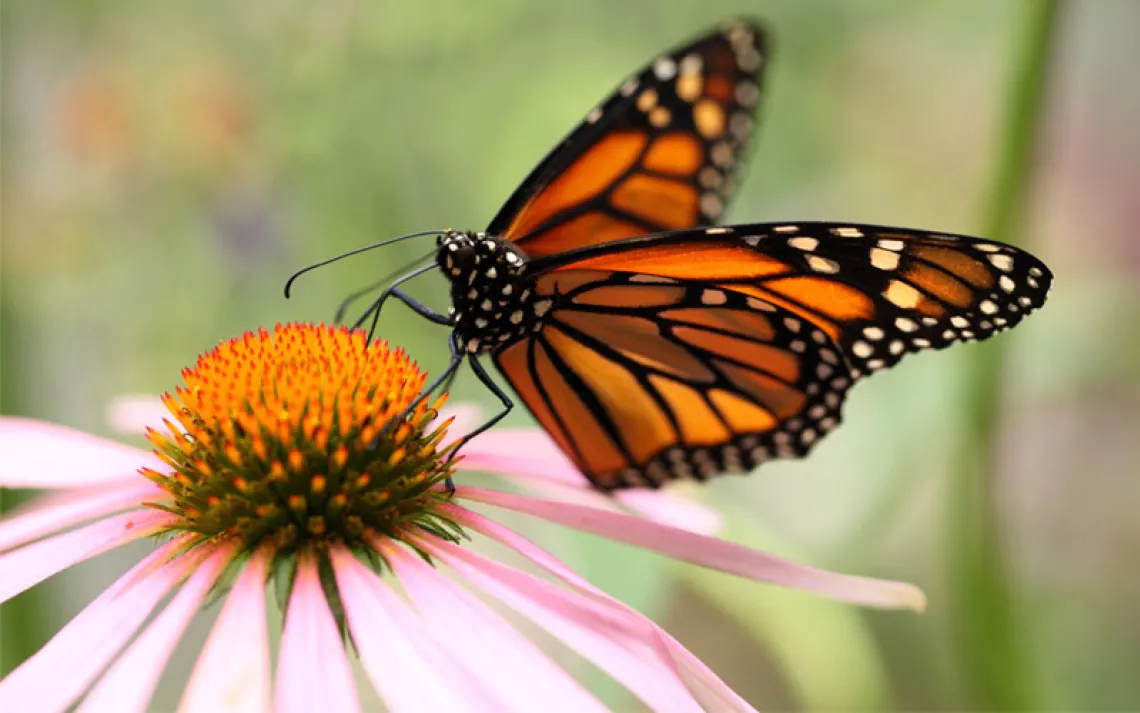
In mid-March, researchers in Mexico reported a bump in the number of monarch butterflies living in the patches of high-elevation fir forest where many of North America’s monarchs spend the winter. Their numbers remain worryingly low overall, because of both habitat loss and worsening climate extremes, and experts say that a spate of good weather is likely the main reason for this year’s increase. They also say that flower cultivators across the continent can lend monarchs a gloved hand.
In recent decades, butterfly advocates have encouraged gardeners to plant the native milkweed species that monarchs need to shelter their eggs and feed their caterpillars—along with a selection of those nectar-bearing, fall-blooming flowers that monarchs need to fuel their long migration south, and which you may now be enjoying on your daily walks. If these efforts are beginning to pay off, gardeners and their flowers are engaged in what sounds a lot like a revolutionary act: helping monarchs to keep gliding across national borders, crossing and recrossing the political divisions among us.