The Future of Conservation: Indigenous Ways Meet Western Science
Collaboration and co-stewardship are bringing positive change across the country
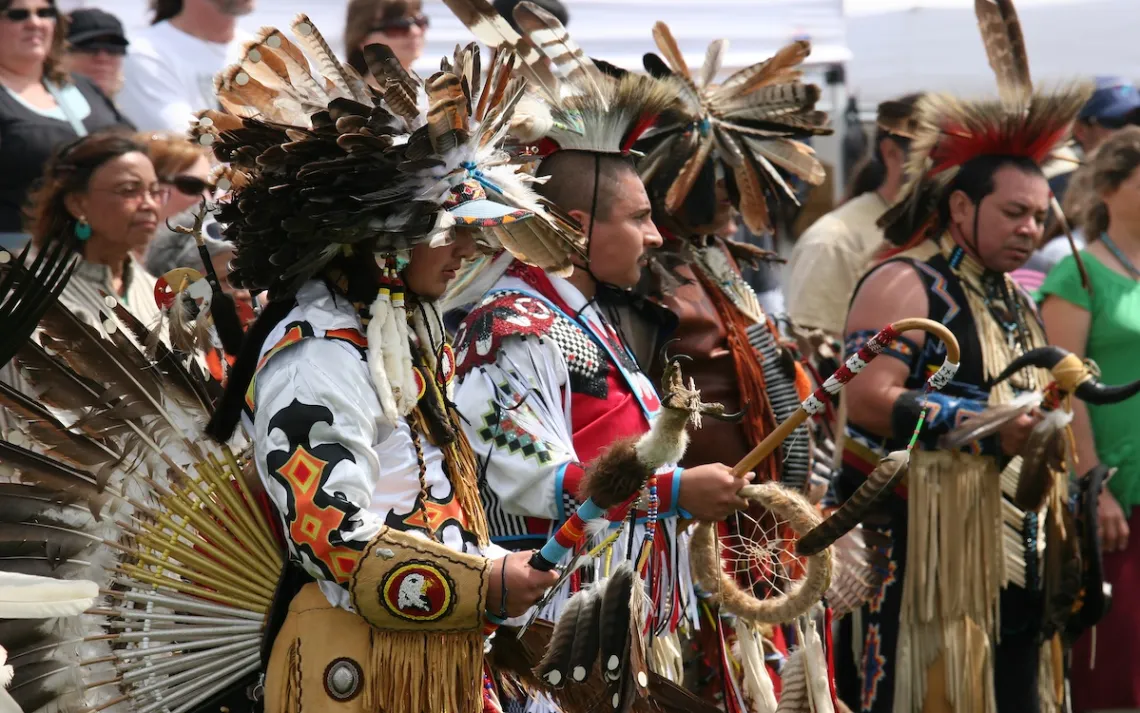
Chumash tribal members in ceremonial clothing. | Photo by Salameh Dibaei/Getty Images
High in the mountains beyond Crested Butte, in the inimitable river valley of Gothic, Colorado, the Rocky Mountain Biological Lab (RMBL) is home to one of the most prolific environmental research stations in the world. The lab—which specializes in providing support, training, and resources to scientists studying local ecosystems—has also become a pivot point for another kind of inquiry: How can conservation techniques and principles evolve and benefit from Indigenous ways of knowing?
Indigenous perspectives—and the connection they have with nature—are frequently ignored in the domain of scientific research. RMBL, as well as many other research stations, are working to change that. Researchers there are cultivating opportunities for collaboration between conservation scientists and their Indigenous counterparts.
That process begins with building trust, says John Hausdoerffer, RMBL director of science communication and storytelling. Trust must be built, relationships strengthened, and respect exchanged before either party can forge ahead. “It’s not just merging ways of knowing, it’s creating new intersectional ways of knowing,” Hausdoerffer says, referencing Potawatomi author Robin Wall Kimmerer’s Braiding Sweetgrass.
RMBL began collaborating with the Ute Museum in Montrose in 2022 on a display about local Indigenous history and culture for the visitor center. The lab invited Acoma Pueblo and Southern Ute poet CMarie Fuhrman, Ute Mountain Ute leaders, and other regional Ute representatives to build relationships with researchers and explore how Ute knowledge systems might integrate with RMBL science.
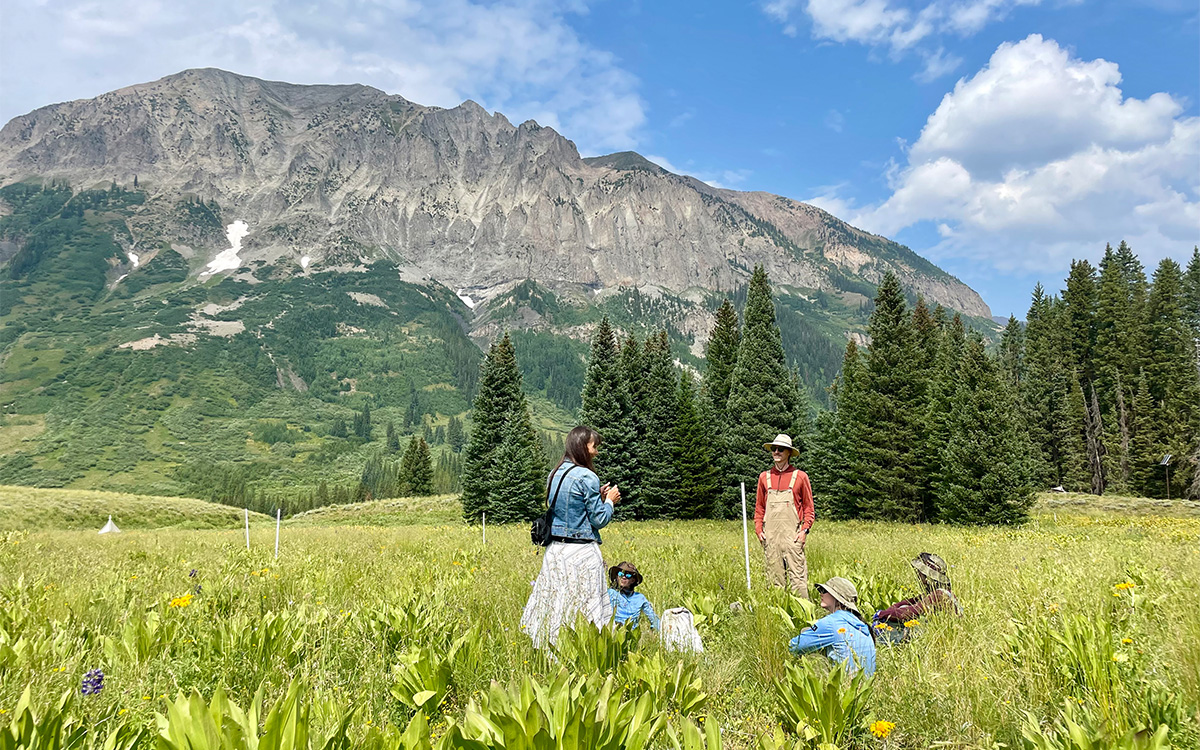
CMarie Fuhrman learns about plant phenology from RMBL researchers. Photo courtesy of John Hausdoerffer.
Fuhrman cautioned researchers at a public event this summer, “Keep paying attention as scientists, but also relate as persons, as relatives. With that common ground, we can build relationships across cultures here at RMBL.”
“Cultural knowledge is an extremely important component to complement science,” says Kenneth Kahn, tribal chairman for the Santa Ynez Band of Chumash Indians on the central coast of California.
RMBL is just one example of where science and Indigenous knowledge are meeting at research labs across the continent.
In California, the National Oceanic and Atmospheric Administration (NOAA) designated the Chumash Heritage National Marine Sanctuary in 2024, the first-of-its-kind project co-stewarded by NOAA and a council of Chumash after a group of local tribes and Indigenous groups nominated the region for a sanctuary. The two groups forged plans for developing research and conservation in partnership, plus exhibits and signage to protect and inform visitors within the 4,543-square-mile area of ocean along the southern San Luis Obispo and northern San Barbara county coasts.
“The Chumash have been the stewards of this coast for thousands and thousands of years, really since time immemorial,” says Paul E. Michel, senior adviser of NOAA Sanctuaries West Coast Region and the Chumash Heritage National Marine Sanctuary. With the sanctuary, conservation leaders saw an opportunity to steward a wild place with the original peoples who are Indigenous to that place, while building trust and understanding between two cultures that have often clashed when it comes to environmental protection.
At Stanford University, Sibyl Diver, a lecturer at Stanford’s Earth Systems Program and Environmental Justice Working Group co-director, focuses on community-based research. That includes work with the Karuk Tribe in the Klamath River region near the border of Oregon and California where collaboration and community connection led to dam removal and the return of spawning salmon to waterways, a revitalization that represents the interconnectedness of ecology and culture.
At Jasper Ridge Biological Preserve ('Ootchamin ‘Ooyakma) in California, Stanford’s School of Humanities and Sciences partnered with the Muwekma Ohlone Tribe of the San Francisco Bay Area in 2024 to return low-intensity prescribed burns to the region after extensive research with Western and Indigenous researchers. Controlled burning, an Indigenous cultural and stewardship practice for millennia, was long ignored in the United States by agencies managing the nation’s forestlands.
And in British Columbia, Canada, in 2011, the Xáxli’p First Nation community worked with the Canadian Ministry of Forests, Lands, and Natural Resource Operations to establish and take over forest management of the Xáxli’p Community Forest, where Xáxli’p knowledge helped shape forest policy.
These collaborative co-stewardships are a relatively new way of approaching conservation, Michel says. “There will likely be missteps along the way,” he says. “But we will move forward together.”
“We want this to be a place of belonging,” Hausdoerffer says. “For every way of understanding place.”