Americans' Obsession With Fast Fashion Is Fueling Africa's Textile Waste Crisis
Can more circular and regenerative fashion solve the problem and reach the people who need it most?
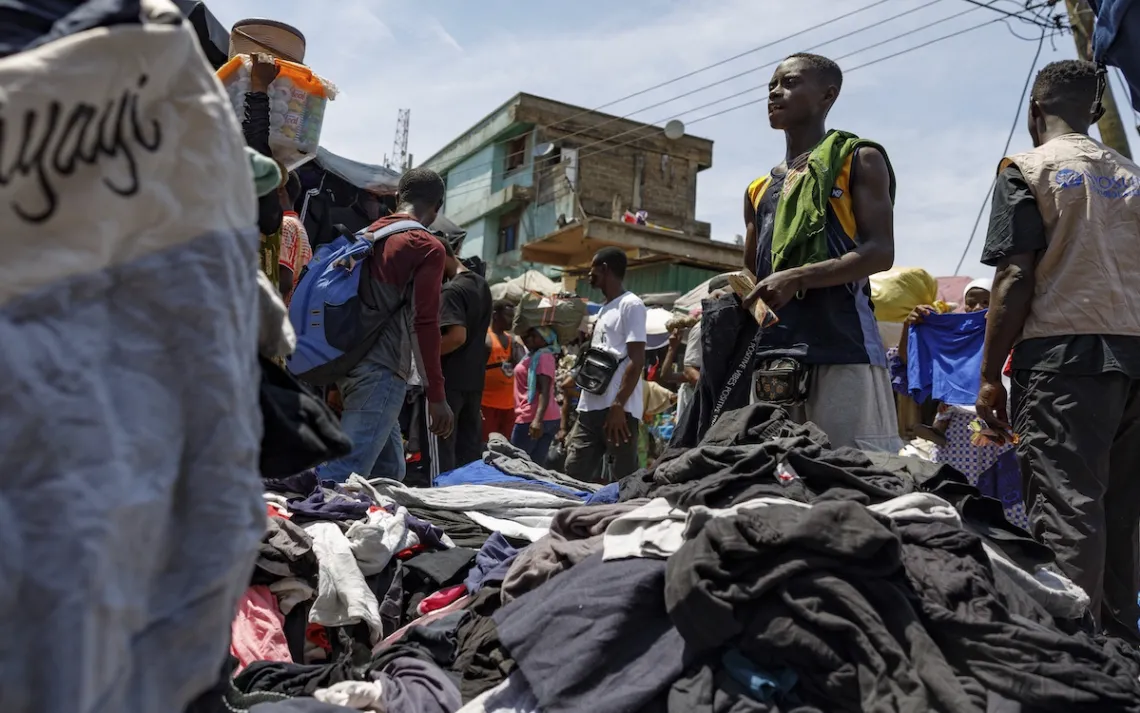
Secondhand clothes at Kantamanto Market in Accra, Ghana. | Photo courtesy of AP Photo/Misper Apawu
Americans are buying more clothes than ever before. The average shopper in the US purchases 53 new garments a year, four times more than in the year 2000. Sixty-five percent of that is discarded within a year. Many of these clothes are made of plastic-based fabrics, such as polyester, nylon, and spandex. These can release harmful microparticles, they don’t biodegrade, and they are nearly impossible to recycle. So where do they end up?
In 2023, Americans exported over $1.09 billion worth of used clothing, making it the world’s top exporter. A significant portion of that was shipped to secondhand markets in Africa, where it's fueling a mounting textile waste crisis. Kenya, Africa’s biggest importer, received $19.4 million worth of used clothing from the US that same year.
“The fashion system was built to produce, market, sell, and then forget,” said Nathalie Naina of Africa Collect Textiles (ACT), which collects over 3,000 pounds of textile waste weekly. “No one is thinking about what happens after.”
Not long ago, tossing clothes into a donation bin felt like the right thing to do. You cleaned out your closet, dropped off a bag, and imagined someone in need giving your old clothes a second life. The billion-dollar trade has also supported countless traders in markets like Kantamanto, in Accra, Ghana, and Gikomba in Nairobi, Kenya. But the reality is far more troubling. Local infrastructure in African countries is overwhelmed.
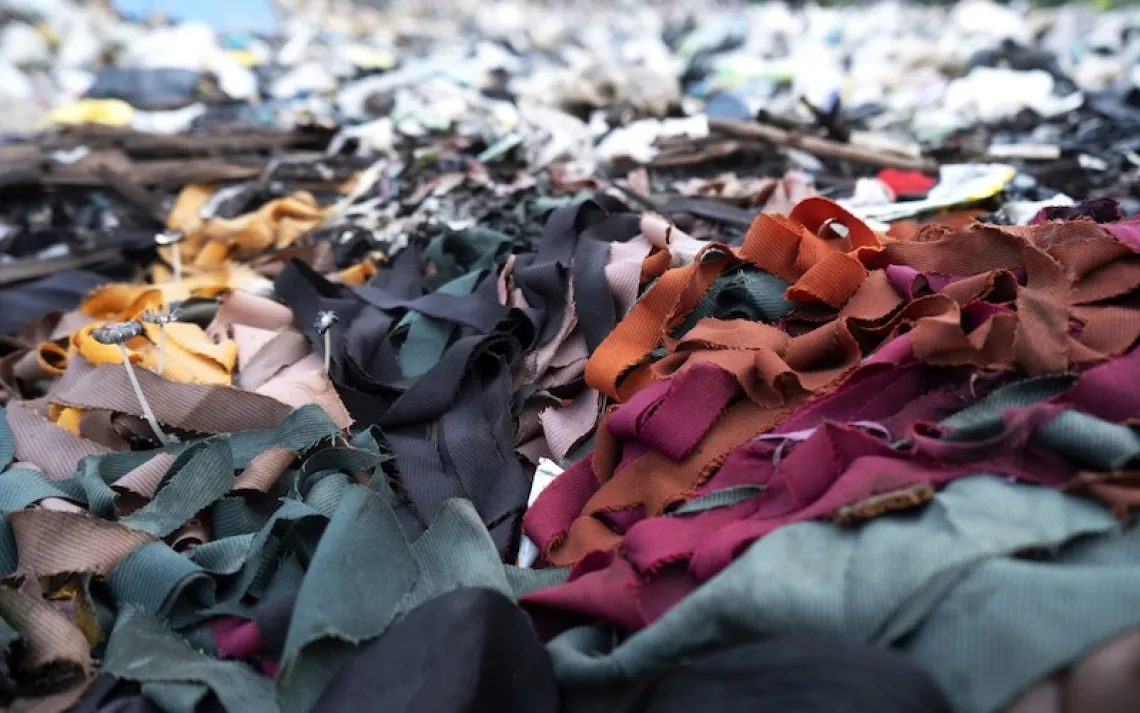
With few systems in place to sort or recycle the waste, countries like Ghana are left to shoulder the burden of disposal. The banks of Korle Lagoon in Accra, once a vital water source for the residents, are now choked with unused secondhand clothes. According to local fishers who once depended on the lagoon as a source of livelihood, their nets are more likely to catch T-shirts than tilapia. Nairobi River in Kenya faces a similar fate.
Much of this waste problem stems from the quality of the clothes, which has declined drastically over the years. Some of the garments that arrive go straight to dumpsites. Others end up in incinerators or get swept into nearby waterways. “We [traders] have to pay for that waste, whether it's sellable or not,” said Yayra Agbofah, who has worked in the Kantamanto Market for over two decades. “It’s an economic injustice.”
In response to that frustration, Agbofah founded The Revival, a community-based nonprofit that transforms unsellable secondhand garments into wearable fashion. The Revival collects textile waste from traders and reworks it into new designs. But these pieces aren’t just for sale. Agbofah also uses them to teach the community about how to prioritize a fashion system that favors both people and the planet.
Meanwhile in Kenya, a similar mission drives Maisha by Nisria, a regenerative fashion studio in Nakuru. Cofounded by Cynthia Mwangi, Maisha began as a youth training program and now creates fashion pieces from secondhand clothes. Unlike traditional sustainability efforts that aim to do less harm to the environment, regenerative fashion is about doing more good for both people and the planet. It starts with how we grow the raw materials, including cotton.
In regenerative agriculture, the goal isn’t just to grow crops but to take care of the soil using natural compost instead of chemical fertilizers, growing different plants together, and avoiding ploughing so the tiny living organisms in the soil can thrive. Healthy soil holds more water, supports biodiversity, and can even absorb more carbon from the air. When fashion uses materials grown this way—like regenerative cotton—and designs clothes to be reused, repaired, and eventually composted, it creates a full-circle system that gives back to the earth and to farming communities. In regenerative fashion, you can trace your clothes back to the farm that grew the material.
Although sourcing natural fibers such as linen or cotton can be difficult when working with secondhand materials, Maisha still tries to ground its work in the broader principles of regenerative fashion. The designers source materials from Gikomba and Africa Collect Textiles. They used to handpick fabrics. Recently, they’ve begun sourcing directly from secondhand bales, which are often filled with low-quality, damaged fabrics.
That constraint has shaped their design process. Unlike traditional fashion design, the secondhand clothes that Maisha works with must be washed, unseamed, deconstructed, and ironed. From there, the team painstakingly pieces them together into cohesive garments, a process that demands both innovation and care. When full garments can’t be salvaged, the designers turn the scraps into woven accessories. Even a tiny cut-off has potential.
Serving local communities
Studios like Maisha and The Revival have gained global attention, especially among conscious consumers abroad. Agbofah told Sierra that his main market is the United Kingdom. But despite growing international interest, they are still struggling to tap into local consumers. Now, regenerative fashion proponents are wondering whether they can scale their efforts to address the waste crisis while serving local communities.
Among their concerns is that the wider fashion industry is still grappling with shifting definitions around sustainability, which can be confusing for local consumers to keep up with. Terms such as sustainable, circular, eco-friendly, and now regenerative are often used interchangeably and sometimes misleadingly by brands as marketing tools to attract conscious consumers with little accountability. In September last year, Shein faced an antitrust investigation in Italy for presenting its “evoluShein” line as recyclable and sustainable. H&M’s “Conscious” collection was criticized for greenwashing when Norwegian regulators flagged misleading eco‑claims about water use and recycled fibers.
There are many examples of such incidents, which have made it even harder for local African brands to communicate their genuine efforts in a space dominated by bigger brands with greenwashed narratives. When I asked a couple of Kenyan shoppers whether they were familiar with any sustainability terms, most were more aware of recycling than with circularity, let alone regeneration. Even local designers are struggling to keep up. “This year is when I started hearing that we’re no longer talking about sustainability; it’s regenerative fashion. It’s probably harder for consumers,” Mwangi said.
I have also observed that while many African fashion brands that are labeled as regenerative are doing critical circular work, they’re still constrained by what’s available. Access to truly regenerative materials like organic cotton or hemp is limited, especially since the supply is coming from imported secondhand bales that are mostly made of nonregenerative materials.
Experts argue that for fashion to be truly regenerative, it’s not enough to upcycle or redesign waste. “They are getting rid of what’s in the landfills, which is great, but it’s not regenerative fashion,” said Lisa Kibutu, founder of Regenerative Fashion Collaborative Exchange (ReFaCe). “Regenerative design means sourcing regenerative materials, eco-designing the garment, and ensuring it has an end-of-life plan that nurtures the planet.”
While the terminology may feel new, the practices themselves aren’t. I, like many Kenyans, grew up in a household where mending clothes, repurposing old bedsheets to curtains, and handing down garments from one generation to another were simply part of life, long before circularity was a global buzzword. Unfortunately, this familiarity is often overlooked in branding, which means that many locals feel excluded from conversations they’ve already been part of for decades.
Another challenge is that for many local consumers, fashion is more about affordability than ideology. I met Angela Kahuru, an environmental advocate, at Nairobi fashion week earlier this year as she browsed a rack of repurposed denim jackets. She’d been a longtime follower of the brand whose clothes she was admiring. But when she checked the price tag—$150—she put the jacket back. “That’s half my salary,” she told me later. “And it wasn’t even priced in Kenyan shillings.”
To be fair, the price reflects the labor-intensive work involved. Upcycling a single item can take hours of manual labor: sorting, washing, deconstructing, and redesigning. Mwangi believes that transparency can help bridge that gap. She told me that while a jacket may cost $150, once consumers understand that behind that price is a story of salvage, innovation, and a devotion to circularity and solving the textile waste crisis, they may be able to appreciate the effort.
But even these designers admit that they can’t upcycle their way out of a broken fashion system. Circular and regenerative fashion initiatives in Africa remain limited in scope without government support, industry accountability, and the infrastructure to manage textile waste at scale.
A long-term solution
Many African countries remain stuck managing a long-term textile waste crisis without the tools to do it properly. In Kenya, most textile sorting is still informal and done by traders or waste workers in open-air markets without access to clean, dedicated facilities or specialized training.
But if properly resourced, Africa’s circular fashion movement could do more than just manage fast fashion’s excess; it could reimagine the entire system. Investment in clean sorting hubs, local fiber-to-fiber recycling—from waste pickers to upcycling designers—would shift the narrative from burden to leadership. Maisha by Nisria is already training the next generation of regenerative designers. The Revival is educating consumers to unlearn years of overconsumption, which could pave the way for a fashion landscape where even secondhand traders are encouraged to adopt more sustainable practices.
These efforts show the beginnings of something bigger: not just a patchwork fix, but a long-term solution built by the very people living through the crisis. With the right support, these African-led initiatives could spark a global reset rooted in repair, renewal, and real circular change.