A “Call to Action” in the Fight Against Plastic Pollution
According to the new book "The Problem With Plastic," collective action is key to solving the plastic crisis
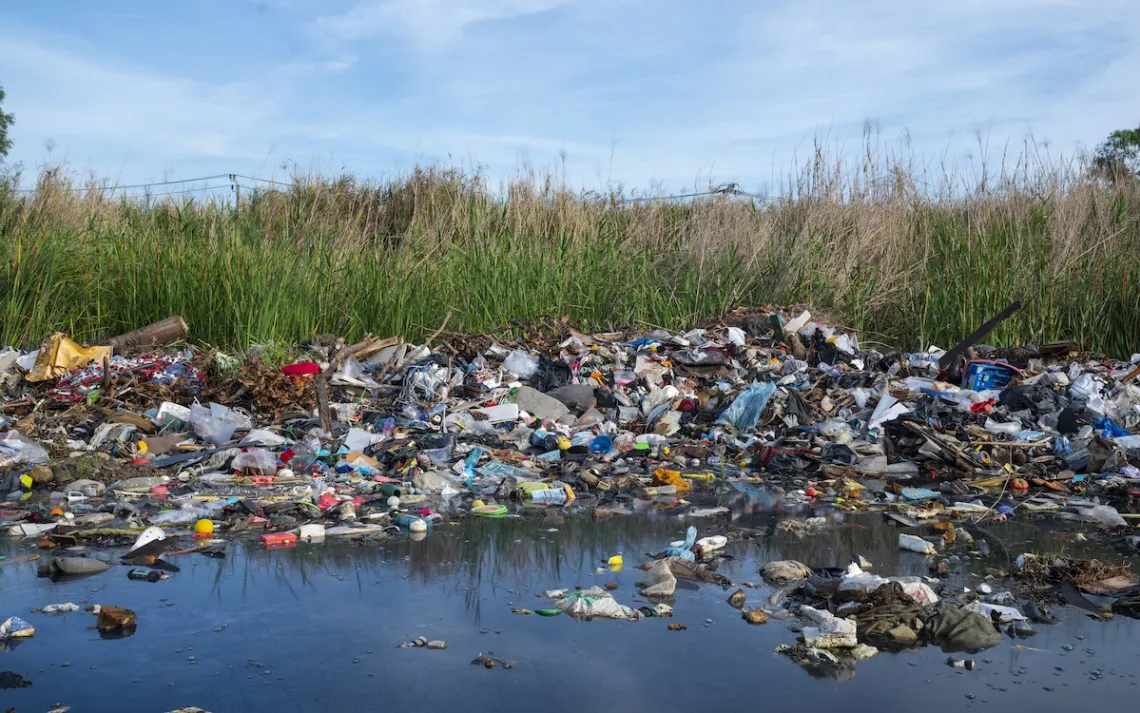
Photo by Witthaya Prasongsin/Getty Images
Plastic is ubiquitous in our modern society. It offers fleeting convenience but at an enormous cost to our health and the planet. As plastic production has skyrocketed over the last half century, so too has pollution and waste, contaminating oceans, soils, the atmosphere, and even our own bodies. Plastic waste production is set to more than double in less than 20 years.
According to Judith Enck, coauthor of the new book The Problem With Plastic, the plastic crisis is daunting but solvable through collective action.
“There is a way to get out of the plastic pollution crisis,” Enck, president of Beyond Plastics, told reporters during a two-day media briefing held at Vermont’s Bennington College in October. Formed in 2019 and based at the small liberal arts college, Beyond Plastics works to educate the public, policymakers, and the media about the plastic pollution problem and to build a movement to address the crisis head-on. That formula of education and activation provides the foundation for The Problem With Plastic. The book, coauthored with environmental journalist Adam Mahoney, “is really a call to action,” Enck said.
The Problem With Plastic is packed with facts that will startle even the most informed reader. Did you know, for example, that nearly half of all plastic ever created has been around only since 2007? Or that some 70 percent of our clothing is made with plastic polymers?
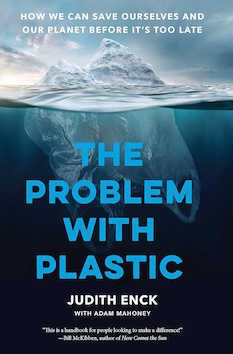
The nearly universal application of plastic to our everyday lives is at the root of a variety of grave health trends. Scientific studies show that tiny plastic particles have been found in virtually all parts of the human body, from the heart, blood, and lungs to reproductive organs and our brains. More research is needed to understand the full extent of the health impacts. Under the Trump administration, however, the federal government is dramatically cutting back on scientific and public health research.
Enck previously served as an EPA regional administrator during the Obama administration. “It is harrowing to see what is happening at my former agency at the EPA, where they are no longer enforcing environmental laws and are no longer committed to protecting public health and the environment,” she told reporters last month during a news conference. Recently, for example, the agency removed information about the anthropogenic causes of climate change from its public-facing website.
Plastics, which are derived from fossil fuels, are a significant contributor to the climate crisis. Total lifecycle greenhouse gas emissions of plastics are estimated to be four times those of the global aviation industry, and they are even on track to surpass emissions from coal in the US.
The bulk of plastics production is concentrated in low-income areas and communities of color, and this petrochemical pollution is an inescapable, and oftentimes deadly, burden for these communities. As the book explains, “Most people experience plastic in passing as a brief relationship with a throwaway item. The bulk of the consequences, though, are saddled upon the local communities where plastic is fracked, cracked, dumped, and burned: from the Indigenous, to the free towns, to the poor working class. In short, plastic kills.”
The Problem With Plastic recognizes multiple activists, mostly women, who are taking on the fight against plastics and the petrochemical industry in their communities. From Sharon Lavigne and Diane Wilson, who have pushed back against Formosa Plastics in their Gulf Coast communities, to Debby Lee Cohen, a mother of two school-age children, who led a campaign to ban polystyrene trays from NYC public schools, there are countless examples of courageous individuals who are leading the way toward a healthier, more sustainable future.
For those who are looking to reduce their own plastics exposure and consumption, the book offers helpful guidance. When going grocery shopping, use reusable shopping and produce bags. Carry reusable items like a water bottle, cutlery, straw, mug, and takeout container to cut down on single-use plastic. At home, conduct a “kitchen inventory” and try to replace as many plastic items as you can.
But the most impactful action, the book argues, is for people to get involved politically and work toward larger systemic change. “You can’t shop your way out of the problem,” Enck said. There are steps you can take in your personal lives. But we have little choice when we go to an American supermarket, there’s so much plastic.”
Tireless grassroots organizing and public pressure is needed to help push back, the book says.
“We need to challenge the powerful plastics industry and push for meaningful change that prioritizes our health, the communities sacrificed for plastic production, and the ecosystems that suffer as a result,” Enck and Mahoney write. “While we may not be able to eliminate all plastic overnight, we can make significant strides through thoughtful collective action.”