ENVIRONMENT EXPLAINED
What Does "Plastic Neutral" Really Mean?
Companies are aiming to reduce their plastic footprint with offsets. Environmentalists are skeptical.

Photo by Daniel Grizelj/Getty Images
A few weeks ago, while shopping in the grocery store, I noticed a bright-red label splashed across a container of white miso: “Now Certified Plastic Neutral!” I was familiar with carbon neutrality, but this phrase was new to me. What does "plastic neutral" actually mean? Is it a genuine step toward sustainability, or just greenwashing?
How It's Supposed to Work
Similar to the process of offsetting carbon dioxide emissions, companies track the amount of plastic they use, then purchase plastic credits that represent an equal amount of plastic waste removed from the environment. Companies such as Burt’s Bees, Hefty, SC Johnson, and miso-maker Great Eastern Sun partner with plastic crediting organizations like Plastic Bank and rePurpose Global, which collect plastic waste in areas of the world where it's a major environmental issue.
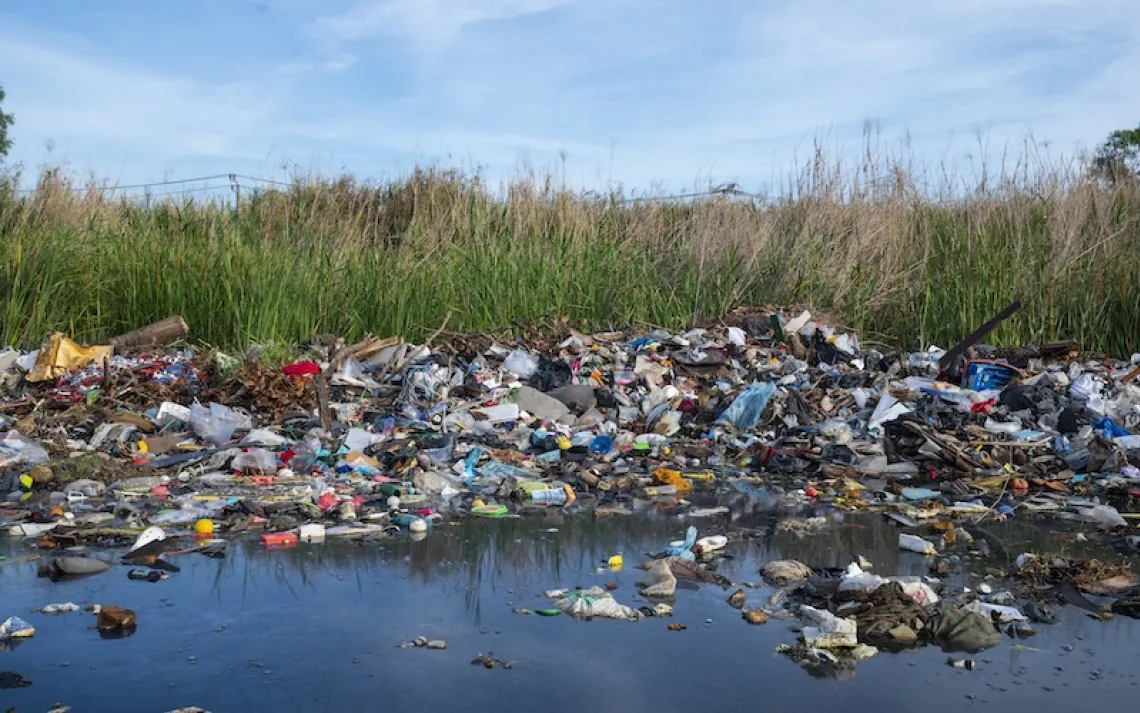
Plastic pollution is everywhere, but it severely impacts developing Asian and African nations. Vancouver-based Plastic Bank partners with communities in the Philippines, Indonesia, Brazil, Egypt, Thailand, and Cameroon. Local residents can register as collection members, gather plastic waste, and exchange it for money and social benefits. The goal is to create a “gig economy of recycling,” said cofounder Shaun Frankson.
Workers bring the plastic to a collection branch, where it’s handed off to a processing partner for cleaning. Then it’s sent off to manufacturers, where it’s made into other products, such as Windex bottles, Frankson said. It’s always sorted, he added, “It's never mixed plastic thrown in a warehouse.”
Does It Actually Work?
While neutralizing plastic production seems like a logical solution to the global plastic crisis, some critics argue that plastic neutrality gives companies a license to pollute, and it doesn’t get to the root of the problem. “It’s just perpetuating the system,” said Peter Blair, policy and advocacy director at the nonprofit Just Zero.
The human health and environmental harms of plastic don’t end when it’s removed from the environment, Blair said. After you collect plastic, “most of the harm has already occurred.” “You’ve extracted the fossil fuels; you have burdened our climate with greenhouse gases; you polluted communities with your refineries. The credit, the piece of paper patting yourself on the back for cleaning it up, did not erase those impacts.”
And it’s not just the creation of plastic that causes environmental harm. Once plastic is created, it can break down into smaller and smaller pieces, but it will never fully disappear. Plastic can take anywhere from 20 to 500 years to decompose, according to the United Nations, and it releases toxic chemicals and carcinogens along the way.
When plastic decomposes, it breaks down into microplastics that can end up just about anywhere—including many parts of the human body. While researchers are still exploring how microplastics negatively impact human health, some studies have suggested that they may be linked to cancer, fertility issues, and heart and kidney diseases.
“There’s never a good end of life for plastics,” said Aidan Maguire, coalition program manager at the Plastic Pollution Coalition. “Whether it’s in 10 years or 100 years or 500, they’re going to end up as pollution, whether it’s in our landfills, in our bodies, or in our oceans.”
Plastic neutrality doesn’t break this cycle, Maguire said, because it doesn’t force companies to change their business practices. “It’s the classic analogy of an overflowing bathtub. Plastic neutrality is paying an organization to come in with a mop instead of turning off the tap.”
Is Anyone Doing It Successfully?
Some companies acknowledge the limitations of plastic neutrality and use it as only one part of a multifaceted approach to the plastic pollution crisis. Grove Collaborative, an online marketplace for environmentally friendly home and personal products, claims to have been plastic neutral since 2020. “It’s not an end goal for us,” said Alexandra Bede, Grove’s director of sustainability. The company is trying to find a way to reduce plastic while operating within a larger system that is slow to make progress on plastic innovation.
“Having a black-and-white approach where all plastic is bad and you can only shop plastic-free is not realistic,” Bede said. “What we’re trying to solve is not demonizing all plastic but really reducing single-use plastic waste.”
Grove partners with rePurpose Global on its plastic neutrality program, Bede said. They have two projects in India, one in Colombia, and one in Cameroon. In India, one of the projects is women-run and managed. “It really helps marginalized waste workers or women who don’t have the opportunity to have fair wages or healthy working conditions enter the workforce and make meaningful impact and be really empowered.”
Grove’s plastic neutrality program is unique in that workers only collect low-value plastic that wouldn’t otherwise be collected, Bede added. Items like chip bags and candy wrappers aren’t picked up by informal waste workers because they have no value.
How Is Plastic Neutrality Regulated?
Unlike carbon credits, plastic credits aren’t regulated by government entities. Blair believes there should be more done to limit deceptive marketing, and it shouldn’t be on the consumer to vet environmental claims on a product. “This is really the wild, wild West,” he said. At the federal level, there’s not a lot of enforcement of environmental messaging, especially when it comes to plastics, Blair said. But some states like California and Colorado have enacted legislation that at least regulates the labeling of compostable and recyclable products. Blair said he anticipates some states may eventually ban the term "plastic neutrality."
How Can People Do Their Part?
While companies need to regulate their own practices, environmental advocates say there are some things consumers should be doing to limit their own plastic use. “As a society, I think that the goal is to buy less,” said Maguire. If you do need to buy something, check to see if you can buy it secondhand. If you’re going to buy something new, look for nonsynthetic or fiber-based products that can decompose, or things that can be recycled over and over, like aluminum and stainless steel. But, he said, it’s good to keep in mind that “when you throw something away, it never truly goes away.”