 The Magazine of The Sierra Club
Can Bison Ever Reclaim Their Historic Range East of the Mississippi?
Some groups are trying to restore the stomping grounds of America’s national mammal

Bison at the International Conservation Center in Somerset, Pennsylvania. | Photo courtesy of the International Conservation Center
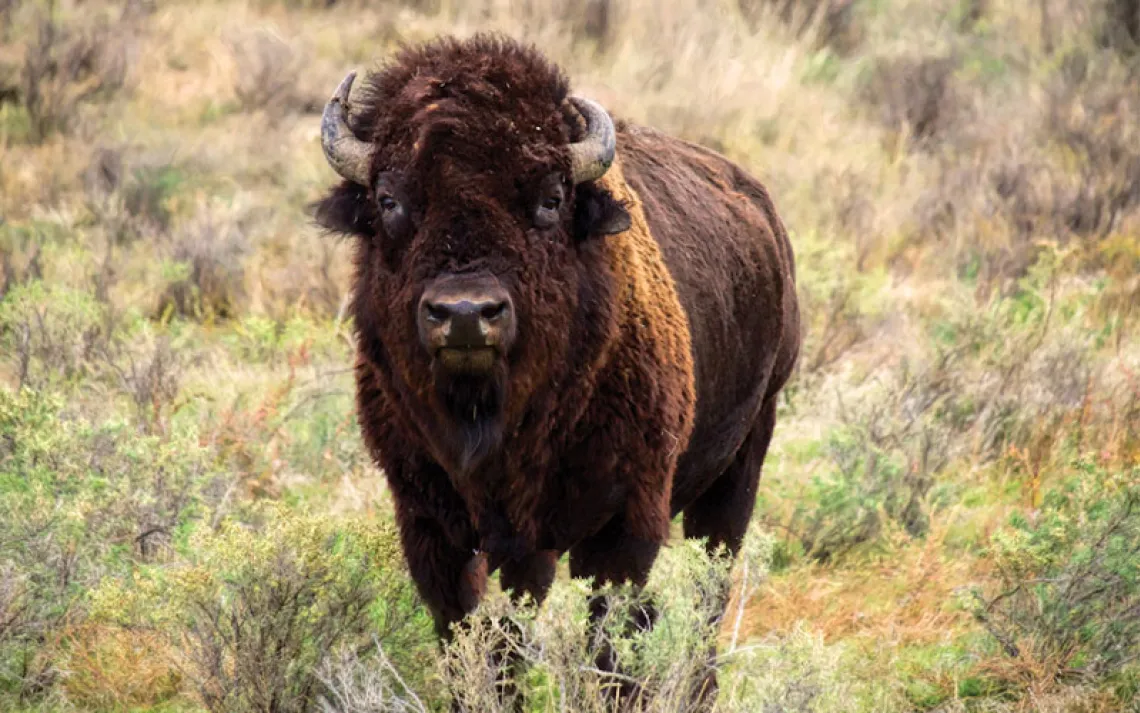
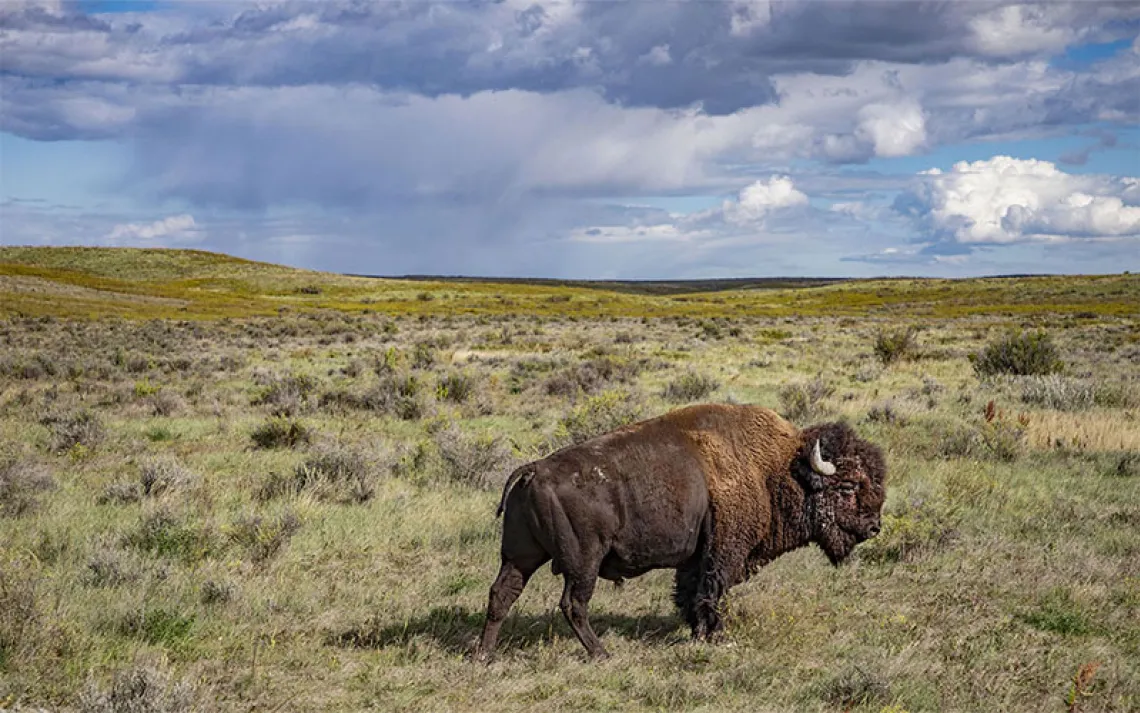
On a hot July afternoon in western Pennsylvania, the dark, shaggy outline of a bison appeared briefly before slipping into pale grass. At first glance, his home, the thousand-acre International Conservation Center—an extension of the Pittsburgh Zoo & Aquarium—looks like many pastoral landscapes in the Laurel Highlands.
But here, four young bison (culturally referred to as buffalo) represent some of the “purest bison stock” in North America, say the zoo’s conservation team. Earlier this year, biologists at the Pittsburgh Zoo brought three females and one male to the ICC from central Montana in partnership with American Prairie, a conservation nonprofit that’s leading the largest rewilding restoration project on the continent.
Over the past two decades, efforts led by tribal communities and conservation groups have worked to restore bison to western prairies. But while the massive mammals remain symbols synonymous with the American West, their historic range once extended from New York to the Florida panhandle. The Pennsylvania herd represents the next chapter in reclaiming bison stomping grounds east of the Mississippi River.
The ICC’s effort to bring bison back to the East is part of the Association of Zoos & Aquariums’ Bison Saving Animals From Extinction (SAFE) program, which intends to recover the species and its native North American prairie habitat in regions across the country.
“The goal is to grow healthy, genetically diverse herds and to support bison reintroduction on Indigenous and conservation lands across North America, especially in the eastern United States,” said Shafkat Khan, director of conservation at the Pittsburgh Zoo.
Eastward expansion
An estimated 30 to 60 million bison once roamed North America. About 2 to 4 million of those bison were believed to live east of the Mississippi—though likely in smaller herds. In a span of only 30 years during the 19th century, tens of millions of bison were slaughtered as European settlers expanded westward. By 1890, fewer than 1,000 remained.
Today, the International Union for Conservation of Nature considers American bison as “near threatened” but “ecologically extinct,” meaning they no longer play their critical roles in shaping the biodiversity of prairie ecosystems. In large numbers, bison have such an impact on their environment that they’re known as “keystone species,” whose presence has cascading effects on the landscape. Their thundering hooves and large bodies create wallows that help retain water. Their grazing encourages new growth and helps diversify grasslands. And their eating habits help disperse seeds and vegetation, creating more wildlife habitat.
As part of the AZA Bison SAFE program, the small herd at the ICC, in Pennsylvania, is among many eastern conservation efforts to support the nation’s broader recovery efforts. Those targets include maintaining robust wild populations on the landscape, having genetically diverse herds, and implementing shared stewardship with tribes.
Bison now live in the Paynes Prairie Preserve State Park of Florida, The Wilds in Ohio, and in the Seneca Nation of New York. The Nature Conservancy’s bison conservation program also expanded to its easternmost location in Kankakee Sands, in northern Indiana.
High conservation value
Though recovery efforts have buoyed the population to 500,000, less than 10 percent are managed for conservation, and their long-term genetic health remains threatened. All living bison are descendants of the few hundred survivors of the great slaughter, and most have been introgressed, carrying cattle DNA.
While four bison in Pennsylvania may seem underwhelming, the Bison SAFE program at ICC will play an integral role in growing the herd and the species’ survival into the future. Scott Heidebrink, director of landscape stewardship at American Prairie, explained that bison went through a “genetic bottleneck” and that without careful management, the species risks losing adaptability to survive in the wild.
That’s where the ICC comes in. Unlike vast prairies, where breeding is left to chance, the center, which has “high-conservation value” bison, can pay careful attention to genetic diversity to manage the health of its herd. This controlled setting allows geneticists to track lineages, perform routine DNA testing, and introduce bison from different stock to aid in the species' survival.
Zoos have had a long history of protecting bison. In 1905, zoologist William Temple Hornaday and President Theodore Roosevelt helped found the American Bison Society, using Bronx Zoo animals to restock herds in Oklahoma and elsewhere.
Now Bison SAFE, along with its field partners, including the InterTribal Buffalo Council (ITBC), TANKA Fund, National Bison Association, American Prairie, and others, are reviving responsibility with a new 2025-2027 program plan.
Restore the buffalo
Historically, bison existed in the eastern US, but there’s no consensus on when. Some evidence suggests bison were present in the region for thousands of years; other research points to a more recent expansion in the last five or six centuries, linked to Native American fire management practices.
Today, vestiges of the bison’s historic range live on in the place-names of towns, rivers, and mountains, as well as remnants of mineral licks and trails. But will herds ever exist here as they once did?
There’s a compelling parallel with the successful reintroduction of elk, another once-vanished species in the eastern US that is now successfully recovered in states like Virginia, Kentucky, and Tennessee. After being nearly extirpated from the region, there are currently over 16,000 elk east of the Mississippi.
But bison face steeper odds. Significantly larger than elk, buffalo need vast ranges, intact grasslands, and room to follow their social instincts. Something that is far more challenging in the fragmented landscape of the present day.
“The land ownership and landscape size is such a different ball game,” Heidebrink said. The amount of development, people, and conflict potential is also much higher. . . . I think everyone would love to see thousands of bison on big landscapes, but the fact is, the world has changed.”
While challenges remain, bison restoration efforts begin with rematriation to tribal communities, who for thousands of years depended on buffalo for their survival, well-being, and spiritual connection. “When we look at areas for reintroduction, our best hope is with the sovereignty of First Americans, peoples, and tribal nations,” Ed Spevak, co-program leader of Bison SAFE, said.
Alicia Nevaquaya, member of the Choctaw Nation of Oklahoma, development director and interim communications director of the ITBC, shared that while there is tribal memory in the east, it is limited. Most of the tribes in the early to mid-1800s were removed from their ancestral lands and forced into Indian Territory west of the Mississippi.
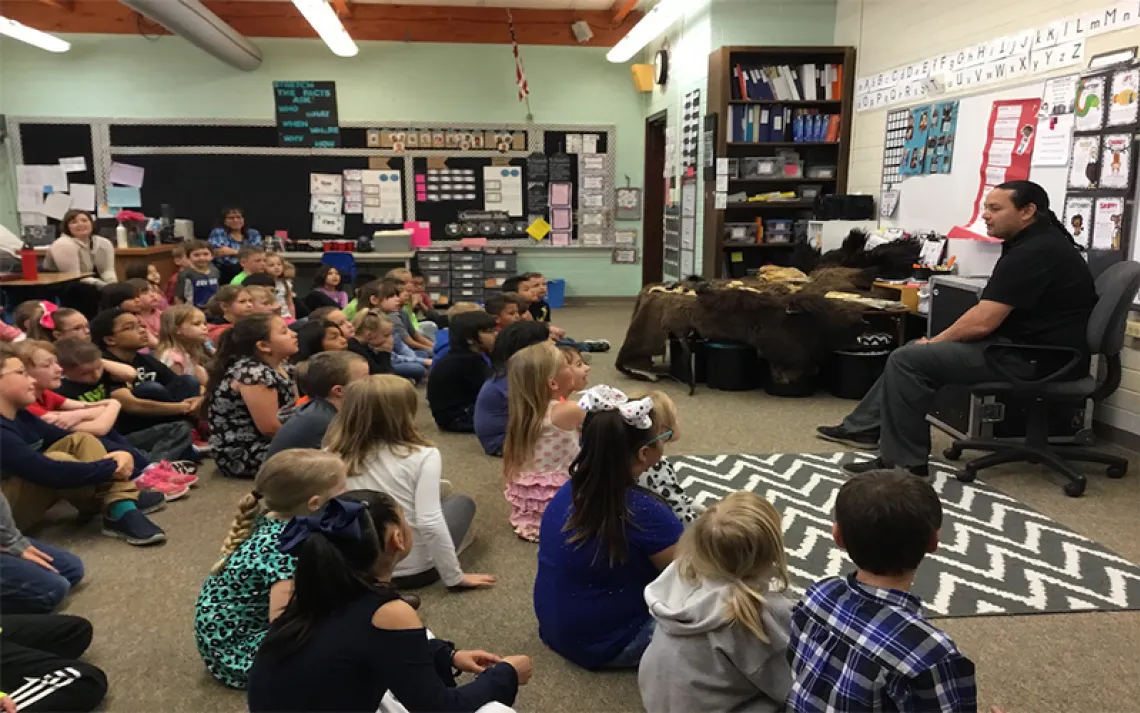
Currently, the ITBC works with 87 affiliated tribes, “helping them to restore the buffalo to their communities, to their lands and back to their cultures, wherever they are … including the East,” Nevaquaya said. The ICC is also developing a partnership with the Council of Three Rivers American Indian Center in Pittsburgh to connect Native American community youth with bison at the conservation center.
“The opportunity provided by the Pittsburgh Zoo to engage with the herd at the Conservation Center is deeply meaningful. It offers a rare chance to reconnect with a vital aspect of our heritage, a heritage that has been systematically diminished and serves as a source of healing and cultural restoration,” SunBear Coe, a representative of the CTRAIC, said in an email.
Next year marks a decade since bison were designated as the national mammal. And for successful conservation efforts to continue, awareness has to exist among all parties, conservation advocates say.
“It took a heavy lift to exterminate [millions] of buffalo in the US. It's going to take all of us to bring them back,” Nevaquaya said. “We want to make sure that our message is clear: We're not giving up on buffalo restoration in North America or the tribes.”
The region’s smaller herds are fighting to make a difference. Zoo-based programs like the ICC, tribal restorations, and prairie preserves are each contributing to the species’ genetic and cultural survival. The reality of bison roaming again in the east remains a “what if?” For now, the effort is alive, and with it, the invitation to hope.