 The Magazine of The Sierra Club
Is a Gas-Station-Free Future Possible?
Environmentalists are advocating for clean energy infrastructure despite Trump’s push for more fossil fuels
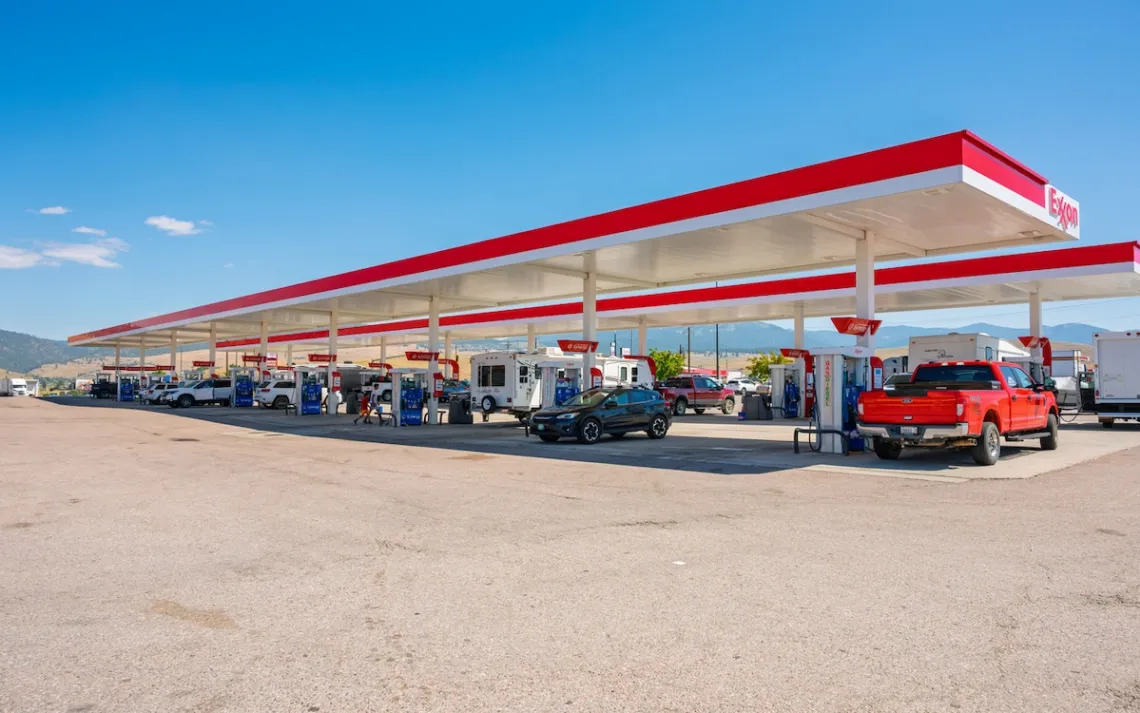
Photo by Kirk Fisher/iStock
The guiding principle of Napa Schools for Climate Action (Napa S4CA) is do no further harm. According to Sophie Wassef, a senior at Justin-Siena High School and co-president of Napa S4CA, the group has been pressuring Napa officials to act since it formed in 2018. The teen activists have succeeded in getting six jurisdictions to pass resolutions declaring a climate emergency and pledging action.
There’s also one feature of everyday life they’d like to see less of: gas stations. Four out of five municipalities in Napa County have banned the construction of new and expanded gas stations so far, and the group is pushing for a countywide ban next.
California is at the forefront of the movement to ban new gas stations. Many of the bans have come about thanks to grassroots activism from groups like Wassef’s and the Coalition Opposing New Gas Stations (CONGAS) in Sonoma County. In 2021, Petaluma, California, became the first US city to prohibit the construction of new gas stations. The effort complemented the state’s move to phase out the sale of gas-powered cars by 2035.
The movement has spread across the country to big cities and small towns alike. Denver’s city council created limitations on the construction of new stations in 2025, citing the need for more local businesses and housing instead. Lewisboro, New York, passed a ban in 2021, and Tipp City, Ohio, in 2025. Several major West Coast cities have been considering them too, including Los Angeles, Sacramento, and Eugene.
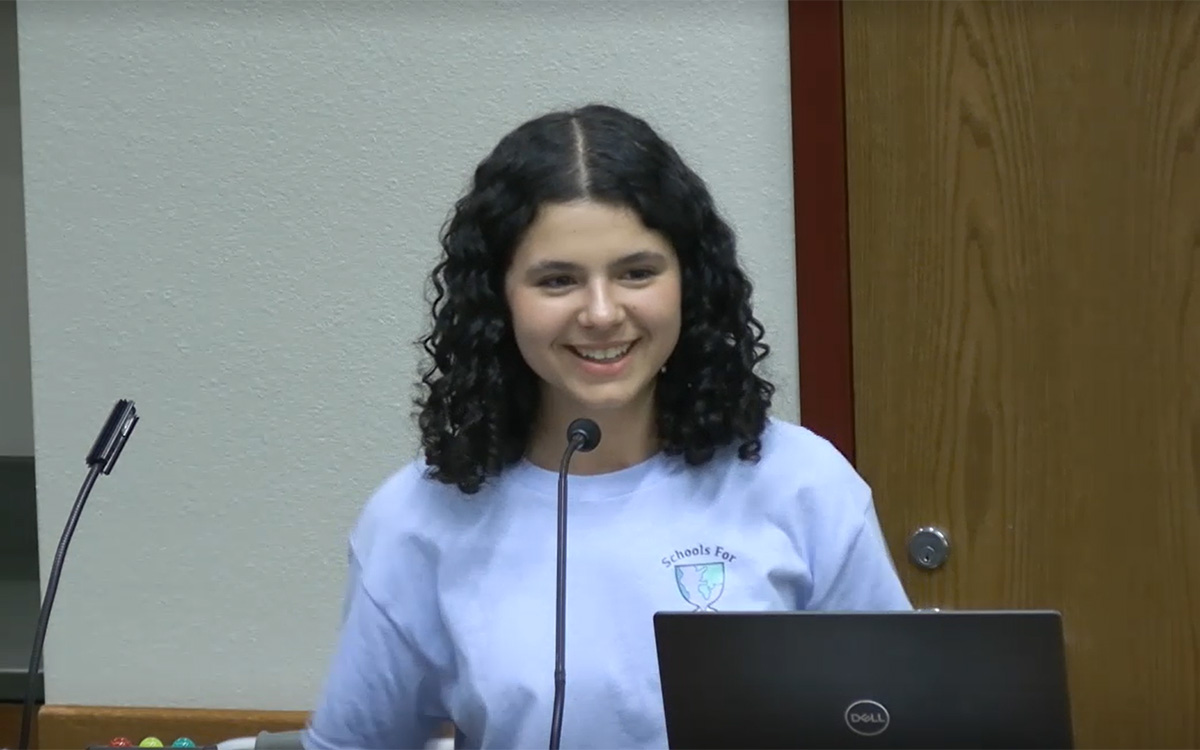
Sophie Wassef speaking at an American Canyon City Council meeting in 2025. She was there to advocate for a net-zero 2030 deadline in the city's most recent general plan. | Photo courtesy of Napa S4CA
Jim Wilson, from the grassroots group Napa Climate NOW, the county’s affiliate of 350 Bay Area, has mentored Napa S4CA. He opposes short-term profit at the expense of the environment—an issue particularly resonant in Napa, where the geography and rare microclimate create the perfect conditions for growing wine grapes. Climate change could threaten the business. “We have something special here,” said Wilson.
Janelle London also sees the bans as part of a larger effort to reduce dependence on fossil fuels. She’s the co-executive director of Coltura, a nonprofit working to end gasoline use. For London, the bans are a step toward incentivizing electric vehicle use and preventing further climate-warming emissions.
Individual gas stations, she contends, are also a threat to the environment and public health. “Above ground, on the ground, and below the ground, there are toxins at every level,” she said. The problems start at the pump. “No matter the protection mechanisms in place, when people are pumping gas, a few drops are spilled almost every single time.”
It might seem insignificant, but those little drops leach into the ground and eventually pollute the soil and local waterways. For a large-volume gas station like the kind offered at Costco, those small spills could amount to as much as 2,000 gallons a year. London coauthored a 2021 report on gas station infrastructure and regulation that found higher cancer rates among people who live near gas stations as well as elevated cancer risks for gas station workers.
Toxic vapors are also vented above ground from where the gasoline is stored below. Benzene is among the worst of the vented toxins. The World Health Organization says there is no safe level of exposure to the carcinogen in the air, but it can be detected up to 160 meters away from gas stations, affecting nearby homes, parks, schools, and hospitals.
The contamination persists below ground too. Gasoline and diesel are kept in underground storage tanks (USTs), of which there are about 542,000 in the United States, holding petroleum and other hazardous substances. Older models of these tanks have only one wall separating the fuel from its surroundings, and leaks contaminating soil, groundwater, and drinking water supplies are common. Only some states currently regulate the replacement of old or outdated tanks. According to the EPA, 25 percent of the country’s population lives within a quarter mile of a UST leak, many of which are in underserved areas.
Even after a gas station closes, it can continue to pollute the area. Liability for cleanup of contaminated land is different state by state, but with the average cost for remediating a service station site at $243,299, it’s not surprising that many stations are abandoned, putting a huge strain on states to clean up the mess. Half of all brownfield sites in the United States—about 225,000—are impacted by petroleum, largely from the leaking USTs of old gas stations.
Contamination makes these properties hard to sell, which is one of the reasons London argues that building new gas stations is no longer a good business decision. In California especially, the state’s pledge to transition to electric vehicles means that it’s counterproductive to keep building new gas stations when there will likely be few gas cars on the road in a decade. One study found that 80 percent of gas stations could be unprofitable by 2035.
“They think they can’t afford to switch to an EV, but really they can't afford to not switch to an EV."
Coltura has found that many gasoline “superusers” (those in the top 10 percent of gasoline usage) are typically located in rural areas where people must travel long distances by car to reach their workplaces—often at enormous personal expense. London said that expanded EV infrastructure is the answer—not building additional gas stations. They found that electric vehicles saved the average American driver $943 in fuel costs annually in 2024, and $2,721 for superusers.
“They think they can’t afford to switch to an EV, but really they can't afford to not switch to an EV,” said London. While every state is different, in places like Washington where electricity is much cheaper than gas, it would be less expensive in many cases to purchase an EV than to continue paying for gas.
But the movement toward a gas-free future has begun to stall. The Trump administration is challenging California’s mandate to phase out gasoline-powered cars. Wassef worries that the Trump administration's deregulatory rhetoric might make people less open to banning new stations but still thinks that this move is an important investment in the future: “Banning gas stations is the first step in a long road toward transforming the way that we move around the world.” It won’t solve the entire issue of fossil fuel dependence, but it’s an important start to moving away from a gas-dependent economy.
London agrees. “If we banned the construction of new gas stations, it would start sending the message that the future is not gasoline.”