Inside the Classrooms Where Bees Are Teachers
The Bee Cause Project is fostering the next generation of environmentalists
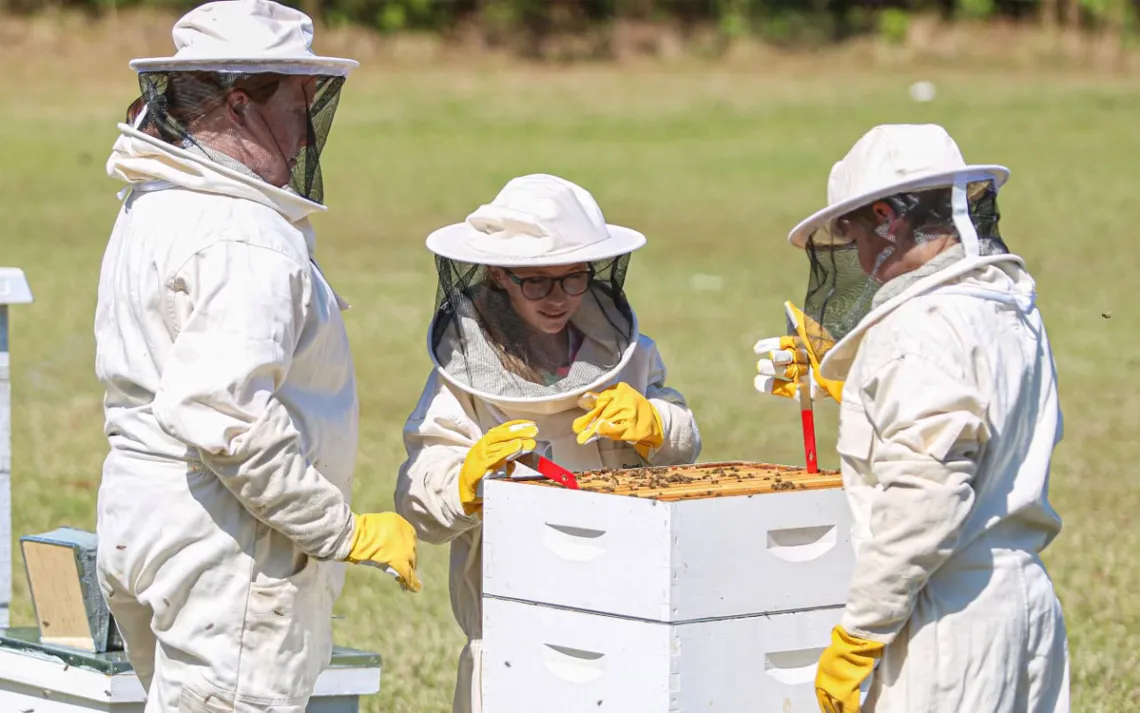
Students working on a hive at James M. Brown School in Oconee County, South Carolina, during the filming of the Making It Grow series. | Photo courtesy of the Bee Cause Project
This past fall, eight children stood shoulder to shoulder on Ashley Hall Elementary School’s roof, zipped into oversize white suits, veils covering their faces. Below them, the city of Charleston, South Carolina, hummed. In front of them, three wooden boxes buzzed. Slowly and gently, the children approached.
They were led by Elizabeth Flowers, a teacher and the coordinator of the Bee Club, a voluntary after-school program where third and fourth graders learn about honey harvesting from working beehives. This school was among the first to receive hives through the Bee Cause Project, a nonprofit that partners with schools around the world to bring pollinator education into classrooms, giving students an up-close look at the working world of honeybees.
The students first got an indoor observation hive in 2014, the same year the nonprofit launched. In the following years, they received working hives, meaning the bees were meant for honey production. Across the country, apiaries are helping honeybees survive in a world that is becoming increasingly hostile. And schools, such as Ashley Hall Elementary, are playing a crucial role in this endeavor. Many are adopting some type of bee-hive installation projects, but the hives with the Bee Cause Project take this role a step further.
Rather than merely placing a hive in a local school for observation or just providing informational materials about bees, the Bee Cause Project trains teachers to incorporate lessons on hive ecology into their curriculum and provides ongoing mentorship from experienced local beekeepers. Indoor observation hives put colonies directly inside classrooms, and schools enter a national network of participating programs, supported by open-access lesson plans and community partnerships.
Additionally, the project’s Pay It Forward program is an initiative that lets participating students sell jars of branded honey to support both their own ongoing hive costs (hive maintenance, bees, materials) and help other schools enter the program. “Our grants are more than a hive,” said Tami Enright, one of the two cofounders of the Bee Cause Project. “It’s a holistic pollinator education initiative that inspires kids to be environmental stewards.”
The Bee Cause Project grew out of a single beekeeper’s belief that educating children about nature could change how they relate to it. “It’s all about raising the next generation of kids to love, protect, and want to support the honeybee,” said Ted Dennard, the other cofounder of the Bee Cause Project. “We’re trying to raise awareness because that’s what makes the big difference.… [The Bee Cause Project] is helping students understand how everything is connected.”
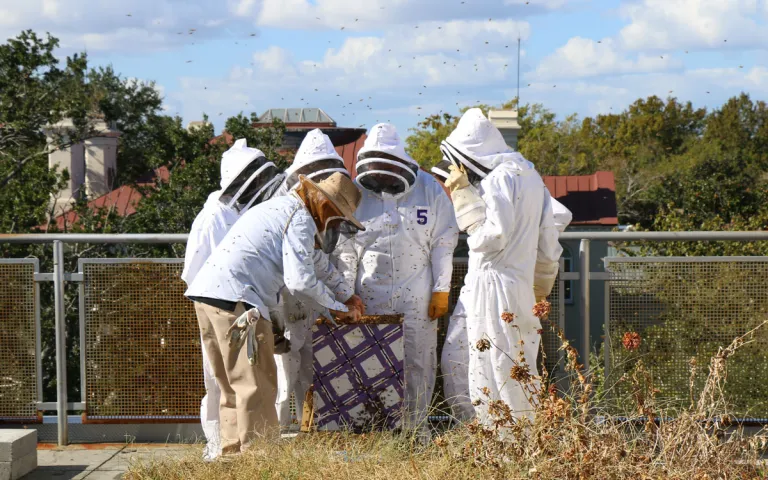
Adults checking in on the production hive on the rooftop of Ashley Hall Elementary School in Charleston, South Carolina. | Photo by Elizabeth Flowers
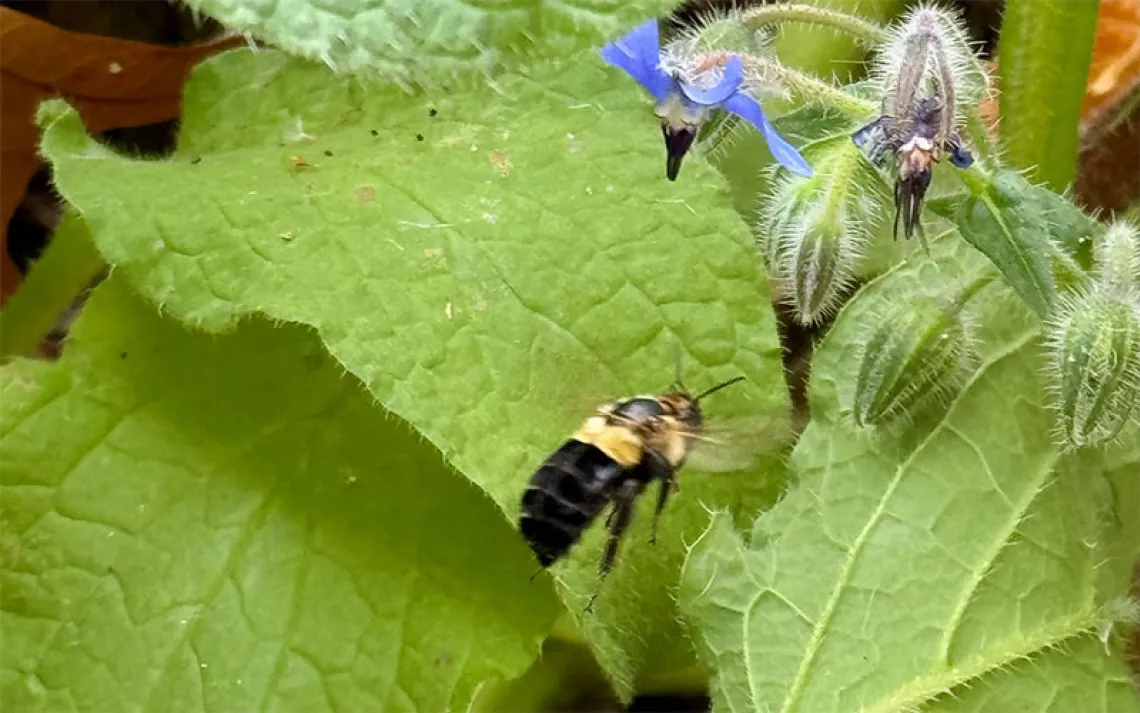
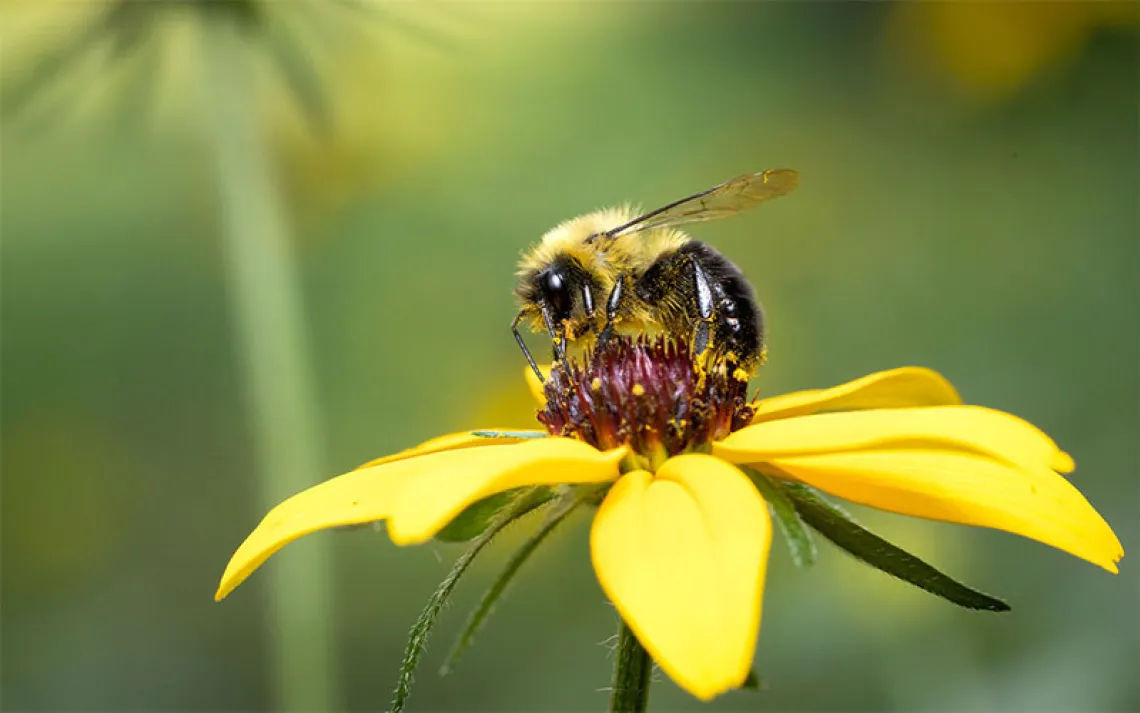
Pollinators are responsible for roughly one-third of the food that humans consume, and in North America alone, bees and other pollinators support more than 100 crops, including almonds and berries. Their economic value is estimated in the tens of billions of dollars annually, but their ecological value is impossible to quantify, as they support the health of entire food webs.
Despite their importance, bees are struggling. In the United States, beekeepers have reported annual colony losses averaging between 30 and 45 percent in recent years, with some seasons causing higher mortality. Research has shown that pesticide exposure weakens bees' immune system and disrupts navigation. Meanwhile, scientists are warning that parasites, such as the Varroa mite, spread disease. And climate change has altered bloom timing, causing flowers and pollinators to fall out of sync.
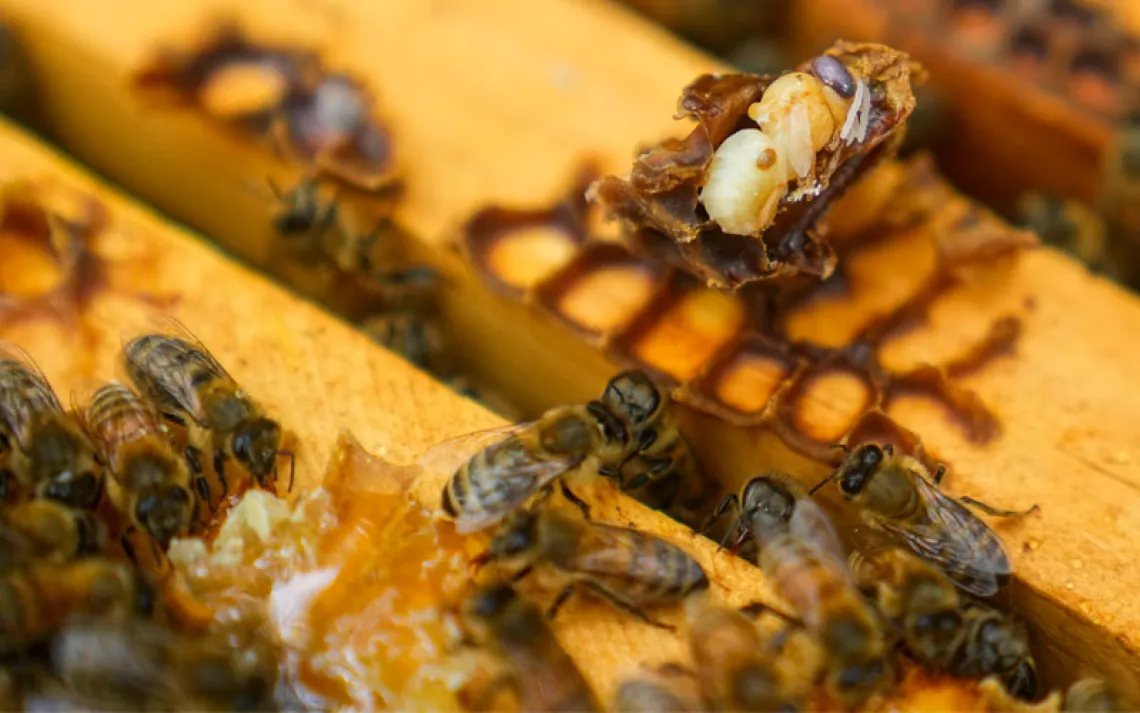
The threats that pollinators face are vast, but the Bee Cause Project addresses them by making abstract conservation a tangible daily practice. With help from the organization, educators teach children skills, including how to read brood patterns, track forager returns, understand hive health, and harvest honey.
Most children are taught one thing about bees: avoid them. But Flowers has seen this change repeatedly over the past decade. For many children, the experience begins with fear and fades to fascination and love, she said. “The bees don't want to hurt us,” Flowers cooed, assuaging the kids' fears. “But we are going into their space in nature, and just like a horse or a dog or any other animal, they will get spooked if we come in loud and excited.”
The shift in attitudes shows up in small moments, like when the children spot a bee on the ground during recess and try to help it, carefully carrying it to a safe place until Flowers explains that it may simply be reaching the end of its short life.
Over time, that exposure builds confidence. Students learn how to handle tools, how to care for living systems, and how to finish work, said Flowers. “It’s empowering them to handle big things on their own.”
Flowers has noticed that students who struggle to engage in traditional classrooms often find calm and focus around the bees. Some gravitate toward the science. Others toward distant observation. And others toward creative outlets, such as working with beeswax, making lip balm, planting seeds, or creating artwork inspired by what they’ve seen.
Before starting his nonprofit, Dennard had long built his for-profit business, Savannah Bee Company, around the idea that education was the most powerful tool for improving pollinator health. His dream to bring pollinator education into schools took root when he met Enright, a fellow beekeeper and environmental educator from Charleston, South Carolina. Over coffee, he showed her an indoor observation hive he had installed at his storefront and shared his dream of wanting to put hives like that in schools.
Enright was already volunteering in her own children’s classrooms and wanted to help Dennard bring his dream to fruition. Together, they began installing hives wherever schools would let them, drilling through library walls to connect classrooms to outdoor colonies. The work was informal and under the radar, until school administrators took notice.
When concerns about safety and liability reached the Charleston County School Board, Dennard and Enright were called in to explain themselves. But as they stepped in front of the board to defend their actions, so did a group of teachers and students, speaking about how the hives had positively changed their classrooms. The district reversed course, creating a formal agreement that allowed schools to host hives. “They saw that the reward outweighed the risk of bringing bees onto campus,” said Enright.
In its first year, Enright said, they had to beg schools to participate, offering free installation, free hive management, and free education. Today, there is a waitlist.
Over the past decade, the Bee Cause Project has awarded more than 1,000 grants in all 50 US states, every Canadian province, the Bahamas, and Puerto Rico. In the 2024 grant cycle, the organization received 450 applications and funded 244 of them. Each live hive grant costs about $3,000, which covers hives, installation, teacher training, program setup, equipment, and some ongoing support.
Beyond hives, Bee Cause also offers literacy grants that supply pollinator-themed books and teaching materials, as well as professional development programs that help teachers confidently bring environmental education into their classrooms. “When we first started, we really thought that it was going to be about saving the bees,” said Enright. But caring for bees, it turned out, was just the beginning.
“If you have kids taking care of bees, they start caring about what happens to the bees,” Enright said. Then they care about pollinators, which leads to food systems. Food systems lead to questions about water, land, and climate conservation. Kids begin to see connections rather than isolated problems.
“This generation, especially, has extreme climate anxiety,” Enright said. Faced with constant headlines about loss and destruction, kids often don’t know what they can do. The Bee Cause Project, she said, creates a tangible place to begin. “These programs have given this generation agency to be able to feel like they’re part of the solution and see themselves in a much larger system.”