The Final Flight of a Queen
An aging bumblebee queen sparked a Facebook post that captured the hearts of millions
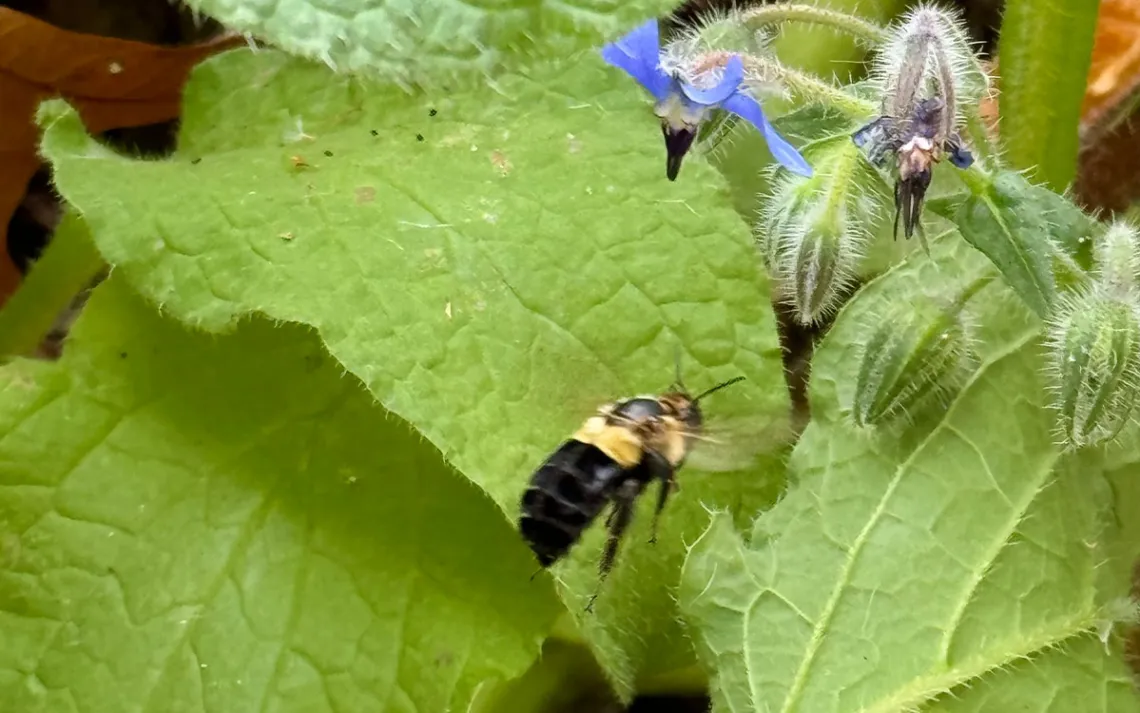
Photo by Bob Plamann
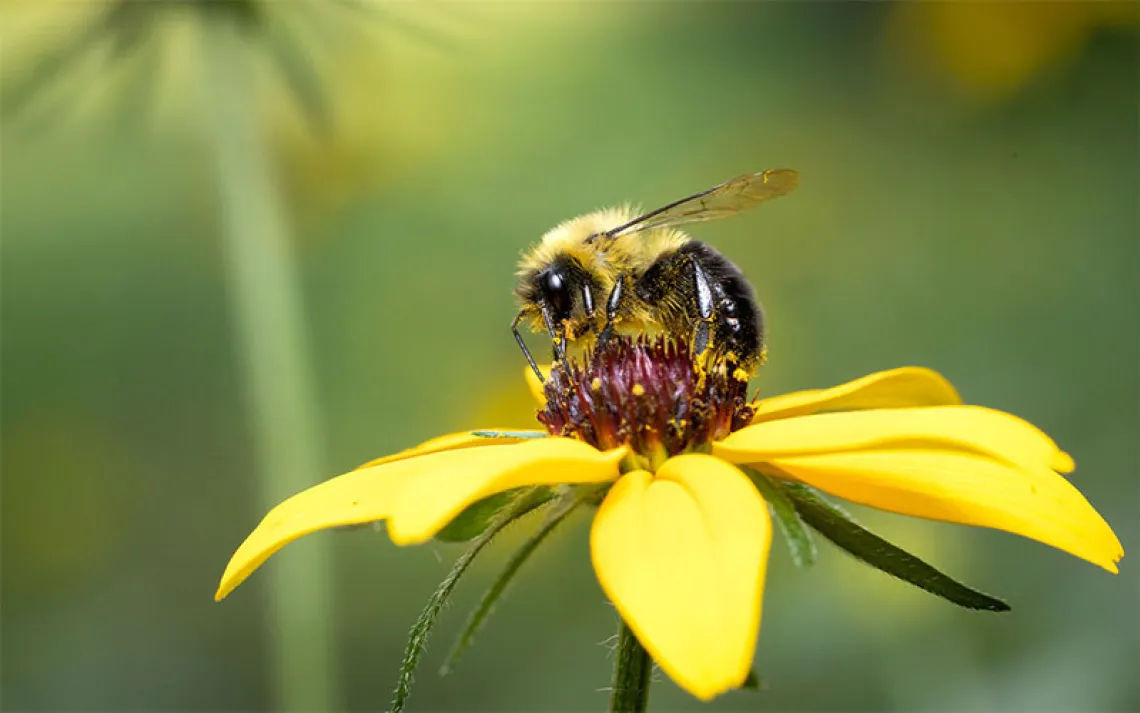
Last year on October 30—as fall was in full swing and most bees had vanished—Bob Plamann stepped into his front yard in Madison, Wisconsin, and noticed a bee in a cluster of borage flowers. The plants' delicate blue blossoms, still open late in the season, had attracted the visitor. Plamann pulled out his phone and snapped a few photos.
When he showed them to his wife, Judy Cardin, she felt a surge of emotion. “I actually got tears in my eyes when I saw her,” Cardin told Sierra.
What Plamann had photographed wasn’t just any bee—it was a common eastern bumblebee queen. Her wings were tattered, her body nearly bald. Cardin, an educator with the Wisconsin Bumble Bee Brigade, recognized her instantly as a foundress queen, likely the matriarch of many bumblebees that had flitted through their yard that summer. “She looked like a very grand old lady to me,” says Cardin.
The queen had lived more than a year—a long time for a bumblebee, says Cardin, who envisioned all that the queen had endured in her short life. Born the previous fall, she had mated, hibernated through winter beneath the leaves, and braved spring’s dangers to find a nest and feed her first brood alone. Many queens don’t make it that far, but this one had. She then spent the summer underground in the dark, raising her colony. And now, in the final days of her life, she had emerged once more to feed on the last remaining flowers.
“I’m at the stage in my life where I’m retired. I’ve raised my kids, and I couldn’t help but look at that bald queen and think of everything she’s been through.”
Cardin, a mother herself, was moved not only by the queen’s condition, but by what she represented. “I’m at the stage in my life where I’m retired. I’ve raised my kids, and I couldn’t help but look at that bald queen and think of everything she’s been through.”
Touched by the encounter, Cardin posted a few photos and a short, heartfelt tribute to the queen in the Wisconsin/Midwest Bumble Bee Observers Facebook group. She expected it might resonate with a few fellow bumblebee enthusiasts. Instead, the post went viral. Within days, more than 2.3 million people around the world had seen it.
What made the story so striking to biologists was its rarity. Most bumblebee queens die inside their nests soon after the colony finishes reproducing in early fall. Amy Toth, an entomologist at Iowa State University, notes that while it’s physically possible for a queen bumblebee to forage again in fall, it’s unusual to see one doing so. “I've never seen one at that stage,” says Toth. It is typically the new queens—freshly hatched and preparing to hibernate—who are spotted feeding on flowers in the fall.
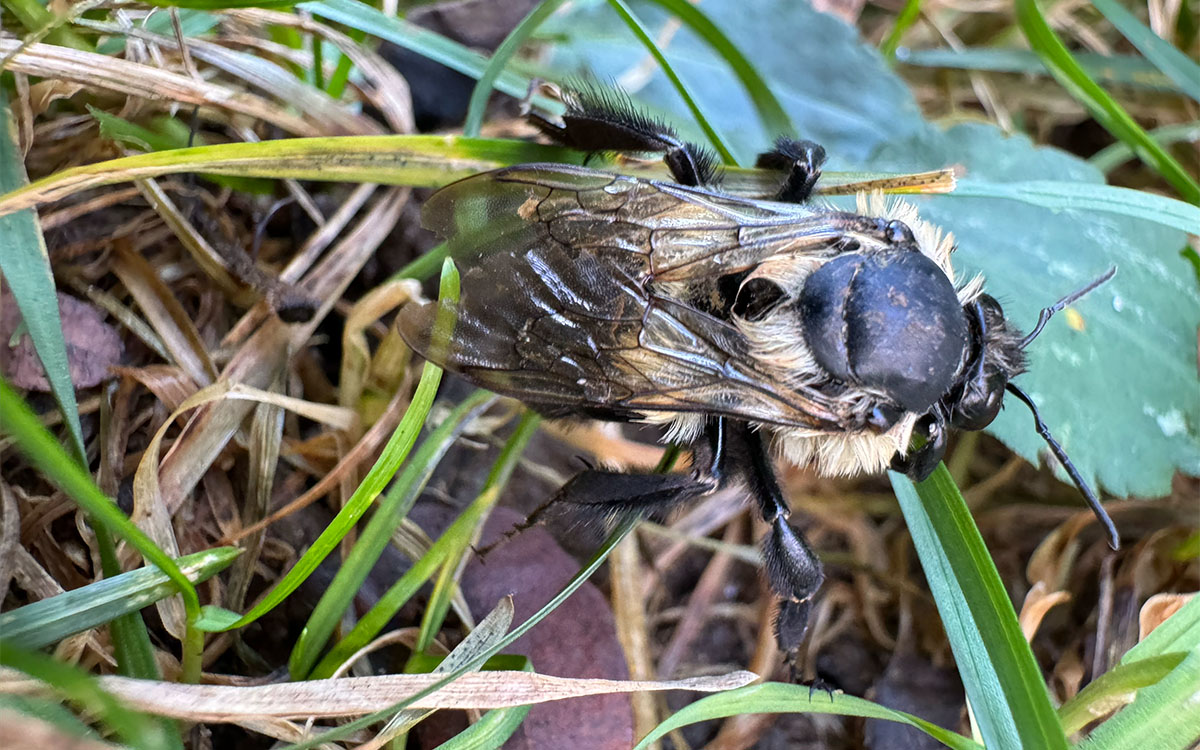
Photo by Bob Plamann
Yet the post didn’t go viral because of scientific rarity alone—though that was likely part of it. It spread because people, like Cardin, recognized something familiar in this worn and weathered queen: a mother who had given everything, now spending her final days at rest, her work done.
The queen kept returning to the borage flowers, even as temperatures plummeted. As November progressed and several hard frosts hit Madison, she survived by sheltering in the leaf litter beside the borage and warming herself by vibrating her wing muscles, says Cardin.
Toth notes that it’s possible that the sighting was actually a new queen and not a foundress queen. Physical wear—such as bald patches and tattered wings—usually suggests age but can also result from injury, disease, or exposure to harsh conditions. Still, Toth acknowledges that the bee’s appearance and behavior were consistent with what one would expect from an old queen. “If I saw that bee, I would think that's a very old bee, but they can look old and tattered and worn for other reasons,” she notes.
Jay Watson, a conservation biologist with the Wisconsin Department of Natural Resources, sees the post as opening a door into the often under-appreciated world of bees. Most people don’t really know anything about bees except perhaps honeybees, he says, but when they read stories like Cardin’s, they can relate to the individual bee and become more interested. “I think that’s how people get hooked to learn more about these species,” he adds.
Comments on Cardin’s post poured in—many saying they’d learned something new about bumblebees, and some had even got teary-eyed after reading about the queen.
Ezell also saw the queen’s journey as a reflection of something larger—an interconnection between life forms and the importance of recognizing that every species, no matter how small, has its role.
One of those readers was Walter Ezell, a writer, poet, and observer of nature from Greenville, South Carolina. What moved him, he said, was the queen’s persistence. “The old bee just kept on going,” he says. Ezell also saw the queen’s journey as a reflection of something larger—an interconnection between life forms and the importance of recognizing that every species, no matter how small, has its role.
The old queen had certainly played her role. She had likely produced hundreds of worker daughters who foraged and pollinated throughout the summer. In the end, she may have also raised a dozen new queens who entered hibernation and would hopefully survive to start the cycle again next spring.
Cardin, who has spent years educating the public about the dire plight of pollinators, hopes the story prompts action. Bumblebees need flowers that they can feed on, she says. Fall-blooming flowers like asters and borage can mean the difference between a queen surviving the winter or not. She also encourages people to let leaves lie, avoid pesticides, and plant spring ephemerals so that queens emerging in April and May have food waiting for them and safe places to nest.
On November 19, after two and a half weeks of cold nights, Cardin and Plamann saw the queen for the last time. She lay beneath the borage plant, still and silent. Her life was over, but her story—one of quiet resilience—went on to touch millions.