The Magazine of The Sierra Club
Piles of Mushrooms Are Rotting in This Colorado Town to Help Curb Forest Fires
Meet the Colorado community members using fungi to combat fires in their neighborhoods
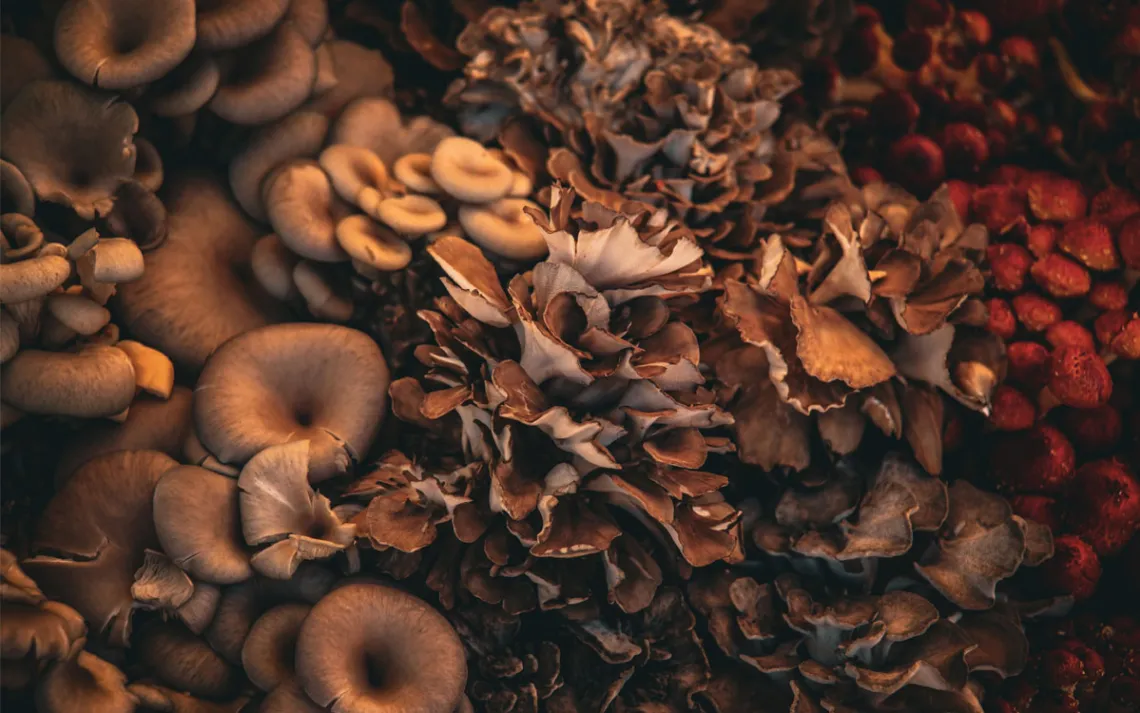
Photo courtesy of Stephen K. Miller/Getty Images
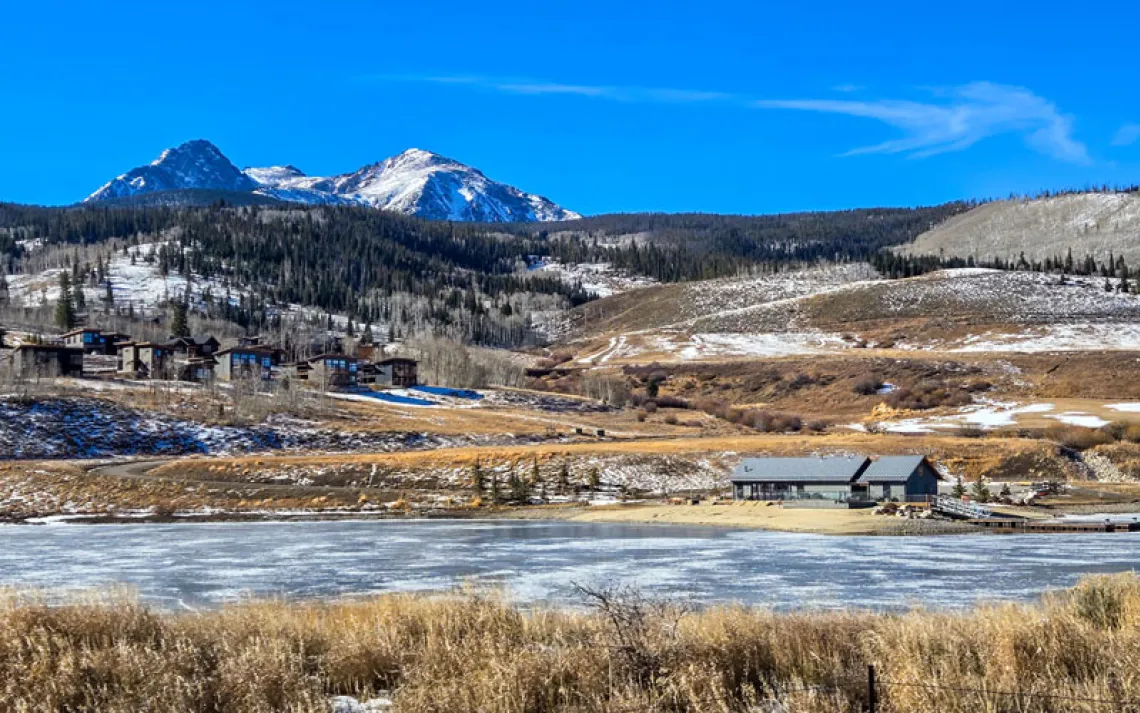
Across the West, thousands of towns face the threat of hotter, more destructive wildfires. One of them is Estes Park, Colorado, a picturesque town replete with conifers, aspen trees, and mountain views. But unlike the many other communities in fire-prone areas of the West, an affluent neighborhood just five miles from the entrance of Rocky Mountain National Park has several piles of rotting, fungi-infested mulch.
Its purpose? Researchers and supporters hope it will serve as a layer of ecological defense that helps mitigate the risk of wildfire.
These scattered mounds of decaying biomass are managed by the Estes Valley Watershed Coalition. In August 2025, while the Lee Fire ripped through 137,758 acres of Colorado, the nonprofit ran around Estes Park with a chipper and a truckload of mushrooms. The group worked with the Colorado State Forest Service and other agencies to identify at-risk neighborhoods and select trees to be cut and chipped into windrows, linear heaps of decaying organic material. Then they planted oyster mushrooms that a local group sourced from the wild, which are meant to keep the debris moist and turn the wood into nutrient-rich compost. Without chipping the wood, those combustible logs could litter the ground for decades. With it, the process takes two or three years.
Jeff Ravage is the one who developed the mushrooms, called spawn, in a Denver lab by regrowing their thread-like mycelia, which are usually too deep and fragile to harvest. While cultivating the mycelia, he gradually introduced a targeted wood species into their diet, thus training them to feed on specific types of wood. He came up with the idea of using fungi to fight fire after 2002’s Hayman Fire, the largest in Colorado history at the time. As a forester who took a mycology class in college, he knew a little about mushrooms—enough to know that they retain moisture. With this foundational knowledge, he launched a five-year experiment where he inserted native mushrooms directly into woody biomass to find out how quickly the material would decay, reducing the amount of fire fuel. He called it the Coldfire Project.
More than a decade later, the Coldfire approach is starting to catch on throughout the West. In particular, the experiment showed that a fungal element could speed up decomposition threefold. Proponents say that could have a measurable impact as the region battles hotter, larger, and more destructive fires.
In Utah, the first half of the 2026 fire season saw more acres burned than the past five years combined. Across the Colorado border, five fires—including the state’s seventh-largest fire ever—have scorched an area twice the size of Denver. The National Interagency Fire Center reported that the number of acres burned across the country by July had surpassed the previous 10-year average by 57 percent.
Most of the fires are started by humans in a zone called the Wildland-Urban Interface (WUI), where human development encroaches into wildlife habitat. A 2022 study said the rapid expansion of this zone has intensified the wildfire problem, with fires in the western US “getting bigger, more destructive, and more deadly.”
"Wildfire mitigation and fuel-reduction projects are critically important, from the smallest residential parcel to larger landscape-scale projects," said Jon Landkamer, the Estes Valley Fire Protection District's division chief of community risk reduction. Because most homes in Estes Park are surrounded by thick pine and aspen forests, most fire-safety advocates warn that it’s essential for residents to keep their properties clear of woody biomass that could act as fuel.
But with worsening droughts leading to more frequent fire bans, the traditional fuel-reduction approach of pile burning is heavily restricted. “One landowner shared that she was only permitted to burn piles for about four days during the last season,” said Wilynn Formeller, development and program coordinator for the Estes Valley Watershed Coalition. That season lasted about six months, during which Colorado experienced its worst statewide snowpack year in recorded history.
Landkamer said the Coldfire process is a viable alternative to traditional methods, such as pile burning, adding that many residents aren’t comfortable with the risk of pile burning anyway. Besides that, it’s safer and has the ecological advantage of returning carbon to the soil instead of sending it into the atmosphere. Another benefit, supporters say, is that composting the biomass is a more affordable option.
“Full removal of woody biomass requires hauling and transportation that drives up cost,” Landkamer said. Meanwhile, if landowners can procure a chipper, the price of the mushrooms themselves breaks down to about $1 per square foot. Ravage said the rate varies.
Despite the benefits, this project has experienced some pushback from residents and homeowner associations who don’t want to see their trees cut down and aren’t thrilled about creating compost piles in their yards. Formeller said permitting and getting neighbors on board have been one of the Estes Valley Watershed Coalition’s biggest challenges.
The Coldfire Project has supplied its specially adapted fungi mostly to initiatives on private lands, like the community in Estes Park. It's the first organization to test and use mushrooms for fire reduction. So far, the method has proved successful across different environments from Tennessee to British Columbia. The trick is to use native species, Ravage said. Members of his organization source fungi from the research area, bring them back to the lab for 22 weeks to essentially propagate the fungi and redevelop their mycelia, then reintroduce them via mulch piles.
Additionally, this approach to fire mitigation could be used in other areas, even in drier climates, such as Utah, which, as of July, continued to battle its largest fire in almost a decade. Ravage has tested the Coldfire method in areas with as little annual precipitation as nine inches. The key is to plant the mushrooms before a wet period, he said, like early spring or before winter. After the mushrooms get thoroughly soaked, they’ll hold moisture—the typical oyster mushroom is about 85 to 88 percent water.
The Coldfire Project currently has a pending patent for the “secret sauce,” Ravage said. “Think of it kind of like Coca-Cola. We create the syrup, and then other small mushroom farms can create the actual end product that goes into the ground.”
He says the patent will prevent big corporations from commandeering it, because he wants to share the mushrooms as widely as possible. Eventually, Ravage hopes to evolve the Coldfire Project from a nonprofit to a hybrid nonprofit-for-profit organization that keeps research in the nonprofit sector while generating funds to expand the project to local communities. “Say we have a company in Fort Collins that does this,” he said. “Then the homeowners could get the spawn from them—that’s a few years down the road.”