The Trump Administration’s Latest Foe: “DEI Bike Lanes”
Funding for one of the last bipartisan programs may get sideswiped in September
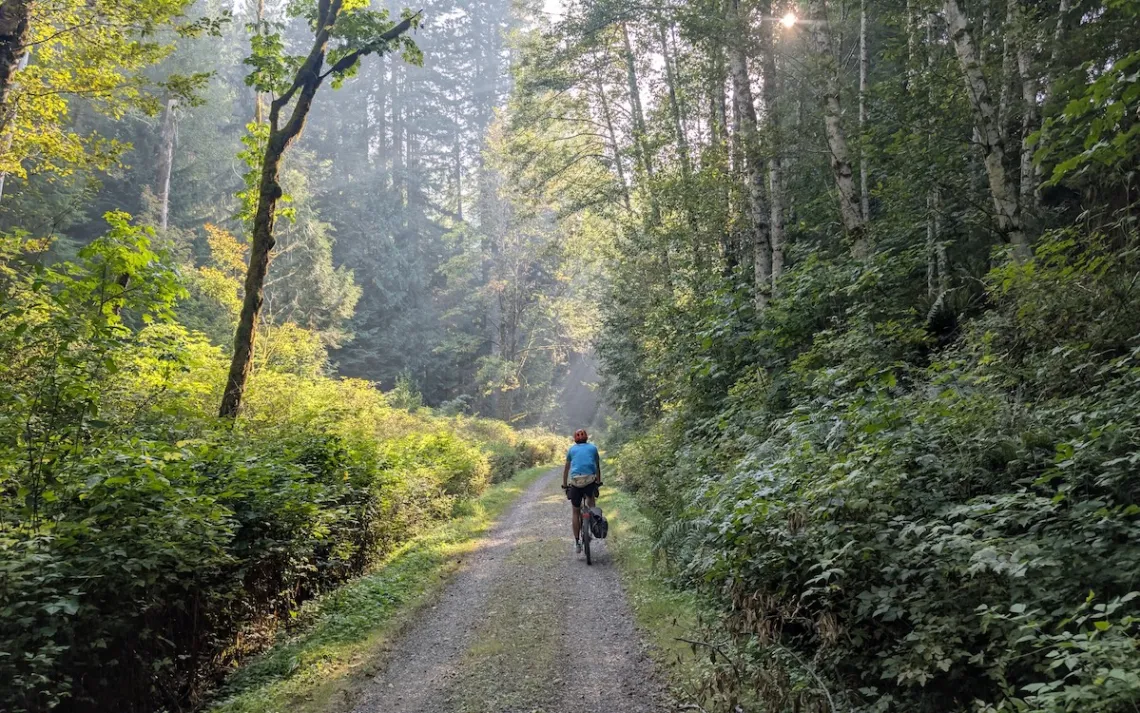
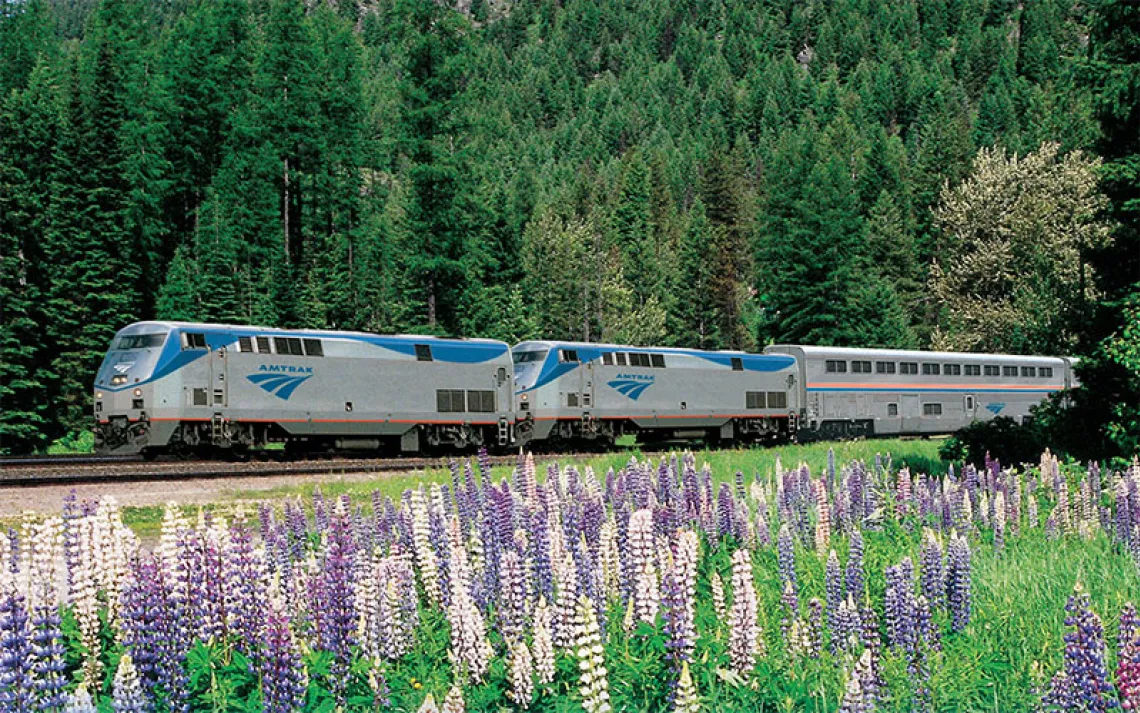
The Great American Rail Trail in Washington. | Photo courtesy of Brandon Withrow
Another day, another near miss while riding my bike along the main streets in Ohio.
“Get off the road!” a truck driver shouted as he sped past. His mirrors were within inches of sideswiping my handlebar.
I usually avoid the busy streets of my city. On this day, I had been making my way to the Wabash Cannonball Trail. Federally funded multiuse trails like this one make cycling from home to other towns safe. These trails connect residents with their communities and businesses and encourage them to set cars aside for the less-polluting mode of transportation on two wheels.
With the upcoming September 30 deadline for the reauthorization of the surface transportation law, that funding is at risk.The Senate has passed a Continuing Resolution (CR) that includes a Surface Transportation Reauthorization extension until December 11. But even if the House passes the CR, funding for programs like Safe Streets and Roads for All will not be included.
In a recent statement on X, US Secretary of Transportation Sean Duffy endorsed funding cuts to so-called DEI bike lanes. He sent Congress recommendations for changes to the surface transportation reauthorization. His changes would in part end trail grants like the Active Transportation Infrastructure Investment Program (ATIIP), “since the program's primary purpose is bicycle lanes, which are not an administration priority.”
Funding threats like these have active transportation advocates on high alert.
“A key challenge is finding a bipartisan agreement,” said Scott Goldstein, the senior director of government relations for the Rails to Trails Conservancy, a trails and public spaces advocacy organization. For 40 years, they’ve worked to connect towns through rail trails—abandoned railways converted into trail networks.
“One of the sticking points is whether or not to invest in trails, biking, and walking infrastructure,” said Goldstein. “The secretary's recent letter is very clear that the department no longer feels that this infrastructure deserves federal funding.”
Congress tends to see things differently, added Goldstein, as it “has repeatedly, on a bipartisan basis, decided that in fact, it is a federal priority. And that’s why we've had 30-plus years of the Transportation Alternatives program.” Their constituencies tell them it is important, he said, and polling has repeatedly backed that up.
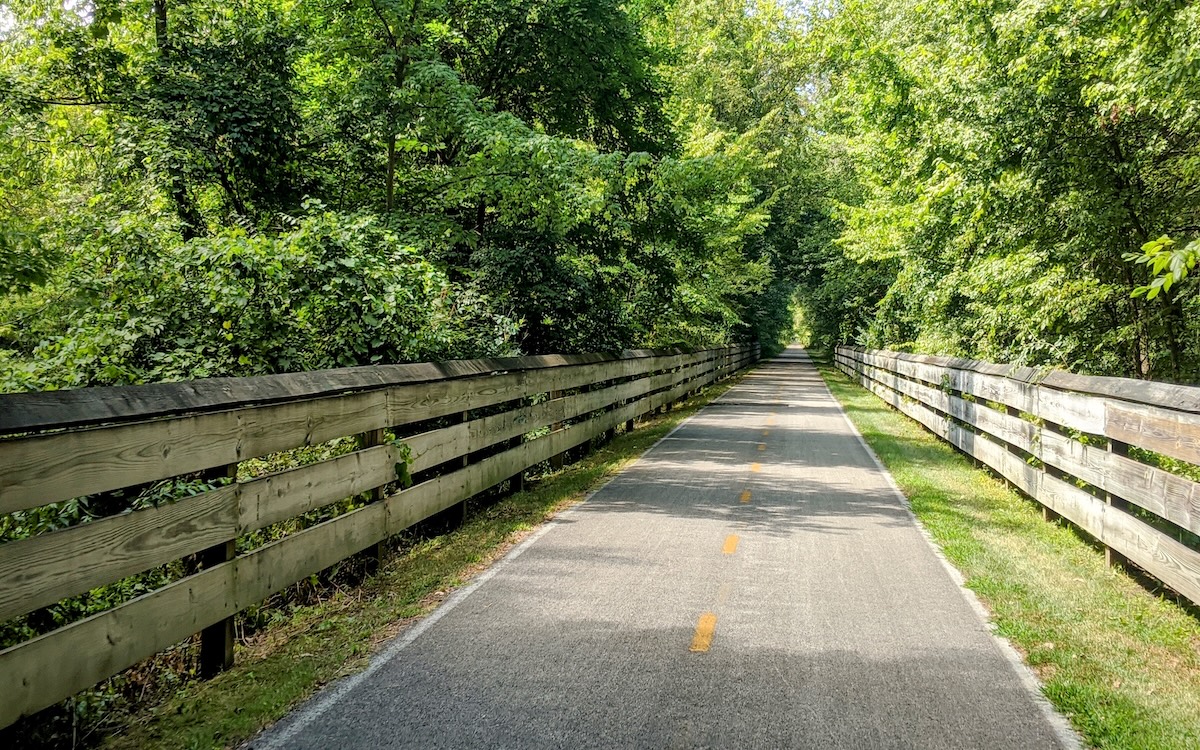
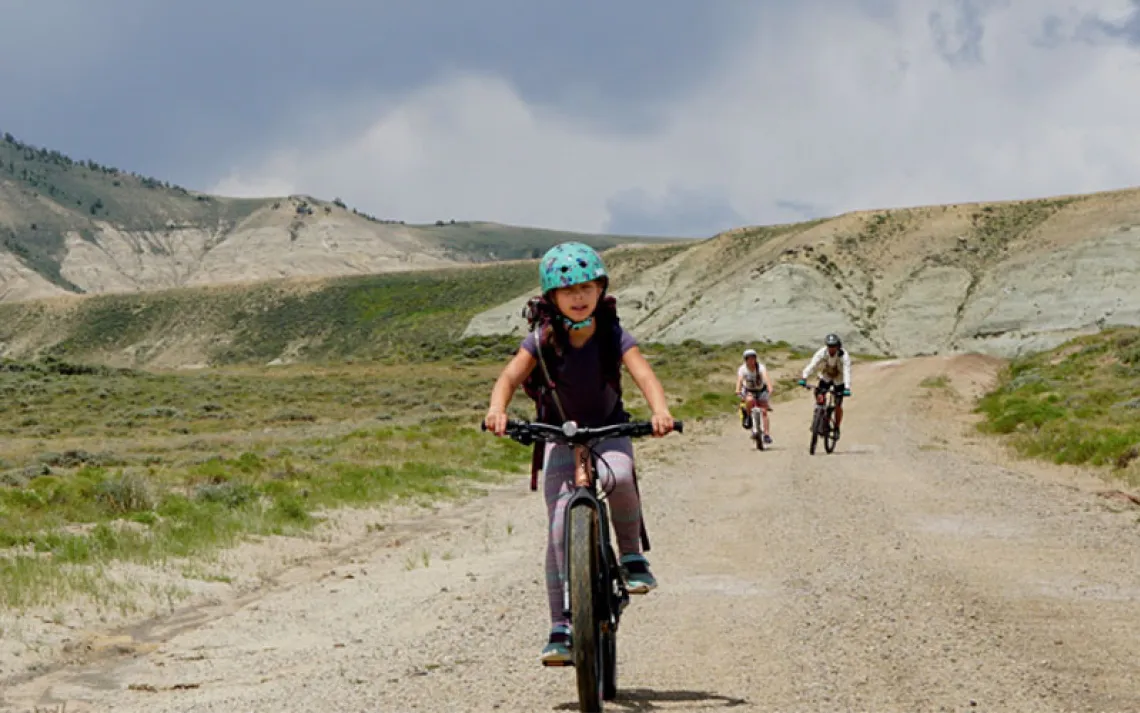
The Wabash Cannonball Trail in Ohio. | Photo courtesy of Brandon Withrow
According to a 2024 survey from Ipsos for the League of American Bicyclists, 77 percent of Americans say they agree on the statement “My community would be a better place to live if bicycling were safer and more comfortable.” Roughly 60 percent of Americans favor increasing funding for bikeways and sidewalks, with 29 percent saying it should stay the same. Only 4 percent say it should be decreased.
A 2025 YouGov survey showed that 76 percent of Americans are “much more likely to support bike lanes in their local area than to oppose them.” According to the survey, “Americans who live in cities (81 percent) and suburbs (78 percent) are more likely than people who live in towns (71 percent) and rural areas (66 percent) to support bike lanes in their area. Democrats (90 percent) are more likely than Republicans (66 percent) to support bike lanes.”
These data make clear that the administration is angling to eliminate a program that a majority of Americans support.
Sweet Trails Alabama, for example, is a comprehensive project to connect communities in all 67 counties of the state. A strong proponent of the plan, Alabama Republican State Senator Andrew Jones, grew up next to the Chief Ladiga Trail, which now connects to the Silver Comet Trail in Georgia. “I thought ... how cool would that be to have a trail system around the state?” Jones recalled. That network dream became a goal when he was elected.
Jones pointed to a pivotal study from the Hoover Institution about what Alabama needs to do to grow its economy. The report notes that Alabama’s “natural endowments” are “undercapitalized” and have potential to draw in “skilled workers” and cutting-edge firms. But the state needs a “substantial, coordinated, and long-term program of investment in outdoor recreation infrastructure,” which includes bike trails.
The report helped policymakers see the bigger picture. “It was the biggest piece of low-hanging fruit for us to recruit and retain young tech talent,” Jones said, “to keep our best and brightest here in Alabama, and to grow our economy.”
The Sweet Trails Alabama statewide trails project offers recommendations for how local communities can navigate the funding opportunities available to them for planning, designing, building, and maintaining trails. “When you have a statewide plan,” said Jones, “it encourages people to think about how you can build in tandem with your neighbor, and take something you have, with something they have, and make something bigger and better for everyone.”
In Florida, Republican Pasco County Commissioner Kathryn Starkey has built a reputation as a trail advocate. She and her husband take their bikes everywhere on vacations as their main mode of transportation. Before she was a commissioner, she was involved in working to connect two trails, the Starkey Wilderness Park Paved Trail, which was land once controlled by the Starkey family ranch, and the Suncoast Trail. Local government agencies involved said they wanted the trails to connect, she said, but the other agencies didn't. “When I finally got them all in the room together,” Starkey said, “we had it connected in 15 minutes, and it was a six-mile gap.”
That became “part of the impetus for the Coast to Coast Trail, which is a very popular trail in Florida,” she added. Afterward, she was appointed to the state’s Greenways and Trails Council by then-Governor Jeb Bush.
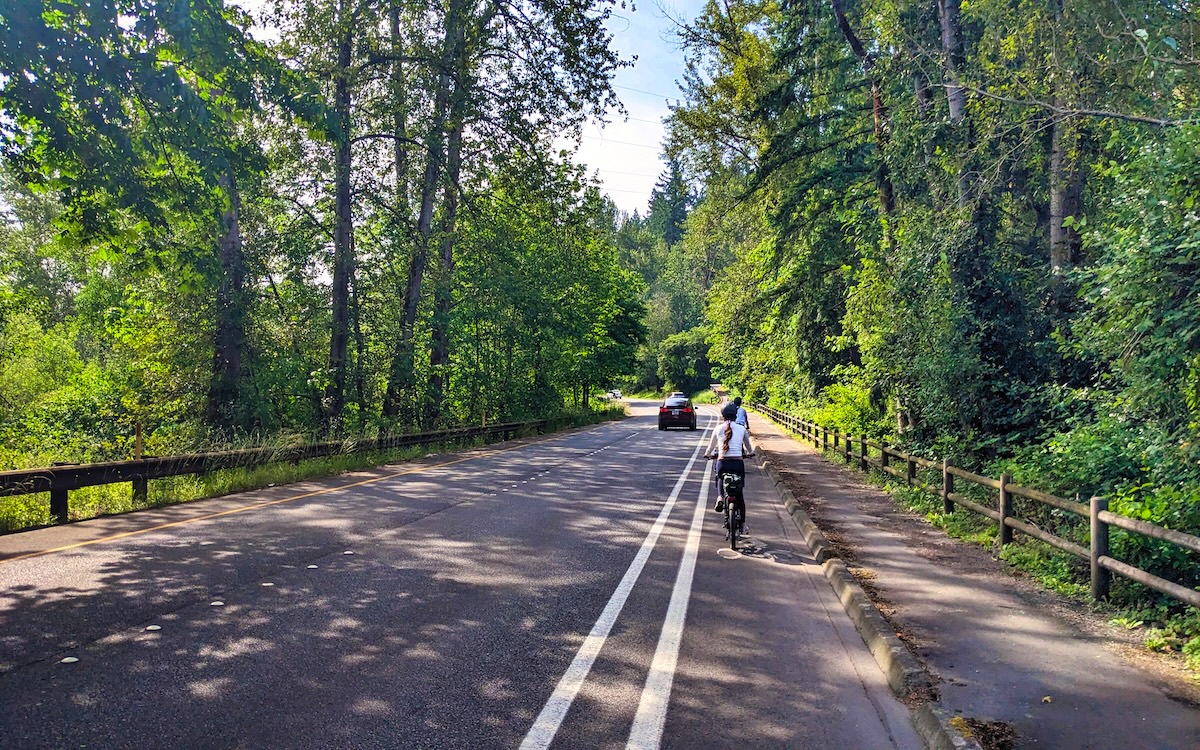
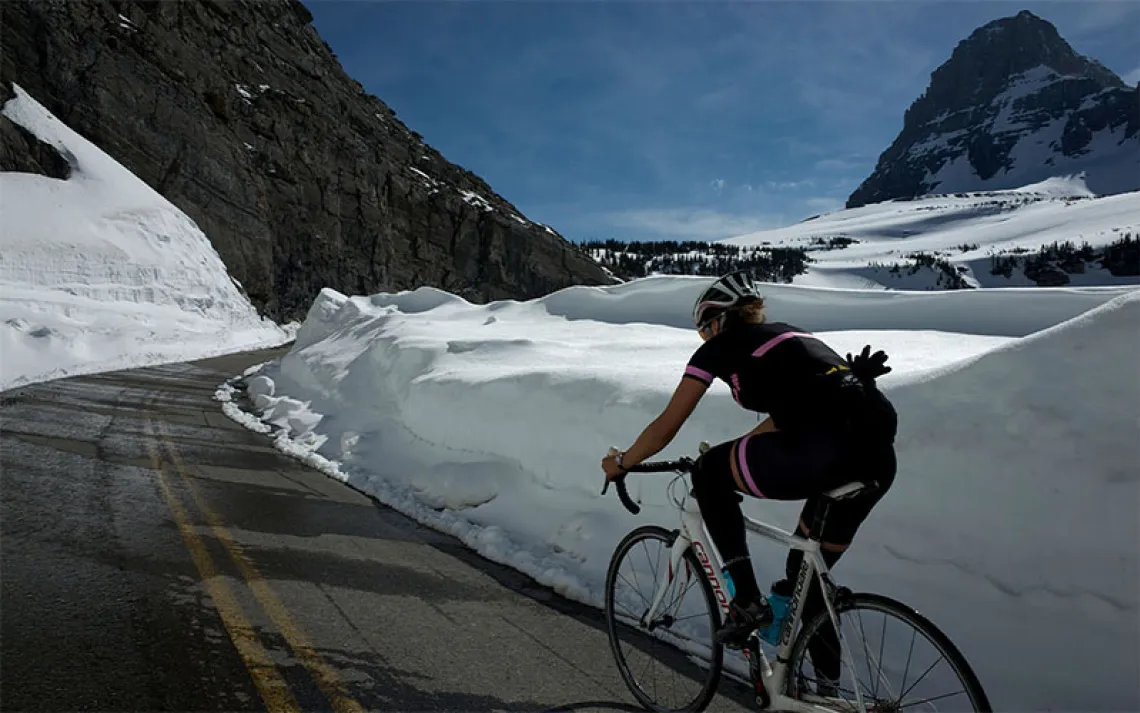
Dedicated bike lane in Bellevue, Washington. | Photo courtesy of Brandon Withrow
Not everyone sees the full value of a trail system. The growing Orange Belt Trail was opposed by the rural town of San Antonio, Florida. The town’s mayor said that officials and locals weren’t opposed to a trail, but they worried that if it went through residential neighborhoods, it would bring crime or require eminent domain. Just over a mile away, the town of Saint Leo and its university saw this as a welcome opportunity to have the trail in their town.
For now, the Trump administration opposes bike lanes and trail funding. Transportation Department officials argue that bike lanes create congestion and are “hostile” to cars. The USDOT currently recommends removing bike lanes and increasing car lanes to improve traffic.
But none of this is backed up by science. Nicole Mortillaro, reporting on global studies of traffic at the CBC, showed that bike lanes reduce congestion and improve safety. Global studies repeatedly show that adding more car lanes results in more traffic due to “induced demand.” USDOT officials did not respond to a request for comment.
While Starkey prefers cycling on multiuse paths over bike lanes for safety reasons, she said she was surprised to hear bike lines derided as “DEI.” Due to the popularity of trails, she doesn’t believe Congress will accept the proposed funding cuts. Florida’s support for trails is strong, she contends, frequently leading to land donations and other forms of funding, including taxes that Florida citizens have approved.
In Alabama, Jones said he's asked his delegation in DC for support. “I do think it would be a mistake for the Feds to cut funding for those types of programs,” said Jones, “because they're essential.”
Some of the administration’s efforts to claw back trail progress have already been enacted. Many existing grants for pedestrian and bike trails and lanes in communities were canceled last year. In Montgomery, Alabama, a $36.6 million grant for the Selma-to-Montgomery Trail was revoked as part of the One Big Beautiful Bill Act.
Despite setbacks elsewhere, states are still improving trail infrastructure. In my home state of Ohio, Governor Mike Dewine plans to award $21 million for bicycle and pedestrian infrastructure across 16 counties.
For my part, I plan to continue riding on the Wabash Cannonball Trail with friends and neighbors on two wheels.
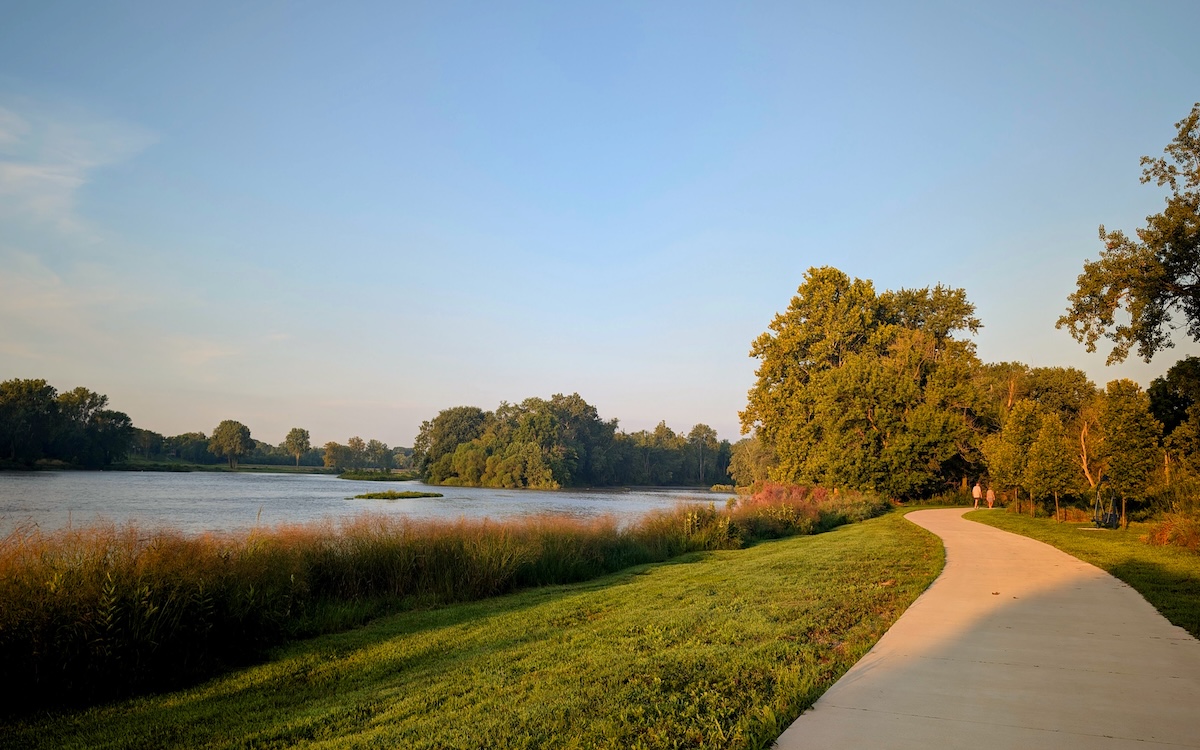
Multiuse trail along the Maumee River in Ohio at Side Cut Metropark. | Photo courtesy of Brandon Withrow