What’s Next for Florida’s Black Bears?
New challenges emerge for advocates who hope to save the state’s black bear population
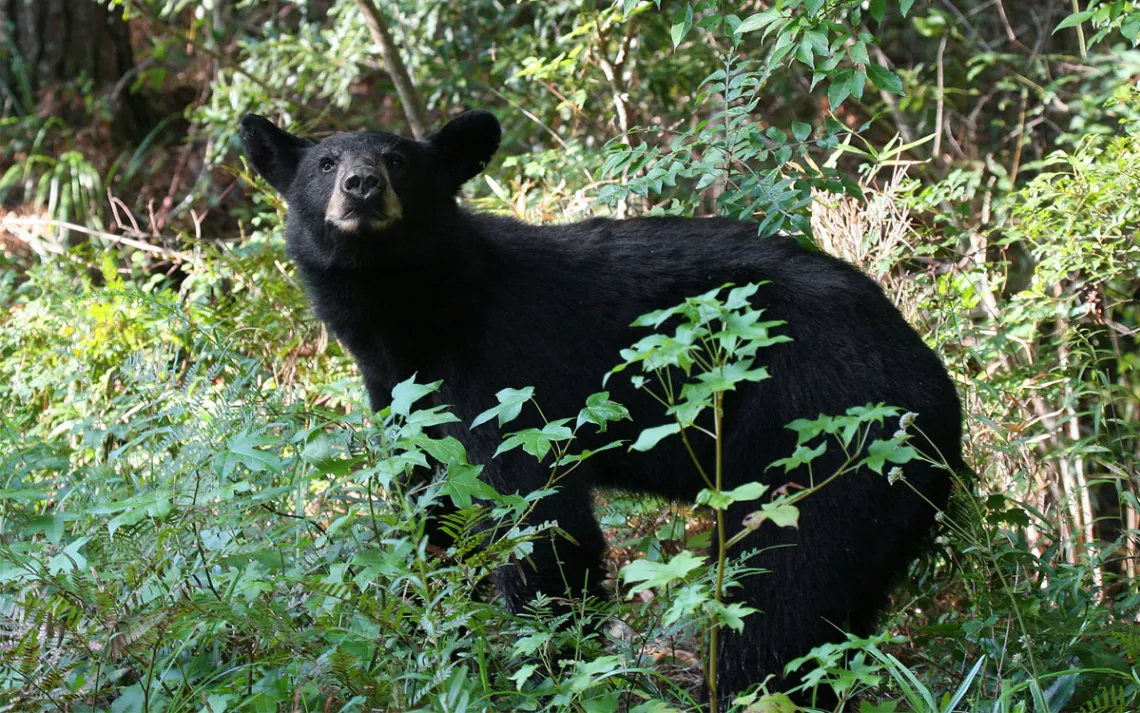
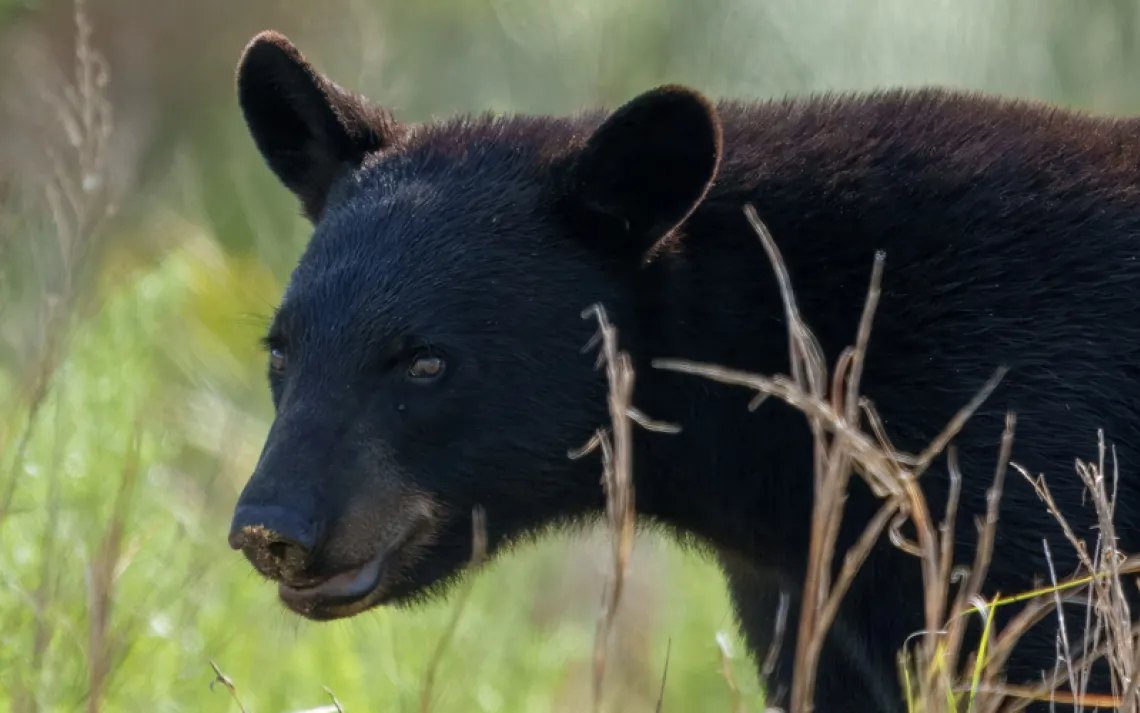
A Florida black bear in the St. Marks National Wildlife Refuge. | Photo by Teresa Darragh/USFWS
When the state of Florida held its first bear hunt in a decade back in December, multiple organizations joined forces to encourage people to purchase hunting licenses. They wanted to save bears by getting tags in the hands of nonhunters. By many counts, they were successful. “I think that we can claim victory,” said Katrina Shaddix, executive director of Bear Warriors United, “because we saved 120 bears that were sure to be killed.”
But now bear advocates face new challenges. That hunt and the one that will come at the end of this year have raised concerns: about what to do with the money made from the sale of hunting tags, about expanded methods of hunting, and about the general makeup of the wildlife commission.
Nearly 15,000 people applied to win a tag that would give them the right to kill a bear. Those selected in the drawing had to pay additional money to claim it. The Florida Wildlife Commission made over $800,000 from the sale. That doesn’t account for the additional money new hunters spent to get a hunting license.
Some bear advocates wonder how that money will be spent. The commission’s website states they anticipate the money will “go into the State Game Trust Fund and will be used for wildlife conservation,” but they haven’t shared specific uses.
“I think it should be used as they did in 2016, with the money after the 2015 hunt—to incentivize communities to institute bear-wise programs,” said Chuck O’Neal, the president and founder of Speak Up Wekiva and Speak Up for Wildlife. “I would hate to see it just go into the general fund. I think that would be tone-deaf on the part of the commissioners.”
Reforming the FWC
While wildlife advocates question the commission’s decision to revive a bear hunt, many commend the work of the FWC employees. “A lot of us rail against the FWC, but what we're really railing against are the commissioners on the FWC,” O’Neal said. “The people on the ground—the employees—are good people that work hard and do a lot of good.” In an update on bear populations, FWC staff never stated that a hunt was needed, yet commissioners still asked them to put together a plan for a bear hunt.
Meanwhile, the commissioners continue to portray the Florida black bear as a conservation success story. However, the estimated number of bears, which grew from a couple of hundred to over 4,000 when hunting was restricted, has remained unchanged in the last decade.
Last year, FWC chairman Rodney Barreto said that a hunt would be a good way to slow population growth, but that contradicts the intent of another wildly popular state initiative—the Florida Wildlife Corridor. The sole purpose of the corridor is to provide pathways for isolated members of species, like bears and panthers, to connect, start new families, and widen their genetic diversity. In short, it was created so that the population could grow.
The seven commissioners are appointed by Florida’s governor and confirmed by the Florida Senate, meaning Florida voters don’t get a say in who serves on the team. Many on the commission also have ties to real estate and development. “I don't think that a board of developers [is] going to really be interested in determining the fate of our wildlife, other than managing it in a way that they can continue to make a profit off the land,” Sarah Younger, a conservation committee member at the Sierra Club’s Florida Chapter, said.
Wildlife supporters would prefer to have those roles filled by people with a scientific background. Some lawmakers agree. Democratic Florida Senator Carlos Guillermo Smith currently has a bill filed that could reform the FWC. Senate Joint Resolution Bill 1364 states there should be nine qualified members of the commission, as opposed to seven, and requires that at least three of the commissioners have education and work experience related to conservation, biology, or wildlife management. Florida’s legislative session lasts until March 13, 2026, and the future of the bill is uncertain.
Training dogs and perks for private landowners
Currently, a hunt is still expected to happen again in the fall, though there are some key changes. And in 2027, canines will be able to join the hunt. Advocates are appalled at the idea of dogs chasing bears into trees, giving hunters an easy shot.
Another issue exists beyond the welfare of the bears, said Adam Sugalski, the leader at the Bear Defenders campaign. Sugalski has been involved in a five-year investigation involving dogs hunting deer in Florida. “It's animal torture,” he said, “but under the guise of conservation or training.”
He created Thedogwars.com as a way of sharing what is involved when using dogs for hunting—a process referred to as “hounding.” He shared some of the gruesome activities he’s seen in his undercover work, saying, “[T]he dogs wear a shock collar around their neck with GPS tracking, and you can see these holes dug in their necks.” In one encounter, he recalled. “They had it on the dog's neck for so long, it was infected.”
Another key change is related to the use of private land. Starting this year, landowners who meet certain criteria, such as having a minimum of 5,000 connected acres, can apply for tags without the need of entering a random drawing. Those tags given to landowners will be deducted from the total number available for hunters who utilize public lands. “It's a rich man's trophy hunt predominantly,” said Rhonda Roff, a member of the Florida Sierra Club’s conservation committee and chair of the committee for the Calusa group. “And it's just a microcosm of the ever-widening wealth and rights and privilege gap that's happening through society.”
In last year’s hunt, 45 of the 52 bears were killed on private land. Hunters still had to be selected in the random drawing, but there was one key difference for those who hunted on private lands. According to the 2025 Guide to Bear Hunting in Florida, a hunter on private lands could shoot a bear while it was eating at a feeder. “The idea that this is fair chase is totally thrown out the window if you're baiting for a bear,” said Younger, who is also the co-chair of the conservation committee for the Suwannee St. Johns Sierra Club group. “That’s like shooting fish in a barrel.”
Hope for Florida’s bears
Although many bears were saved, almost half of those were female. “We still believe that that's a lot of bears,” Roff said. “It’s an unnecessary number of bears to be taken, especially since there are other causes of mortality.” The FWC has stated that up to half of cubs die before they reach their first birthday and over 200 bears are killed by vehicles each year. FWC’s data also shows that from 2014 to 2024, 183 bears were killed illegally. Those only account for the number they’re aware of, though. Research conducted by the pro-hunting Boone and Crockett Club states that 95 percent of poaching crimes are never discovered.
Supporters are prepared to help buy up tags again if a hunt happens in 2026, but they hope they won’t have to. Bear Warriors United has filed a lawsuit against FWC to stop the hunt. They argue there’s a lack of current scientific data that would justify it, thus violating the Florida Constitution.
Shaddix said she expects the case to go to court in August. She’s also applying to get the Florida black bear relisted as a state threatened species. “We’re going to fight to win this lawsuit,” she said. “In honor of the 52 bears that were slain.”