Your Travel Decisions Can Have a Positive Impact
The destinations, tour operators, and lodgings you choose can make a difference
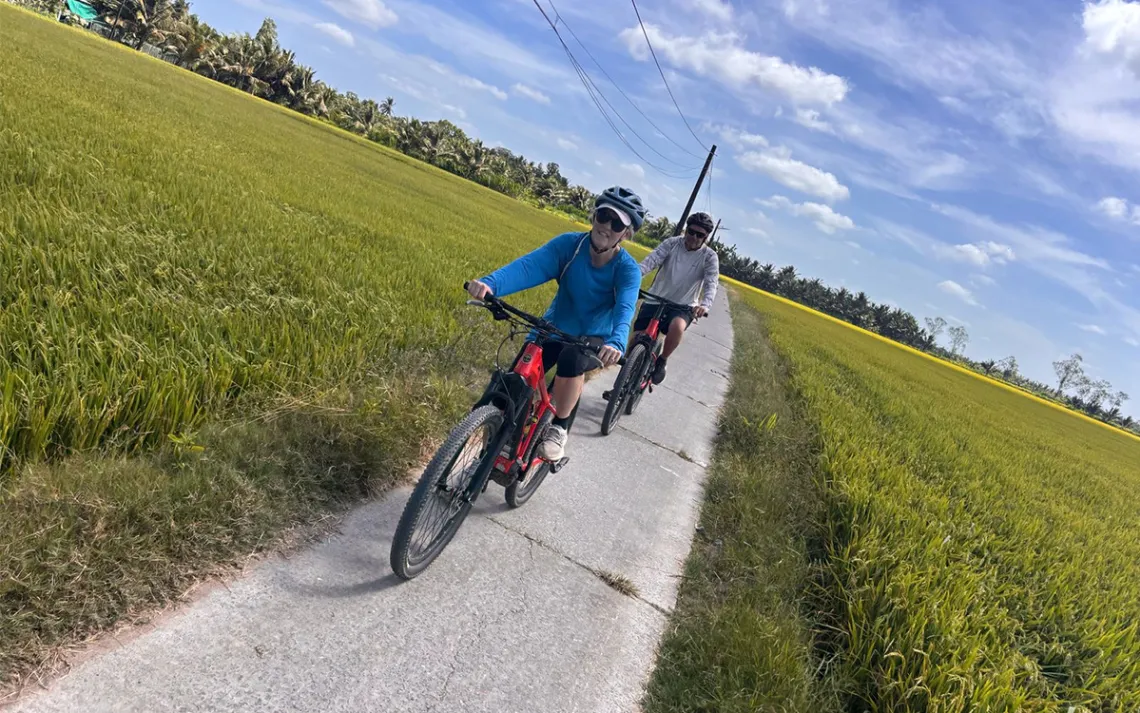
Photo courtesy of Amy Brecount White
Fields of bright-green leaf blades waved around me in a welcome breeze as I navigated a band of concrete that cut through rice fields. These were often the only road around as my husband and I followed our Mr. Biker Saigon guide on an e-bike tour of the Mekong Delta. Most Vietnamese people travel on motorbikes, not cars; our journey took us past homes, graveyards, fields, groves, and small factories. Multiple river crossings required loading our e-bikes onto ferries, and usually we were the only non-Vietnamese people aboard.
Our three-day trip in part supported a homegrown entrepreneur who founded the company, Thai Minh Hang, which sells e-bikes. After starting with half-day jaunts through Ho Chi Minh City, his 10-year-old company now offers bike tours throughout Vietnam and Cambodia while supporting local businesses—we loved the Vietnamese coffee shops—and hiring local guides.
Like us, many travelers seek to spend their dollars on destinations, tour providers, and lodgings that support local economics, not multinational corporations. Such decisions can help travelers avoid contributing to unwelcome and potentially destructive trends, such as overcrowded destinations and “tourism leakage.” A 2010 United Nations report expanded on this term that had been coined earlier.
“High levels of leakage can seriously undermine the positive development impacts of tourism. Leakage is the process whereby part of the foreign exchange earnings generated by tourism, rather than reaching or remaining in tourist-receiving countries, is either retained by tourist-generating countries or other foreign firms,” says the 2010 United Nations Conference on Trade and Development. The report states that, at that point, the average leaked for developing countries was “between 40 to 50 percent of gross tourism earnings.” They estimate 10 to 20 percent economic loss for more developed countries.
“The net result is that substantial opportunities for income and employment multipliers in the tourism sector are lost,” the report adds. Tourism in Gambia and Laos, for example, found “large shares of tourists' expenditures are absorbed by international tour operators, foreign airline companies, and foreign-owned hotels and restaurants, with only 14 and 27 percent of total tourism expenditures reaching the poor living in destination areas.”
In short, if you’re not careful, your tourism dollars leak away and don’t support the struggling local economies or ecosystems you visit.
One way tourism providers have battled tourism leakage is by applying to receive the B Corporation, or B Corp, designation. The tough-to-achieve designation is “an integrated business certification that assesses and verifies a company's social, environmental, and governance impact against the B Lab Standards.” A B Corps designation shows a company cares about more than its bottom line. Consumer brands include REI, Seventh Generation, and Cabot Creamery.
Certified as a B Corp since 2007, Untours offer worldwide apartment stays to encourage visitors “to live like a local” and connects visitors to local hosts. Intrepid Travel, a B Corps since 2018, has significantly improved its B Corp score since then, which is reviewed every three years.
Some travelers are on board. Barbara Threatt of western Massachusetts has taken 30 trips with Intrepid. Their sustainability focus was “a huge part of what attracted me to them,” she says. “The accommodations they use, with rare exceptions, are small B and B's and inns and home stays that are owned by the people who are there. They’re very intentional about supporting the local economy.”
“The B Corp certification holds us accountable to ensure we're meeting the highest standards of social and environmental performance, transparency, and governance,” says Leigh Barnes, Intrepid’s president of the Americas. “If we don't have communities that want us to travel there, and we don't have a healthy planet, we don't have a product.”
The company emphasizes local hiring and accommodation suppliers, along with advocating for women travel leaders and Indigenous tourism products. In Morocco, they’ve worked “with the government to ensure that women are able to get access to the relevant permits,” says Barnes. “We now have a number of female leaders in Morocco.” Like many B Corps and regenerative-focused providers, Intrepid formed a foundation that recently raised $50,000-plus to help rebuild the Grand Canyon’s fire-struck North Rim.
On the skiing front, Taos Ski Valley recently became a B Corp, and the town also has a destination stewardship network visitors can tap into. Bella Coola Heli Skiing in British Columbia offsets its carbon emissions by 110 percent through a project in the Great Bear Rainforest. Guests there pay a 2 percent sustainability fee, which goes to their legacy fund to support the local community.
With his wife and their two children, Mark Fiebert of New Jersey has taken 20-plus adventure trips. Traveling with Lindblad Expeditions—which offsets 100 percent of its carbon emissions and supports science and education—they’re confident their trips contribute positively. They seek less crowded areas and trips that support “local tribes and/or communities because of your visits.” On a Tasmanian trip with the World Wildlife Fund-allied Natural Habitat Adventures to a preserve area, they saw Tasmanian devils, which are at risk due to disease, and learned how the preserve is trying to help.
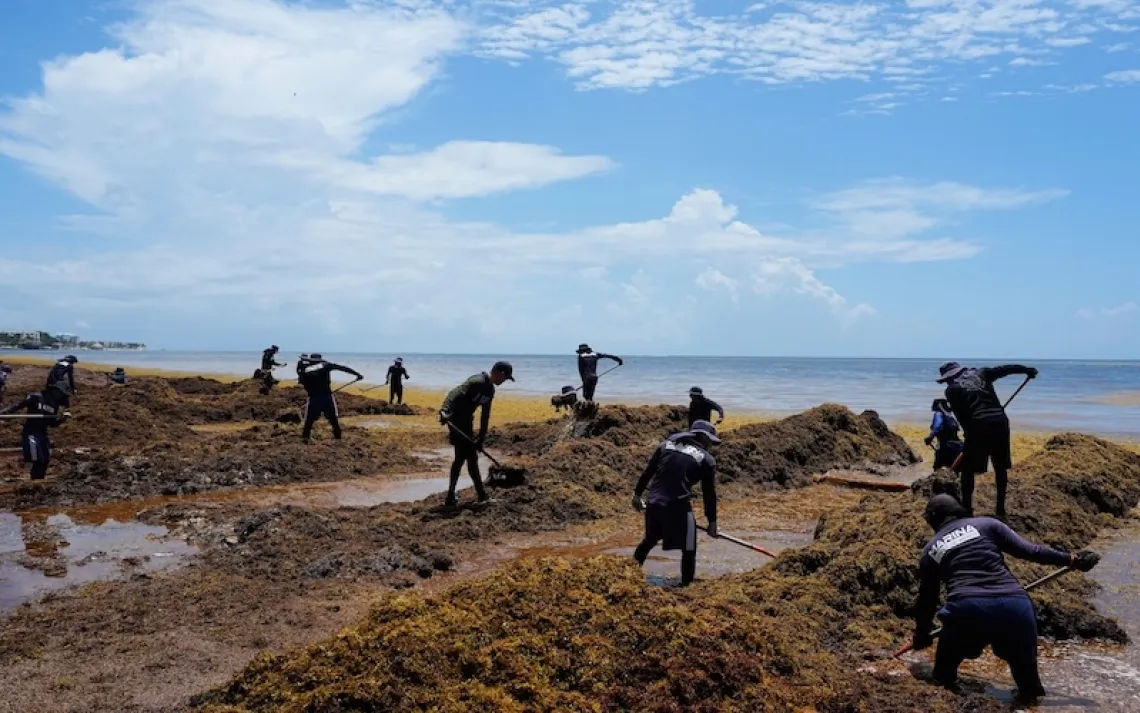
Some tourism providers are actively repairing ongoing ecosystem damage. For the past three summers, the Canadian tourism provider Maple Leaf Adventures collaborated with other companies and Indigenous partners to remove pollution from the British Columbian coastline they market using gloves, lift bags, and helicopters. They also work with Indigenous guides and supply their ships at local ports.
Kevin Smith, expedition leader and president of Maple Leaf Adventures, describes them as battling pollution that’s “like a slow-motion oil spill onto our coast, that harms shorelines and wildlife. To us, it’s not done until whales stop being entangled, plastic stops breaking down on beaches, and seabirds are out of danger of ingesting plastic.” Through three marine-debris clean-ups, they’ve cleared 327 tons from over 1,500 beaches. “Doing this work as part of travel is what to us the future of tourism looks like,” he says.
Mindful travelers can support Indigenous communities by choosing tribal-owned lodgings that reflect their heritage through the décor, cuisine, and the excursions they offer. Outside of Seattle, the Snoqualmie Tribe owns the Salish Lodge and Spa perched near the 268-foot, sacred Snoqualmie Falls. Staying at the Hualapai-owned Grand Canyon West can include the experience of tribal members bird singing, viewing the canyon from their cantilevered glass bridge, or going whitewater rafting with tribal guides, including a helicopter lift from the canyon.
Many environmental advocates now prefer the term regenerative to sustainable travel. We don’t need to maintain a status quo—we need to restore and regenerate destinations and communities, they argue. At a recent salon in New York City hosted by Regenerative Travel, I was impressed by international independent operators who work to improve the ecology and economy of their sites.
When the founders of Hamanasi Adventure & Dive Resort in Belize were advised by their builder to cut down the coastline trees so guests would have an ocean view, they did the opposite. Instead, their lodges are built into the trees, so guests have immersive canopy experiences. The family-founded Antara Luxury River Cruises explores the culture and wildlife of river systems across India on boats handcrafted in India that showcase Indian handicrafts.
“The idea is that through this immersive, low volume, low impact river cruise experience, we can bring these stories to life,” says Arjun Sinsinwar, the company’s chief inspiration officer. “We can regenerate and contribute positively to these remote rural locations.”
Respecting wildlife needs in her travels is especially important to Christie Greene, the founder of the Evergreen, Colorado, nonprofit Wild Aware, which seeks to reduce human-wildlife conflicts and collisions. After her son’s wedding in South America this year, she plans to visit Patagonia because that makes sense from a carbon emissions standpoint. A fellow volunteer recommended Estancia Rincón Chico in Argentina, located in a UNESCO Biosphere Reserve and a marine mammal sanctuary. Part of the guest fee supports the family’s nonprofit, Conservación Peninsula Valdés.
“They don’t let you go into a boat to see the whales because it's a protected area. You can only look at them from the shoreline of the property,” Greene explains. “I would not go somewhere that has plastic single-use things in the rooms, and they greet you with a plastic water bottle, and there's no sense of community or connection with the environment.”
Catamaran cruising continues to make eco-progress. The worldwide catamaran yacht-rental company Dream Yacht Charters has partnered with others to create a NEO program, which basically upcycles and upgrades fleet catamarans that are passed their prime. The NEO boats get new engines, solar panels, and low-consumption air conditioning systems. TradeWinds, another cruising company, now sells and offers cruises on a “smart electric yacht” whose main power sources are solar, wind, and hydrogen fuel cell technology, along with a backup gas generator. Sunreef Yachts also offer green-propulsion options.
Can we hope the popular tide is turning toward more tourism support for local communities? It will if we all do our part.