 The Magazine of The Sierra Club
Haven for Honeycreepers: A Visit to Hakalau Forest National Wildlife Refuge
This protected area provides important habitat for endemic wildlife and plants on Hawaiʻi Island
Photos by Jill K. Robinson
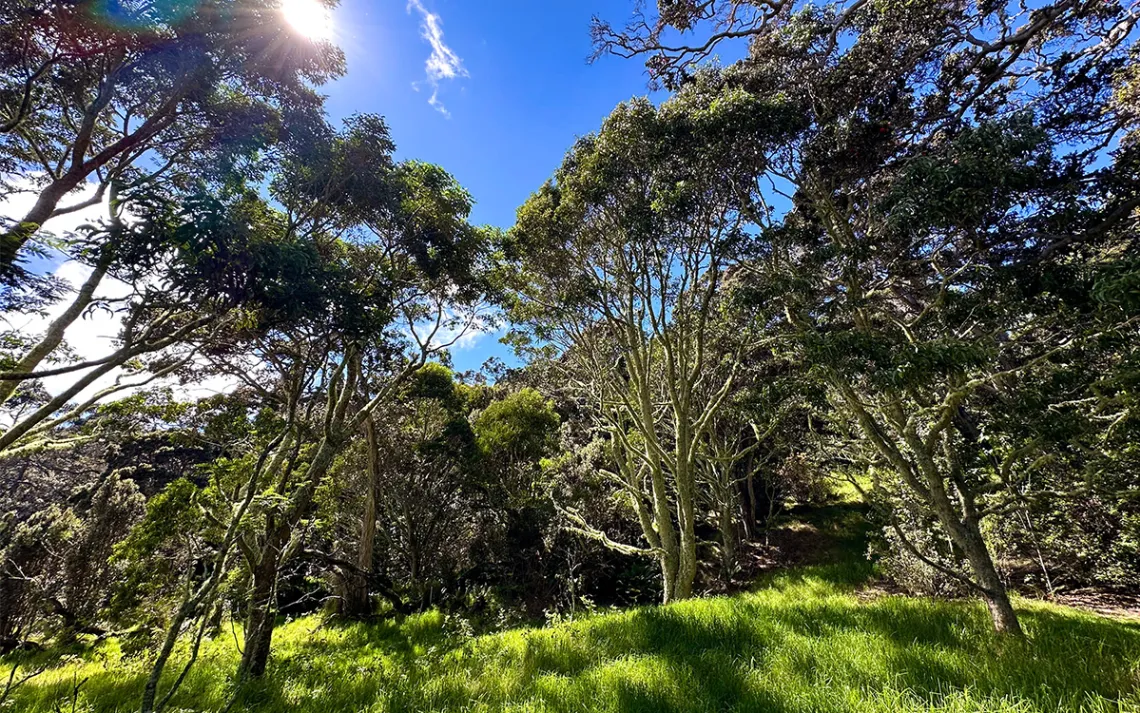
I stepped off the trail and walked between grassy hummocks, in the midst of koa and ʻōhiʻa trees, in Hakalau Forest National Wildlife Refuge. Chirps, songs, trills, warbles, whistles, and feathery flutters greeted me like a birdsong soundtrack. All these Hawaiian honeycreepers rely on the forest for their survival.
The refuge was established in 1985, on the windward slopes of Mauna Kea on Hawaiʻi Island, by the US Fish and Wildlife Service with the support of The Nature Conservancy. Hakalau Forest became the first national wildlife refuge to encompass rainforest as well as the first to be set aside for native forest birds. It protects 32,733 acres, and the Kona Forest Unit—an additional parcel on the western slope of Mauna Loa—protects 15,448 acres.
The refuge is the only place in the state where native bird populations are stable or increasing. Because of this management effort, Hakalau has the highest density of three Hawaiʻi Island endemic endangered bird species: the ʻakiapōlāʻau, Hawaiʻi creeper (ʻalawī), and Hawaiʻi ʻakepa. The refuge is one of the only areas in the Hawaiian Islands where six species of Hawaiian honeycreepers can be found in high numbers, including the three endangered birds, one threatened species (ʻiʻiwi), ʻapapane, and ʻamakihi.
Hawaiian honeycreepers are a group of more than 50 species and subspecies endemic to Hawaiʻi and represent one of the most impressive examples of adaptive radiation on Earth. Hawaiʻi’s native forest birds are essential in local ecosystems and traditional culture; protecting them is part of honoring the reciprocal responsibilities that people have with the land.
But these endemic species are facing an immediate extinction crisis. Clearing native forests for ranchland and the sugarcane industry has caused destruction to forest bird habitat, and some native birds have already gone extinct.
“Many of Hawaiʻi’s birds are on the brink of extinction,” says Jack Jeffrey, photographer and former wildlife biologist for Hakalau Forest NWR. “In the more than 50 years since I’ve been in the Hawaiian Islands, seven bird species have become extinct.”
Introduced ungulates (cows, sheep, goats, and pigs) and predators (rats, mongooses, and feral cats) have destroyed native plants and trees, and eaten native birds and their eggs. Warming temperatures have caused cooler, higher altitude environments where native forest birds used to be safe from introduced mosquitoes to now become hospitable to those mosquitoes, which spread diseases like avian malaria and pox.
The staff at Hakalau is tasked with aggressive management efforts including fencing, control of feral ungulates and invasive weeds, and reforestation of former pasture lands. A process of collaboration between conservation agencies and academic institutions has resulted in a better understanding about invasive species control and the habitat requirements of endemic species.
The Friends of Hakalau Forest NWR was established in 2006 as a nonprofit organization and provides volunteer labor to aid the responsibility that the federal government has to manage the refuge—propagating and planting native trees and rare plants, conducting weed-control efforts, and raising funds for necessary facilities.
“It’s a daunting task to protect the endangered forest birds in Hawaiʻi,” says Peter Stine, board president of Friends of Hakalau Forest NWR. He worked on the design and preparations for establishing the refuge in his former job as the endangered species recovery coordinator for the Fish and Wildlife Service. “Hakalau demonstrates that it’s possible to have positive results with increased and stable populations. It really is the very best place that’s an example of what native forests once looked like and where their inhabitants flourished.”
The conservation success story at Hakalau wouldn’t have happened if it weren’t for thousands of volunteers and staff who believe in protecting native habitats.
“As a result of their combined work, habitat has been created in what was once open pasture,” says Jeffrey. “Where 35 years ago not a tree stood and not a bird could be heard, today these areas covered in young forest and native birds are abundant.”
Jason Cohn, president and COO of Hawaii Forest & Trail, first visited Hakalau Forest when he was nine years old. “I was told that when I was an adult, there would be no more ʻakiapōlāʻau left,” he says. “Those koa trees are now 30 feet tall and have ʻakiapōlāʻau in them. That’s a direct result of the efforts of Hakalau Forest NWR and Friends of Hakalau Forest working together. It’s like a symbiotic relationship that you’d see in nature, except it’s happening for nature.”
Visiting Hakalau Forest National Wildlife Refuge
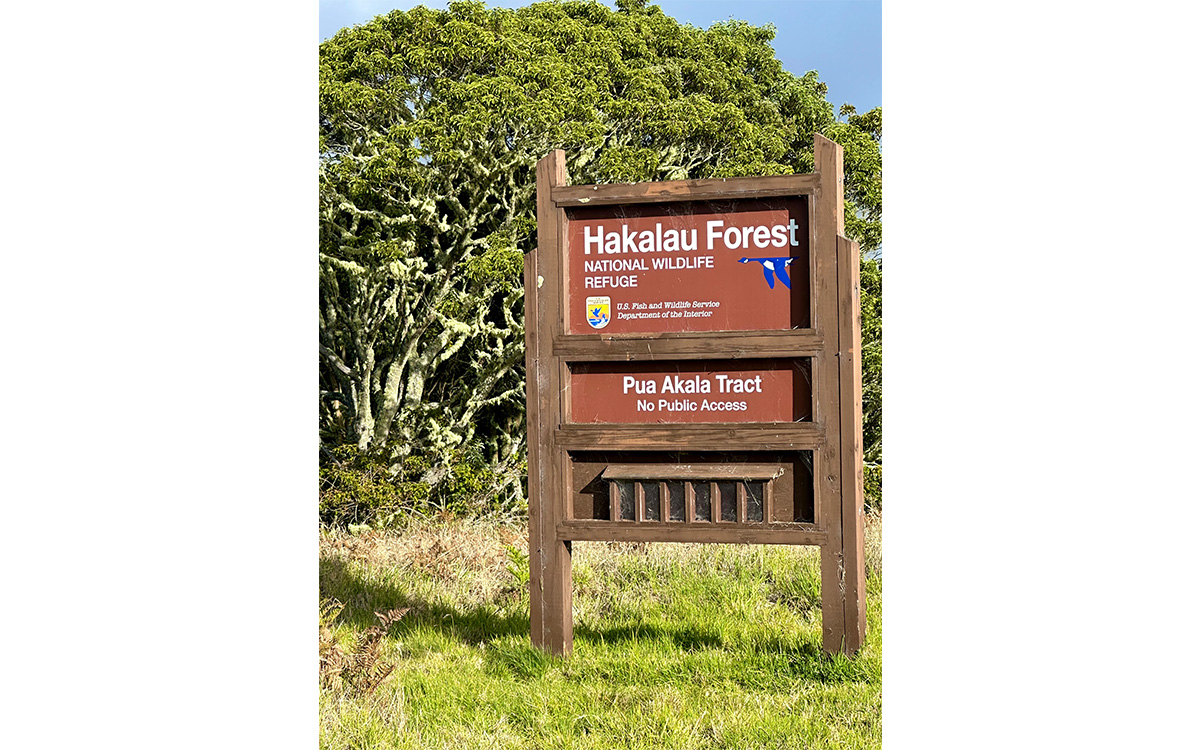
Access to Hakalau is closed to self-guided activities due to concerns about the introduction of invasive plants and animals, fire hazards, and diseases (such as Rapid ʻŌhiʻa Death, a fungal disease threatening native ʻōhiʻa trees). The public can visit through refuge-sponsored events and tours and volunteer service trips, and a limited number of guided tours are available through authorized commercial operators like Hawaii Forest & Trail. These tours offer visitors the opportunity to experience the refuge’s unique biodiversity with experienced and well-informed guides while adhering to protocols that protect the delicate ecosystem.