Zoologists Are Still Working Out Who’s Biting Us
Mosquitoes and other bloodsuckers play an important role. It's time we learned their names.
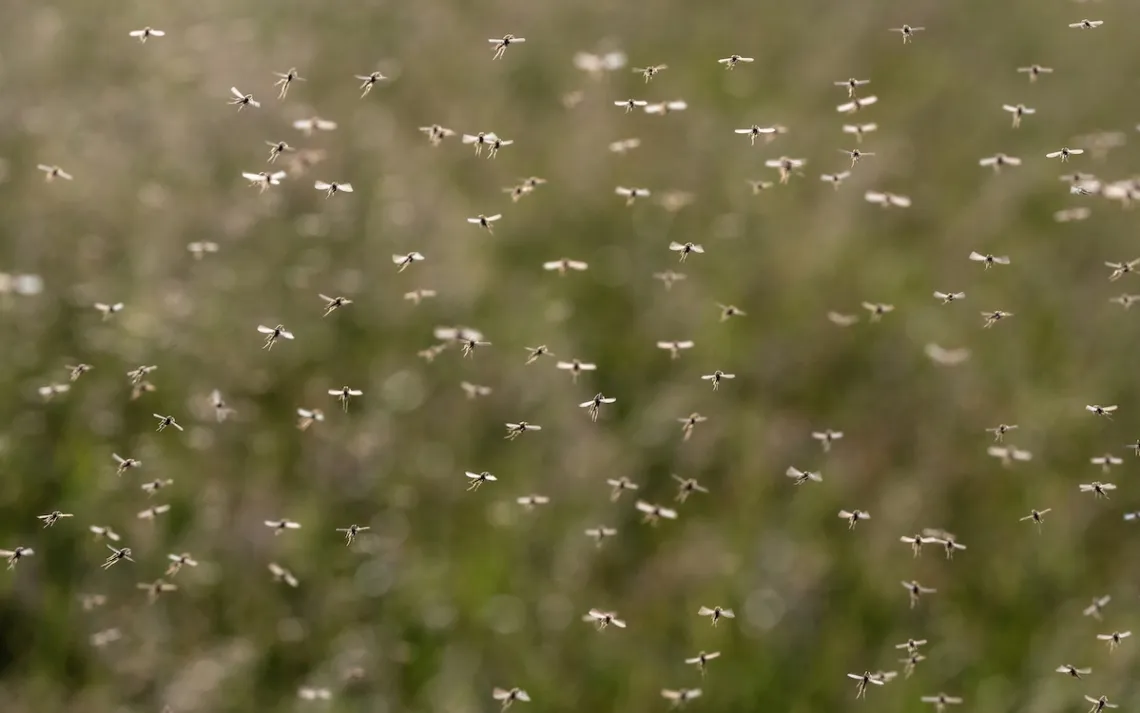
Photo by Hans Verburg/iStock
I know that insects are not capable of psychological warfare, but I was beginning to have my doubts. Sitting on the gray Jurassic sandstone of central Utah, scratching away at teeth and bones that I had hiked to the stony hill to uncover, I tried to take stock of the damage inflicted so far as a small gathering of gnats buzzed next to my ear. Tiny, itchy welts lined the edge of my baseball cap and the outer limits of the sleeves and socks I’d pulled on to discourage the thirsty little biters. A gnat hat was out of the question. The blood-feeding insects were so small they’d just fly through and become trapped in with me. And I didn’t even know what exactly to call them.
We’re all familiar with bloodsuckers. Cedar gnats, mosquitoes, midges, punkies, and more. They’re often simply called “bugs.” But why not get to know their real names, and even learn how to love them instead of see them as a nuisance?
When zoologists name new animal species, like a curious and fuzzy new butterfly, the news takes notice. Blood-feeding insects don’t have such friends in the press. We primarily speak of mosquitoes and company as dangerous vectors, some of the deadliest animals on the planet for their propensity to harbor infectious disease, and are so—pardon—bugged by them that we spray ourselves down with toxic chemicals that are bad for us and the environment rather than itch our way through the night. But the fact is, these sanguine sippers are just as evolved as we are and are part of our planet’s biodiversity.
“Mosquitoes and many of these other groups of biting flies are diverse and, even for experts, challenging to identify and require experience and training,” says University of Florida entomologist Lawrence Reeves. At present, he notes, there are about 3,700 mosquito species described globally. The real total is probably three to five times that number, Reeves says. Entomologists certainly have their work cut out for them.
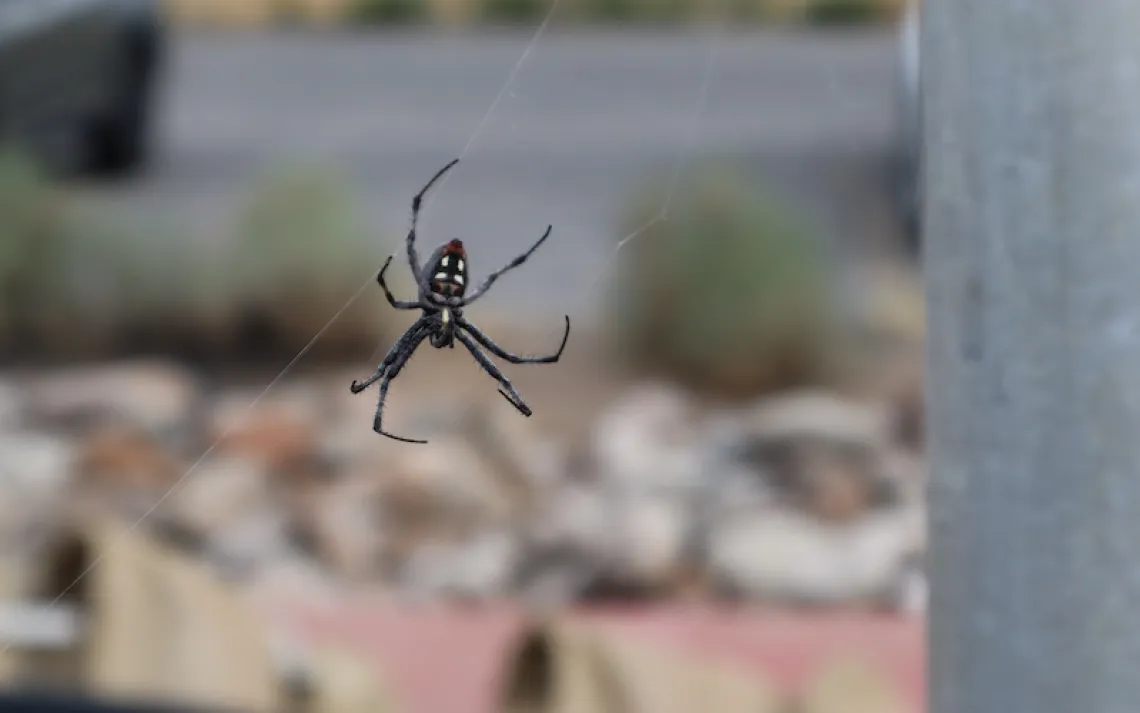
So we often hate what doesn’t even have a name. Utah’s Antelope Island, home to some magnificent spiders, also hosts biting insects of an as-yet-unknown species. Midges collected by Natural History Museum of Utah entomologist Christy Bills and park staff don’t match any species documented before, and a preliminary DNA analysis didn’t identify them any further than Culicoides, the genus with more than a thousand recognized species. Tourists go home from Salt Lake shores every summer with itchy bumps and yet the insect doing so isn’t recognized as anything more than “gnat.” Even in well-traveled places, there are likely unnamed insects buzzing around.
Culicoides has a fossil record going back over 99 million years, with no shortage of blood-bearing creatures to feed on since then. Many are tiny with big ranges. Culicoides variipennis, only about 0.039 inches long, about the diameter of a small pin head, are found across most of eastern North America in soggy lowlands and are one of the biters commonly called “no-see-ums” whether you’re being bitten in New Jersey or Wisconsin. The same term is often applied to the cedar gnats of the Utah deserts, distinguished from mosquitoes by the fact that they snip open skin with scissor-like jaws and effectively slobber into it (whereas mosquitoes use near-surgical piercing methods).
And, of course, there’s a great variety of mosquitoes themselves. One of the largest in eastern North America is Psorophora ciliata, a species with females who aren’t shy about seeking out people, livestock, and even other mosquito larvae to get the blood meals they need to form their eggs. Species that may spread disease or feed on livestock tend to gain the most attention, but there are dozens of others that are barely known and an untold number that haven’t even been found yet. When an insect sips on you, you may be visited by a creature new to science.
Part of the reason so many biters remain unknown is because science can’t be rushed. “It takes an immense amount of time and effort to actually observe all the biting insects present in an area because they are small, difficult to find, and highly diverse,” says Stanford University mosquito expert Johannah Farner.
Even when two species of biting insect are similar to each other, they might actually belong to different species only identifiable by their DNA. Zoologists call these cryptic species. “One of the main current limitations to identifying new biting insect species through DNA sequencing is that we do not yet have a thorough catalog that pairs all the species we have already described with their DNA sequences,” Farner says. So let’s say researchers go out in the field, collect a mosquito, and sequence its DNA only to find it’s not in the database yet. Maybe it’s a new species, but it might be a known species that just hasn’t been fully cataloged yet. Experts are still working to fill the database gaps on the species we do know even as new insects are being identified. When experts take inventories of mosquitoes and other biting insects in an area, they may very well sink some species and find new ones in the process.
The workload is so immense that many of these insects species haven’t even been visually documented yet. If researchers are lucky, Reeves says, researchers might get a line drawing of distinctive insect genitalia in a paper and that’s all. “Sometimes, for some species, finally seeing a specimen in life is like that moment in Jurassic Park when they see the Brachiosaurus for the first time—moments of revelation when we finally see what a species looks like,” Reeves says.
Naturally, knowing more about the biology of mosquitoes, midges, biting gnats, and similar blood-feeders is essential for tracking infectious diseases, especially as the world and the United States in particular remain unprepared for another pandemic. But, as Farner notes, most biting insects are more annoying than they are harmful. Compared with the broad diversity of their family, only a few species of blood-feeding insects could potentially carry harmful pathogens. “Rigorously describing both known and new species and their ecological needs, behaviors, and potential to transmit disease is one of the ways we can hone in on knowing where we should accept coexistence with these creatures, despite their peskiness,” she notes. Not to mention that the bloodsuckers can provide us with unexpected inspiration. In Science Advances, researchers just proposed that 3D printing with replicas of mosquito mouthparts might allow experts to move and manipulate tiny objects like semiconductors or the cells of living things.
I certainly can’t blame the suckers for doing what’s worked so well for them through tens of millions of years. It’s hard not to admire them, animals that have evolved through a very specialized relationship with other creatures that eventually expanded to include us. “Understanding the diversity of mosquitoes is essential because of the tremendous impact they’ve had on humans throughout history and into today,” Reeves add, noting that entomologists who specialize in identifying insect species aren’t being trained nearly fast enough to replace the experts already studying these insects.
I hope those experts enthused over such insects find their calling. I can’t help but wonder what life’s like for a creature so different from us but still so connected to our lives. They don’t consider us as much more than food, or a big swatting shadow, but I would like to know them better if only to be awed by the sheer number of diminutive species that live such impressively tiny lives around us. And if a creature is going to do something as biologically intimate as drink my blood, it would be nice to know what to call it.