If you do any eavesdropping in Wyoming’s public spaces, you hear the same set of worries over and over- what is the summer going to bring? Where are we going to get our water from? It’s a pretty rational set of concerns, especially considering that Wyoming just experienced its warmest winter and worst snowpack on record.
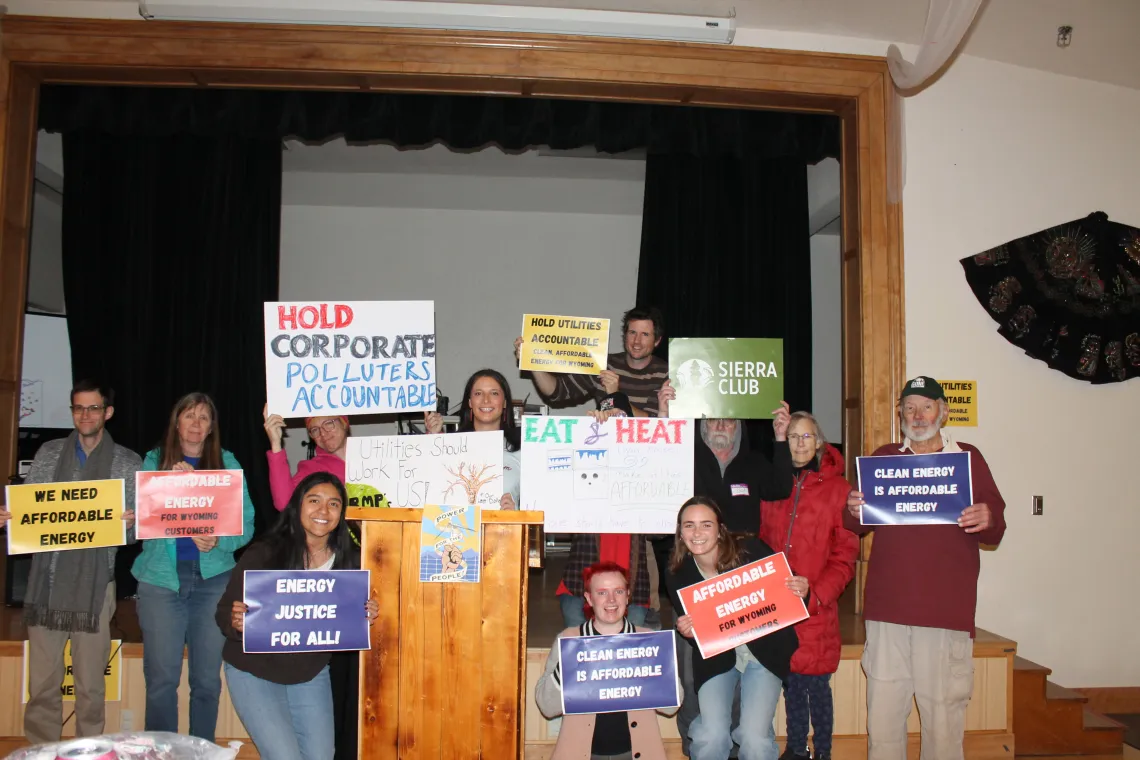
Wyomingites understand that water is not abstract. It sustains our communities, our ranches, our recreation economy, and the landscapes that define this state. Yet at the same moment these concerns are growing, many of the largest decisions affecting Wyoming’s water future are being driven by monopoly utility companies and corporate interests with remarkably little public scrutiny.
In the span of the last several months, federal officials at the Environmental Protection Agency have repeatedly signed off on efforts to delay coal ash clean up at some of the most contaminated groundwater sites in the country- all while Rocky Mountain Power, Wyoming’s largest utility company, doubles down on an aging fleet of coal plants in the midst of a worsening climate crisis. On May 28, the EPA held a public hearing on yet another round of coal ash rollbacks- including plans to exempt hundreds of coal ash dumps from regulation and weaken safeguards designed to protect our water supply from contaminants including arsenic, lithium, and lead. You can submit an official public comment up until June 12th at the EPA’s comment portal. Coal ash poses a direct and immediate threat to groundwater in Wyoming, but it’s only part of a bigger problem.
The unfortunate reality is that utility companies have enormous sway over our water resources- whether it’s the type of energy resources they prioritize, the developments they invest in, or the downstream impacts of climate change. And if we want to protect our water, we need to start paying closer attention to what monopoly utilities are doing.
Pressures on our water resources are likely to intensify as utilities pursue massive new electricity demand growth tied to data centers and industrial expansion. A couple of weeks ago, I listened in on Berkshire Hathaway’s annual shareholder meeting, where new CEO Greg Abel (formerly the head of Berkshire Hathaway Energy) enthusiastically endorsed data center development as a key opportunity for Berkshire owned utility companies- including Rocky Mountain Power and its parent company, PacifiCorp. Yet, Wyoming policymakers have done little to establish guardrails around the scale, pace, or water impacts of this development.
Community members are right to be concerned about the water usage of data centers themselves; however, a much bigger concern for me is the water consumption and health impacts that accompany the vast expansion of energy resources like natural gas.
Wyoming is at a crossroads- from climate to snowpack to the recent boom in data center development. These may seem like different issues, but the truth is that they are all connected. If we want to address water usage and the long term health of the landscapes we all rely on, we need to prioritize real solutions:
- We need to hold corporations- and especially private utility companies- to clear, enforceable, timely standards for reporting and remediating water contamination and usage.
- We need to prioritize community input, and ensure that communities across the state have the tools they need to effectively evaluate the benefits and drawbacks of development.
- We need to start taking climate seriously. For utilities, that means prioritizing renewable energy resources and having a clear plan for an energy transition that puts communities first. It also means that state leaders should take water scarcity seriously when evaluating future energy development.
More than anything, we need a standard of honesty from the corporations who plan to operate in Wyoming, and we need officials who are willing to hold corporations to that standard.
Wyoming is at a crossroads, but we have the opportunity to advocate for what direction we go in. We can choose a future that prioritizes the sense of community that makes Wyoming a great place to live and that is sustainable for hardworking Wyomingites. We can work towards policies that allow us to grow while protecting our access to clean water and public lands. This fall, we can vote for representatives who prioritize honesty and accountability from corporate interests like Rocky Mountain Power.
I commented on the EPA’s latest round of coal ash rollbacks this week because protecting our groundwater is critical for Wyoming communities. But coal ash is only part of a much larger conversation about who gets to shape Wyoming’s future. The decisions utility companies make today — about coal plants, natural gas expansion, renewable energy, and industrial growth — will shape Wyoming’s water future for decades. Wyoming cannot control the snowpack. But we can decide whether we allow short-term corporate interests to dictate the future of one of our most precious resources.
If you're wondering how to get involved in advocating for a future that puts our water and communities first, here's where you can start:
First, tell the EPA to maintain existing regulations on coal ash. You can leave your comment on the EPA's website and consult this toolkit for more information and help crafting your comments.
Second, get involved. The time to protect Wyoming's future is now, but we can't do it alone. Sign up to get more information on volunteering with the chapter here. Whether you're interested in making art, writing Op-Eds, planning events, or just showing up in your community, we need all hands on deck to push back on threats to our water, land, and climate.