With full protection of the Endangered Species Act, grizzly bears in the Greater Yellowstone Ecoregion have made great strides back from the brink of extinction only forty years ago. The Sierra Club is fighting hard to maintain good protections for the bears, and to make sure that Yellowstone bears have connected habitat with other grizzly populations so they can stay genetically healthy. In recent years, Yellowstone grizzly bears have lost two of their most important food sources: cutthroat trout from Yellowstone Lake are almost gone due to competition from illegally introduced, non-native lake trout; and white bark pine trees throughout the region have almost completely died-out due to disease and insect outbreaks. The loss of the white bark has been especially devastating, because the seeds of this tree have been the best and safest food source for pregnant female and young bears.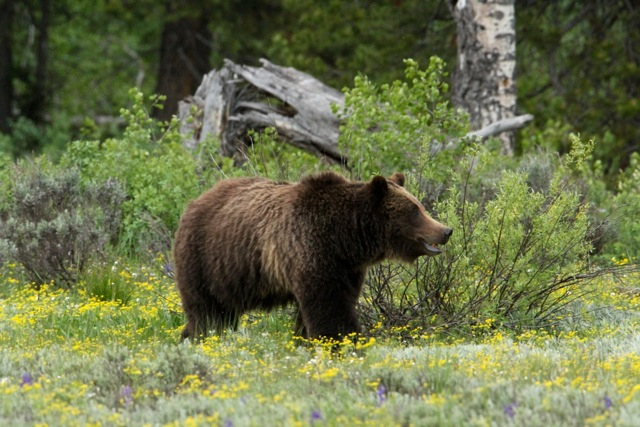
Unfortunately, grizzly bears face continued threats from U.S. Fish and Wildlife Service, Congress, and the Trump Administration with attempts to remove grizzly bears in the Greater Yellowstone region from the Endangered Species List. Despite serious concerns in the scientific community about declining populations, changes in food sources due to climate disruption, and the ability of Yellowstone bears to reproduce with bears outside the region, the pro-delisting camp has powerful and moneyed allies. States have already made it clear that without endangered species protections, immediate steps will be taken to significantly reduce the number of bears in the area, including through hunting-- a move that will reverse grizzly bear recovery in the region. In September 2018, a federal judge restored protections for grizzly bears within the Greater Yellowstone Ecosystem under the Endangered Species Act. This decision came after the U.S. Fish & Wildlife Service removed those protections, or “delisted” the bears, in July 2017.
In response, Michael Brune, Sierra Club Director, issued a statement:
“We are deeply opposed to the Fish and Wildlife Service’s proposal to prematurely remove endangered species protections from grizzly bears in the Yellowstone region. Grizzly bears are an essential piece of the American West; these majestic animals have been integral to the Yellowstone region for centuries. Today grizzlies remain a salient emblem of the wild and are a core pillar of the region’s outdoor economy.
“This proposal not only fails to preserve the progress made toward bear recovery, it will reverse it. It falls short of maintaining a healthy bear population and leaves bears straying outside Yellowstone and Grand Teton National Parks at the mercy of hostile state management policies. It stacks the deck against the continued presence of bears in the area and the possibility of Yellowstone bears reconnecting with grizzly bears from other areas for long-term recovery.
“People and bears can co-exist -- and as grizzly recovery so far has demonstrated, can do so in a way that is highly beneficial to all. We should not let bears slide back towards extinction because of misplaced political hostility towards these magnificent and beloved beings.”
Here are points to consider:
· If grizzlies are delisted, many bears will be killed by agency personnel and hunters. The bear population will be killed back to minimal numbers, which is why they were protected in the first place.
· Grizzly bear food sources, such as cutthroat trout, white-bark pine, and elk are themselves threatened by invasive species, climate change and diseases.
· More than 60 grizzlies died last year in the Yellowstone region, many killed unnecessarily by people. Killing even more bears through trophy hunting is the ultimate insult to the bears and to wildlife enthusiasts who fought to keep this iconic species from going extinct.
· The Department wants to kill bears to alleviate so-called “conflicts” with cattle and improperly stored human food and garbage. Killing off grizzlies is a poor solution; instead, the Department and other agencies should require better grazing practices and enforce bear-proof food storage and trash disposal.
· Millions of people visit this region to view and celebrate grizzly bears. A live bear is worth far more than a dead bear.