Laurene Allen Took On One of New England's Biggest Environmental Crises
The Goldman Prize winner mobilized her community to oppose toxic PFAS in their drinking water
Photos courtesy of Goldman Environmental Prize
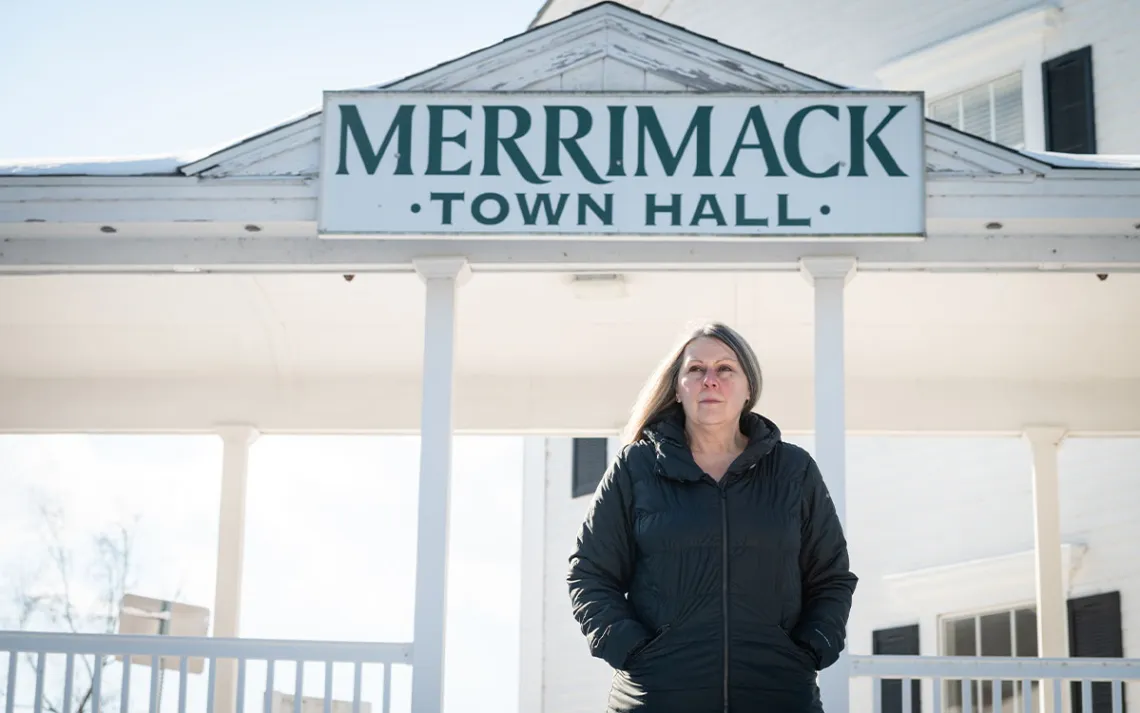
Laurene Allen moved to Merrimack, a town of 29,000 in southern New Hampshire, in search of a place where her kids could access nature. When she and her family moved there in 1985, “all the boxes were checked," she told Sierra. “The kids grew up with salamanders under rocks and watching snapping turtles. It had all of it. Clean air, clean earth.”
But in March 2016, Allen learned some troubling news at a town meeting. The town’s water supply was heavily contaminated by PFAS, which are human-made per- and polyfluoroalkyl chemicals. According to the New Hampshire Department of Environmental Services (NHDES), manufacturing processes at the Saint-Gobain Performance Plastics plant, located near the Merrimack River, had been contaminating the water for years.
As she listened to community members detail their health issues, Allen was shocked. “Our tap water was looking great. It tasted good, and we filled up from it,” she said. “It was stunning to think that there’s a class of chemicals that are tasteless, odorless, and highly toxic that have evaded toxic substance designation for decades. This was an immense deception.”
Allen had a feeling the state was minimizing the contamination and concluded that “no one was coming to save us.” She decided to become an expert on PFAS chemicals, a large group of human-made chemicals used to make products resistant to water, oil, heat, and stains. They are often called “forever chemicals” because they don’t break down naturally in the environment or human body. Exposure to PFAS has been linked to health problems, including cancer, thyroid issues, liver damage, and developmental effects in children.
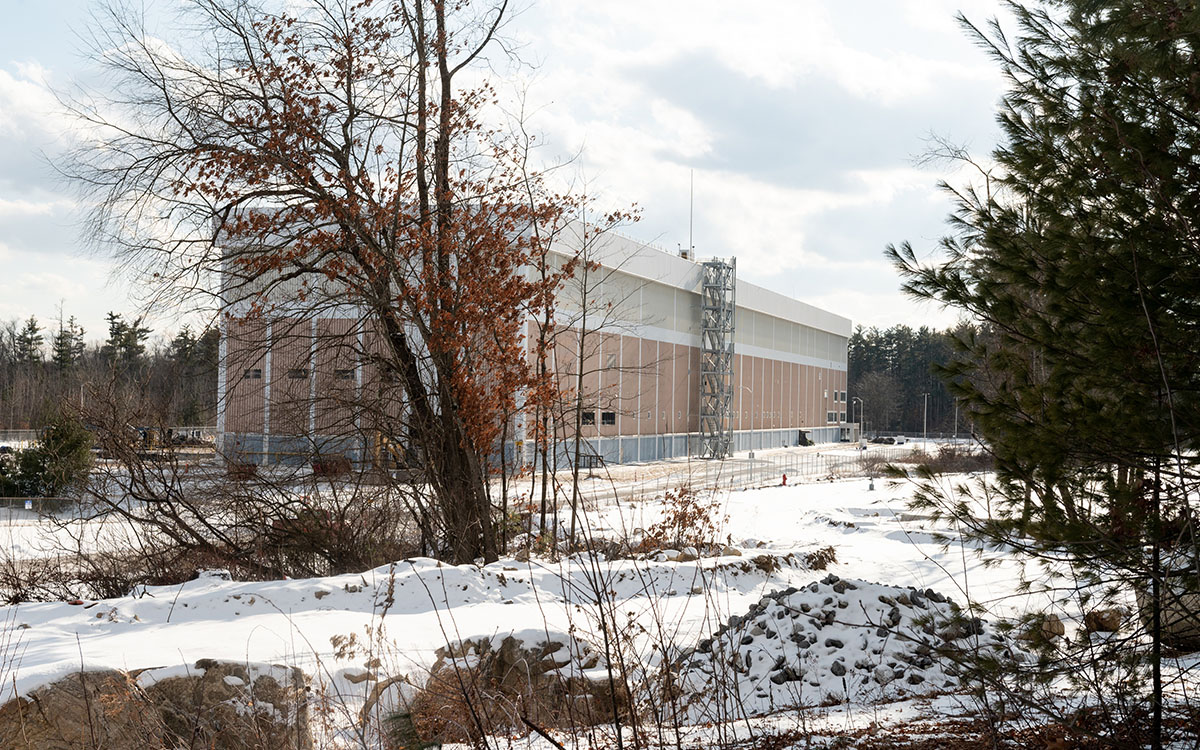
Allen knew the water contamination was a bigger issue than it initially seemed. But what she didn’t know at the time was that it was one of the largest environmental crises in New England’s history. While continuing her full-time job as a clinical social worker, Allen dove into studies and investigated reports of water contamination from the Saint-Gobain plant. She started Merrimack Citizens for Clean Water, a volunteer group dedicated to addressing the water contamination crisis in Merrimack. The group talked to scientists to learn more about the issue, went door-to-door to conduct community surveys on health issues, and pressed elected officials to take action.
For her work on the issue, Allen was awarded the 2025 Goldman Environmental Prize, an award given to grassroots environmental activists around the world for their advocacy on environmental issues.
As Allen advocated for change, she was dubbed a fearmonger and a “crazy lady,” she said. It took until June 2018 to convince people of the real damage the Saint-Gobain plant was causing. That year, Saint-Gobain entered into a consent decree with the state of New Hampshire to address widespread contamination. Under the agreement, Saint-Gobain agreed to pay for the design and installation of municipal water line extensions to homes where private wells were contaminated with PFAS. They also committed to fund bottled water and filtration systems for affected residents.
While it was a major step, the consent decree didn’t fully resolve the issue. Allen and Merrimack Citizens for Clean Water scaled up their movement, testifying in public hearings, identifying group members to run for elected office, and pushing for stricter statewide regulations. Allen banded together with activists from other states to cofound the National PFAS Contamination Coalition, which now has members in 30 states.
In 2023, when the Saint-Gobain plant was approved for a permit that would allow the company to operate in Merrimack until 2028, Allen mounted a fierce opposition. Less than a week later, the plant announced its closing. When she heard the announcement, she was “ecstatic,” Allen said. “Everybody was.”
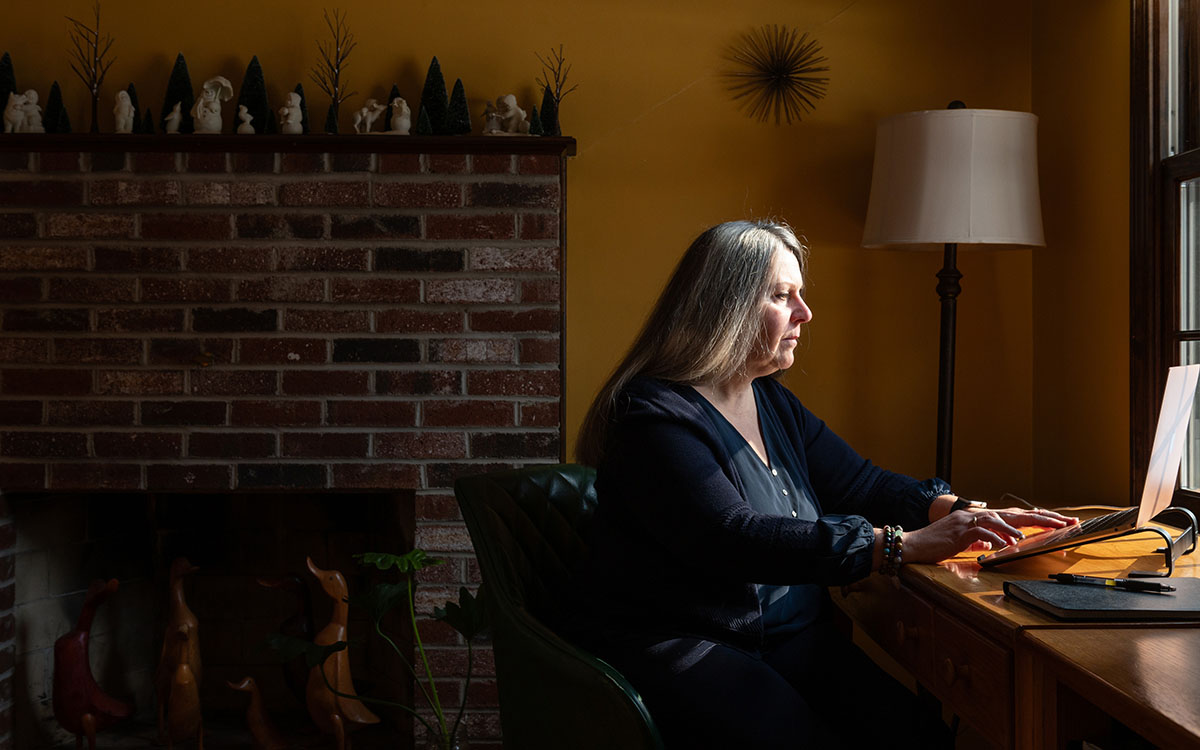
The battle against contamination is not just about clean air and clean water. "It's bigger than that,” she said. “There’s a huge gap that doesn’t really fill this void anywhere, between regulatory and human experience and the earth’s experience. We have to step back and look at this in a holistic, integrative way, because we’re in trouble. We’re in big trouble.”
In the next few years, Allen is planning to retire from her clinical practice and dedicate more time to working against PFAS contamination. “It’s taken a toll on me, but for some people, there’s just this compulsion that says I need to do this.”
Winning the Goldman Environmental Prize has been “an honor,” as it’s a platform to elevate advocacy and the people who are making a difference, Allen said. “There are people everywhere doing this work because they know it’s crucial not just to the planet but to life itself.”
Here are the five other winners of this year’s Goldman Prize:
- Batmunkh Luvsandash, from Mongolia: In an effort to shield his homeland from the impacts of mining, Batmunkh Luvsandash fought to create a 66,000-acre protected area in Dornogovi province in April 2022. Home to Argali sheep, a significant portion of the world’s endangered Asiatic wild ass population, and an array of native plants, this newly protected area now stands as a crucial defense against Mongolia’s mining expansion.
- Carlos Mallo Molina, from the Canary Islands: Carlos Mallo Molina orchestrated a far-reaching international campaign to stop the development of Fonsalía Port, a massive boat and ferry terminal that would have jeopardized a vibrant 170,000-acre marine protected zone near Tenerife. The port’s construction threatened critical habitat for endangered sea turtles, whales, and sharks. Thanks to sustained advocacy, the Canary Islands government officially canceled the project in October 2021.
- Mari Luz Canaquiri Murayari, from Peru: In a groundbreaking legal victory for nature’s rights, Mari Luz Canaquiri Murayari secured a court ruling in March 2024 granting Peru’s Marañón River legal personhood. Recognizing the river’s right to remain free-flowing and unpolluted, the court found the Peruvian government in violation and ordered immediate measures to prevent oil spills, create a basin-wide protection plan, and formally recognize the Kukama people as stewards of the river.
- Semia Gharbi, from Tunisia: Semia Gharbi played a leading role in exposing a corrupt waste trafficking operation that illegally shipped 6,000 tons of household waste from Italy to Tunisia. Her efforts culminated in the waste’s return to Italy in February 2022 and led to the arrest of over 40 individuals, including high-ranking officials. The scandal prompted the European Union to strengthen its oversight and tighten regulations on international waste exports.
- Besjana Guri and Olsi Nika, from Albania: Through their determined advocacy, Besjana Guri and Olsi Nika successfully protected Albania’s Vjosa River from a hydropower dam development boom. Their efforts led to the river’s historic designation as the Vjosa Wild River National Park in March 2023, protecting the river’s full 167-mile course along with 250 miles of its tributaries. It marks the first national park in Europe dedicated to preserving an entirely wild, free-flowing river.