Food Rescues Step In as Communities Face Slashed SNAP Benefits
After Trump's One Big Beautiful Bill Act led to the largest cut in SNAP history, these organizations are helping combat food insecurity
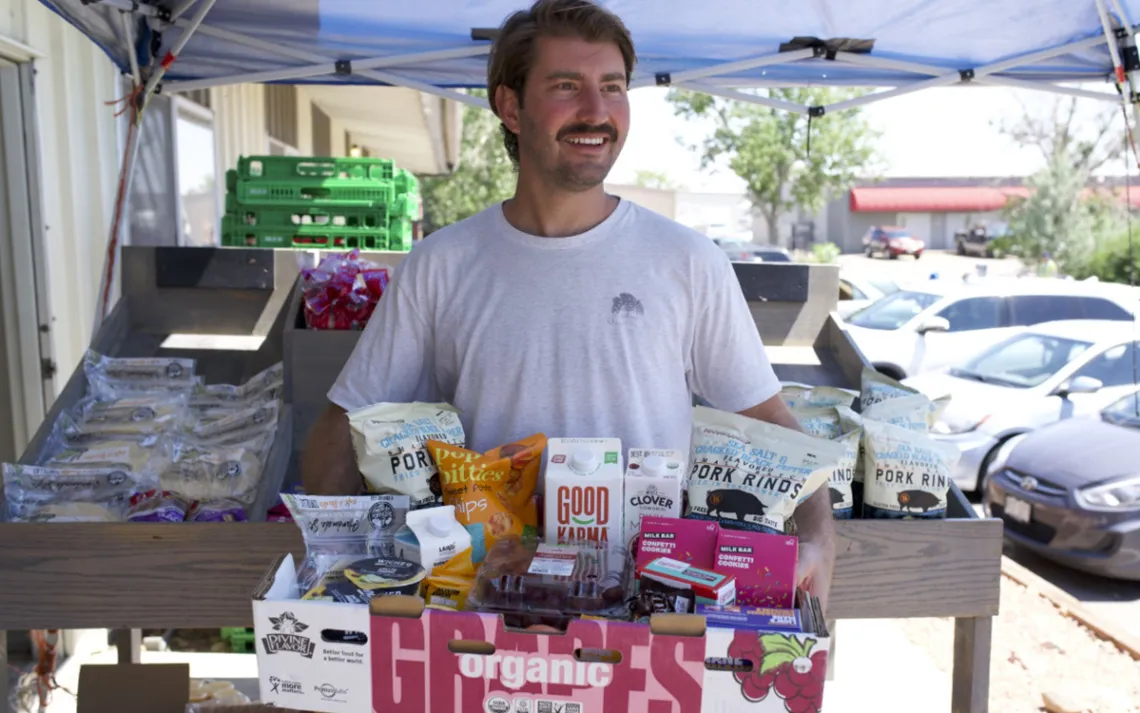
Vindeket founder and executive director Nathan Shaw. | Photo courtesy of Abby Fountain
On a Tuesday afternoon in Fort Collins, Colorado, a line of shoppers stretched out into the parking lot of Vindeket Foods. Individuals and families waited with their shopping carts and grocery bags under a painted mural on the side of the warehouse. Volunteers directed traffic and restocked the shelves with bunches of bananas, tubs of yogurt, and bags of bagels and fresh bread.
Vindeket is a community-sustained nonprofit food rescue. Its no-cost market is open for business three days a week. Founder and executive director Nathan Shaw was inspired to start rescuing food nearly a decade ago when his dumpster-diving expeditions revealed just how much was wasted.
He now works with grocery stores, farms, and other businesses to provide an alternative destination for their surplus food than the landfill. “We get almost anything that you can imagine that would otherwise go to waste,” said Shaw. That includes damaged produce, excess dry goods, recently expired items, and sometimes even fresh cut flowers, Christmas trees, and potted plants.
Although there are only two staff members, Vindeket has a network of 250 volunteers who staff the market and pick up, sort, and shelve food seven days a week.
While Vindeket works with other nonprofits to provide food to marginalized groups and those in need, Shaw emphasizes that they are here to serve the whole community. “Everyone is welcome through our doors,” said Shaw. “We believe that Vindeket gives people an even playing field. We’re all keeping food out of the landfill; we’re all rescuing food.”
Vindeket is one of many organizations addressing food waste and food access in the United States, particularly after the Trump administration slashed the Supplemental Nutritional Assistance Program (SNAP) in 2025. President Trump's One Big Beautiful Bill Act significantly changed the federally funded, state-run program. According to the Congressional Budget Office, the bill represents the largest cut to SNAP in history, totaling $187 billion through 2034. It has expanded work requirements for veterans, unhoused people, and able-bodied adults without dependents under 64, up from 54. Since Trump’s bill was enacted, SNAP participation has dropped in every state, many of which have also issued USDA-approved waivers that further restrict its use.
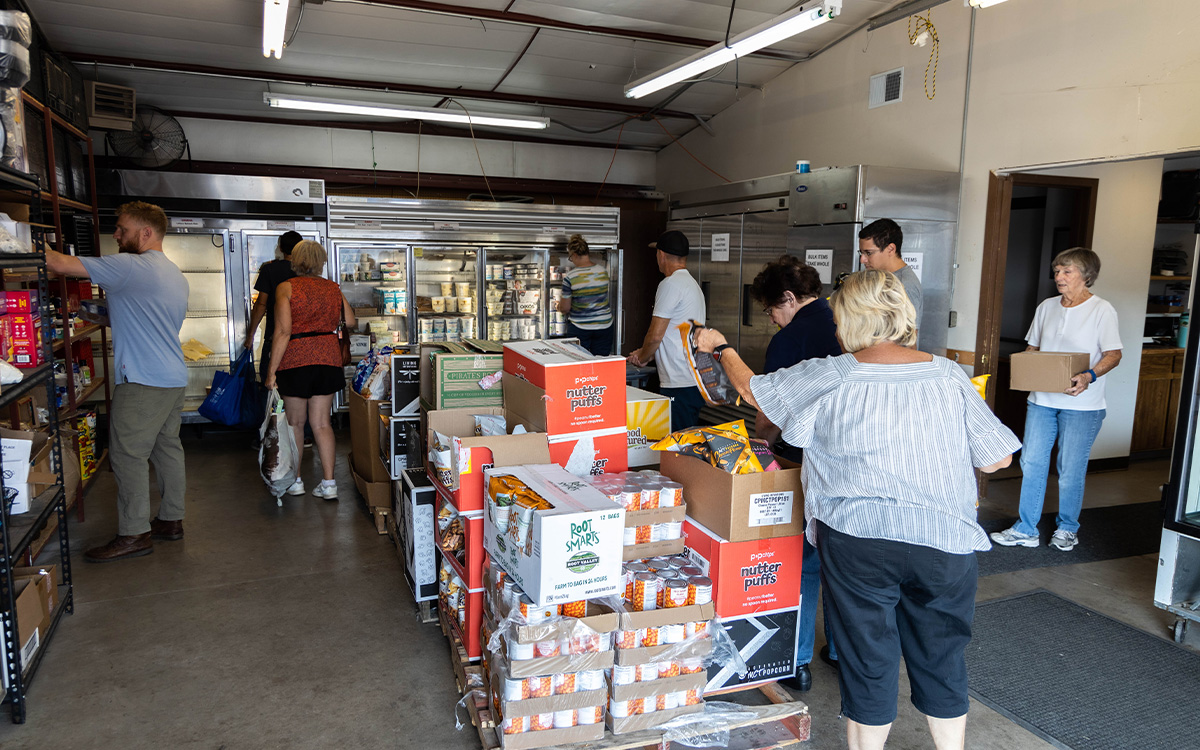
Photo courtesy of Vindeket Foods.
Alongside these cuts and overall high food insecurity, between 30 and 40 percent of the annual food supply in the United States is wasted every year. ReFED, a nonprofit focused on food waste, reported that surplus food produced in the United States in 2023 was worth almost $400 billion.
It also comes with an environmental price tag. If emissions related to lost and wasted food were a country, it would be one of the biggest emitters of greenhouse gases in the world.
It’s not hard to believe those statistics while shopping the full shelves at Vindeket, which rescued nearly 2 million pounds of food last year. Their offerings change every day, depending on what is donated. There is an array of fresh, frozen, and shelf-stable foods, and occasionally a huge quantity of one item.
Shaw sometimes intercepts produce from trucks via Farmlink, another nonprofit that helps connect surplus produce to organizations like Vindeket. He took over a whole truckload of rejected blueberries from Chile last year, and his customers enjoyed them for weeks. Fruits and berries can be rejected for a variety of reasons: too many imperfections on the produce, a discrepancy in the truck’s temperature, too-near expiration dates, or the retailer simply bought too much.
“It’s not personal failure all the time,” he said. “Grocery stores and food producers are not the bad people. They're just the ones trying to meet our demand. We drive the market.”
Too Good to Go is a more widespread option for retailers to avoid food waste. In cities across North America, Europe, and Australia, users can buy “surprise bags” on the app made up of heavily discounted produce, prepared meals, baked goods, and more that are left over at the end of the day. The app’s 180,000 business partners include grocery stores, restaurants, cafes, and specialty food shops.
In Troy, New York, the nonprofit Capital Roots tackles the tandem issues of food waste and food security. Chief Executive Officer Amy Klein says that their goal is to make fresh, healthy food accessible and affordable to everyone in the community through a variety of means. Capital Roots started as a community gardening organization that gave people the resources to grow their own food. Since then, they’ve assessed the barriers to accessing fresh food and built more programs accordingly. Their Squash Hunger program brings fresh produce into the emergency food network; their Veggie Mobile—the first mobile produce market in the country—helps people purchase affordable and high-quality food in their neighborhoods. Along with donations of excess food from distributors, the organization also buys produce from local farmers, which they sell for about half the price in their Healthy Stores—small, custom refrigerators located in local convenience stores—and through other programs.
The organization aims to provide alternatives to the emergency food network. “[SNAP] is the answer to food security. Emergency food is not,” said Klein. When SNAP benefits increased during the pandemic, people had enough money to buy the food they needed, but recent cuts threaten this progress. “We know what the solution is, and we’ve seen it in operation, so to see us going back in the other direction is very frustrating to say the least.”
The benefits of SNAP reach beyond the individual consumer. An analysis from The National Grocers Association found that SNAP supports approximately 388,000 jobs and provides over $20 billion in direct wages—so cuts to the program also negatively impact retailers and the broader economy. In some stores where SNAP purchases make up a large percentage of sales, fewer of those purchases mean more wasted food, reports NPR.
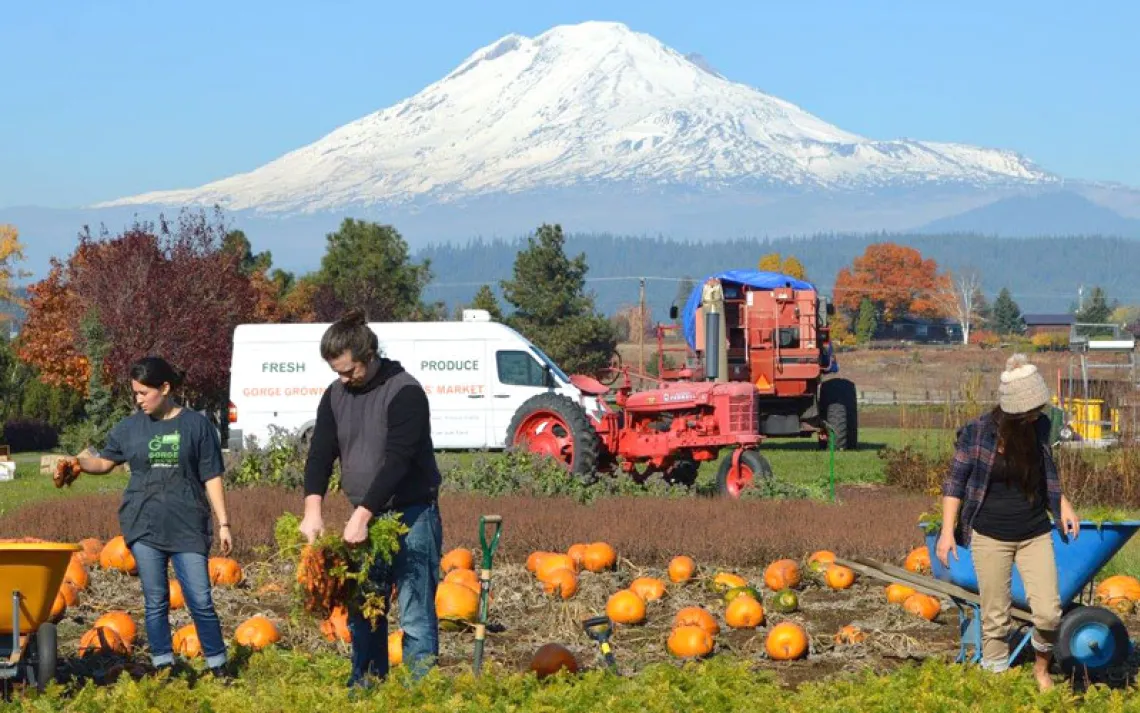
While Capital Roots doesn't sell or donate expired food, addressing food waste is part of its mission, which it mainly does through gleaning on local farms. “So much high-quality food goes to waste in the fields just because it's not going to be picked,” said Klein. Farmers can’t waste time and labor to harvest excess produce in the field that they don’t have a market for, so Capital Roots volunteers come in to glean it and bring it to the community. “It’s a win-win situation.”
Capital Roots’ work highlights the intersectionality of both food waste and food access, and Shaw sees Vindeket as an opportunity to create change and build community. Customers volunteer or donate if they can, but all are welcome to contribute to the cause of diverting food waste by shopping at Vindeket.
“It creates a really beautiful community around the issue of food waste,” Shaw said.