As the year comes to a close, we are reflecting on the progress that Sierra Club’s Beyond Coal Campaign has continued to make this past year towards advancing grid decarbonization while making electricity more affordable for all.
2025 was perhaps the most remarkable year in our campaign’s history, both in terms of the unprecedented challenges and the scale of the opportunities presented. The Trump administration launched a comprehensive effort to reverse the transition from coal to clean energy, including a sweeping set of executive orders to prop up coal plants, the proposed dismantling of the previous administration’s life-saving standards aimed at cleaning up coal pollution, and legislation that ends critical clean energy tax credits.
Compounding this federal attack is an unprecedented spike in electricity demand, largely driven by rapid expansion of data centers supporting artificial intelligence. We’re seeing projections of data centers driving another 50 gigawatts of national electricity demand by 2030, which would represent an expansion of the U.S. grid by nearly 10 percent over the next four years. The Trump administration has seized on this growth to argue that coal and gas are indispensable for maintaining grid reliability.
Despite these challenges, our campaign is meeting the moment. We are challenging the rollback of core EPA water and air pollution standards, and litigating the Trump coal bailouts while demonstrating those bailouts will drive up costs for customers. And with a robust and longstanding presence in more than 30 states, our teams are expanding our advocacy before public utility commissions (PUCs), where many pivotal decisions on energy infrastructure and resource planning are made.
At a time when electricity rates and household energy bills are at an all-time high, we are amplifying a clear message: continued coal dependence is driving up costs.
We are spotlighting the financial harm of repealing clean energy tax credits and elevating the fact that clean energy offers a pathway to affordable electricity and a more reliable and resilient grid.
Where speculative load growth threatens coal plant retirement delays or a vast expansion of new gas plant infrastructure, we are calling on data center companies to uphold their clean energy commitments, and we are educating public utilities commissions around the country about how clean energy offers a more affordable and less risky path to addressing this growth.
We are challenging unjustified and expensive fossil fuel infrastructure investments and are pushing for policies that ensure new data centers bear the full cost and risk of the infrastructure they require, rather than shifting the burden to existing utility customers.
Here are some of our 2025 highlights:
60,000 Premature Deaths Prevented
In June, the Beyond Coal Campaign celebrated a landmark milestone: the campaign’s work retiring dirty coal plants has prevented 60,000 premature deaths, 100,00 heart attacks, and one million asthma attacks.
This historic moment is more proof that our work is improving the lives and health of millions of Americans across communities, and reminds us of what is at stake as we continue to push back against coal pollution.
Standing Strong Against Trump Administration’s Rollback of Core Air, Water and Climate Protections
In March, EPA Administrator Lee Zeldin announced the agency’s intention to roll back bedrock environmental standards that save lives, including many that we fought to finalize during the Biden administration. The Beyond Coal Campaign released the “Trump Coal Pollution Dashboard” to expose the local impacts of these rollbacks to our air and water.
As the agency worked on stripping these standards, the Trump administration exempted 71 coal plants from the federal standards that had successfully and cost-effectively reduced emissions of mercury and other toxic air pollutants. To apply for an exemption, coal plant owners only had to send an email – using a pre-made template drafted by the EPA – to the administration. The Beyond Coal Campaign swiftly filed legal challenges against these unlawful and dangerous exemptions, and requested information through the Freedom of Information Act so that the public could understand which coal companies took the administration up on this offer to cut corners and needlessly increase their pollution.
Our campaign continues to oppose schemes from the Trump EPA to rescind the long-standing Endangerment Finding – a move that would strip away the agency’s legal obligation to regulate the pollutants causing the climate crisis and a major handout to the worst emitters, especially power plants. This fall, our Environmental Law Program released a thorough legal analysis of the legal risks polluters would find themselves in should the president follow through with its plan. We are also pushing back against the Trump administration’s plans to eliminate the first-ever power plant pollution standards for the existing coal fleet and newly proposed gas plants. The existing standards will curb over a billion metric tons of carbon pollution and create hundreds of billions of dollars in climate and public health benefits.
To fight back this year, we held nationwide “Action Hours” each month with tens of thousands of our members and supporters directed into calling on their representatives, writing letters to the editor to local newspapers or posting on social media in defense of these and other key federal environmental protections, as well as clean energy programs jeopardized by Trump. The fight to block the EPA’s unlawful plans to give power plant polluters a free pass from critical clean air, water and climate rules that protect our health and lower energy costs for families will continue next year.
Fighting Back Attempts to Keep Dirty, Dangerous, Retiring Coal Plants Open
The Trump administration also took the unprecedented step of ordering uneconomic and polluting coal plants to stay online, even where states and local public utilities have already determined that it would lower costs and is in the public’s interest to transition to clean energy. In May, our attorneys immediately appealed DOE’s order to keep a Michigan coal plant online and have continued suing to block subsequent expensive and needless orders in court as additional facilities have come under attack.
In August, we published a report that drew national media attention, showing how much these unnecessary federal orders could drive up electricity costs at a time when people are struggling more than ever to make ends meet.
We’ve created helpful resources, like our “Ticked Off: How the Trump Admin is Giving Your Money Away to Fossil Fuel Companies” tracking tool, visualizing how much these 202C orders have transferred to date from household grocery budgets into industry wallets and what more is at risk.
And our campaign is organizing communities and local leaders to stand up to make clear that this federal overreach into local decisions about their energy future is not wanted. We have remained proactive and vigilant, as Trump’s DOE continues to abuse 202C authority to force more coal plants to stay open.
Our members and supporters are organizing to show that these forced coal plant openings are not what local communities want. Local residents rallied in Holland, Michigan, calling for the Campbell coal plant to close and Sierra Club organizers also hosted a “retirement party” at the J.H. Campbell facility in West Olive, Michigan. We have continued to uplift community voices in protest of the illegal order, in partnership with organizations like the NAACP.
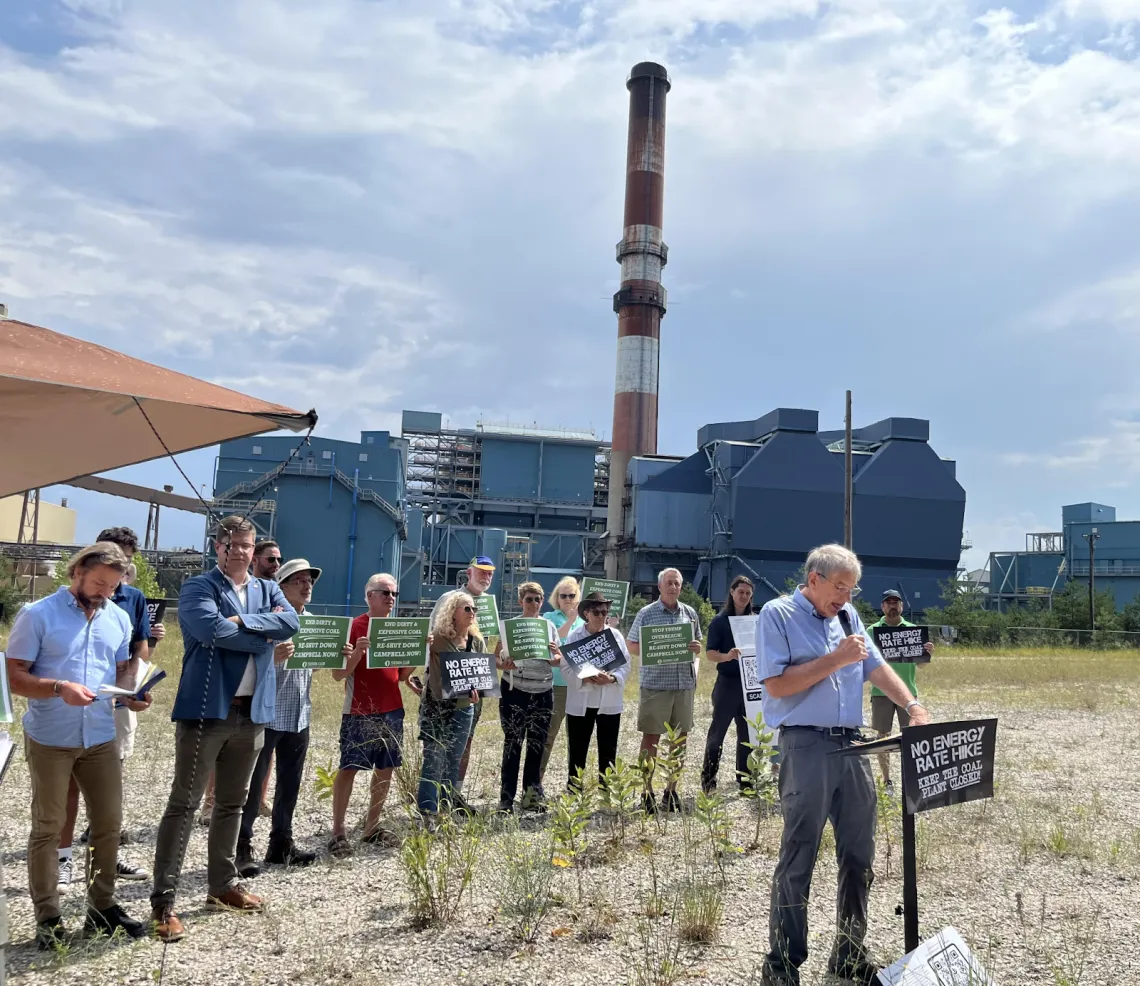
Sierra Club Michigan Chapter gathers at the J.H. Campbell facility in West Olive, Michigan to host a “Retirement Party” for the coal plant which was slated to retire in May, but has remained online, racking up costs to households. (Photo taken by Sierra Club Senior Energy Issues Organizer, Jan O’Connell)
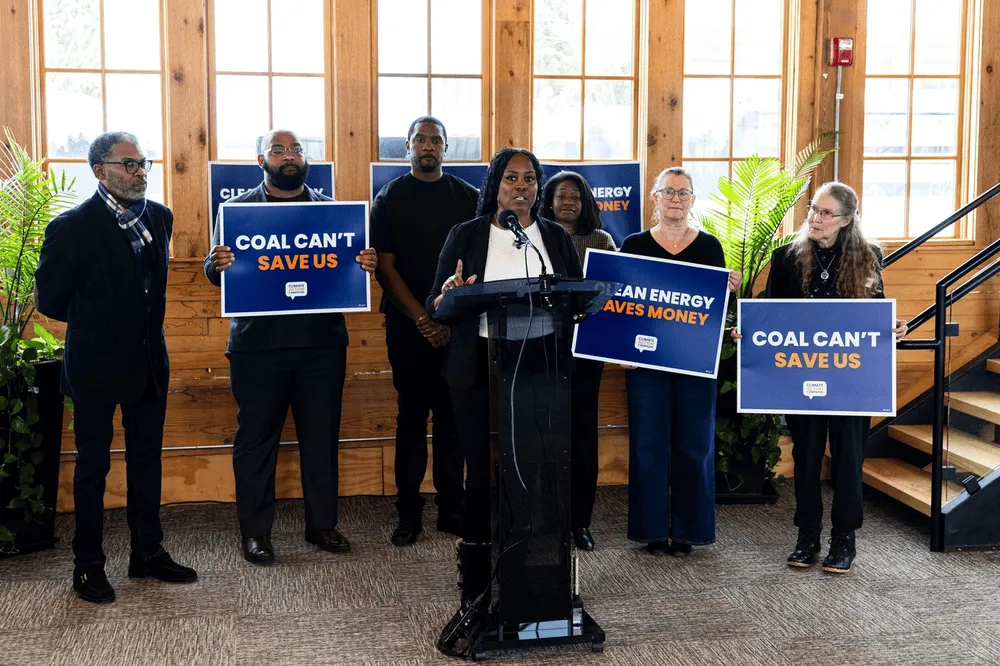
November NAACP press event on the J.H. Campbell facility 202C order with Sierra Club staff, Tamara Horne and Jan O’Connell
Resisting Trump Administration Attacks on Offshore Wind, And Winning
No part of the renewable energy industry suffered more from the pettiness and personal grudges of the Trump administration (in case you’re not familiar with the history, RFK Jr. doesn’t want to have to look at wind turbines off the coast of his Martha’s Vineyard estate) than offshore wind.
When the Trump administration arbitrarily issued an indefinite moratorium on wind permitting, 17 states and Washington, D.C., filed a legal challenge; the Sierra Club joined nine national, regional, and local partners to file an amicus brief arguing that the directive is arbitrary, unlawful, and lacks scientific grounding.
And when the administration issued a stop-work order on the 800 megawatt Empire Wind project off the coast of New York, our campaign stood alongside union members and congressional representatives at a press conference less than 24 hours after the news broke.
We delivered remarks highlighting how the project would provide electricity to 500,000 homes while generating over 1,000 union jobs. The following week, we helped organize a pro-offshore wind Earth Day rally on Long Island, and shared findings from a new report showing how offshore wind is the key to affordably meeting energy needs in downstate New York. In a tremendous victory for the power of local voices standing up to federal overreach, the Trump administration lifted its stop-work order and Equinor announced it would resume construction.
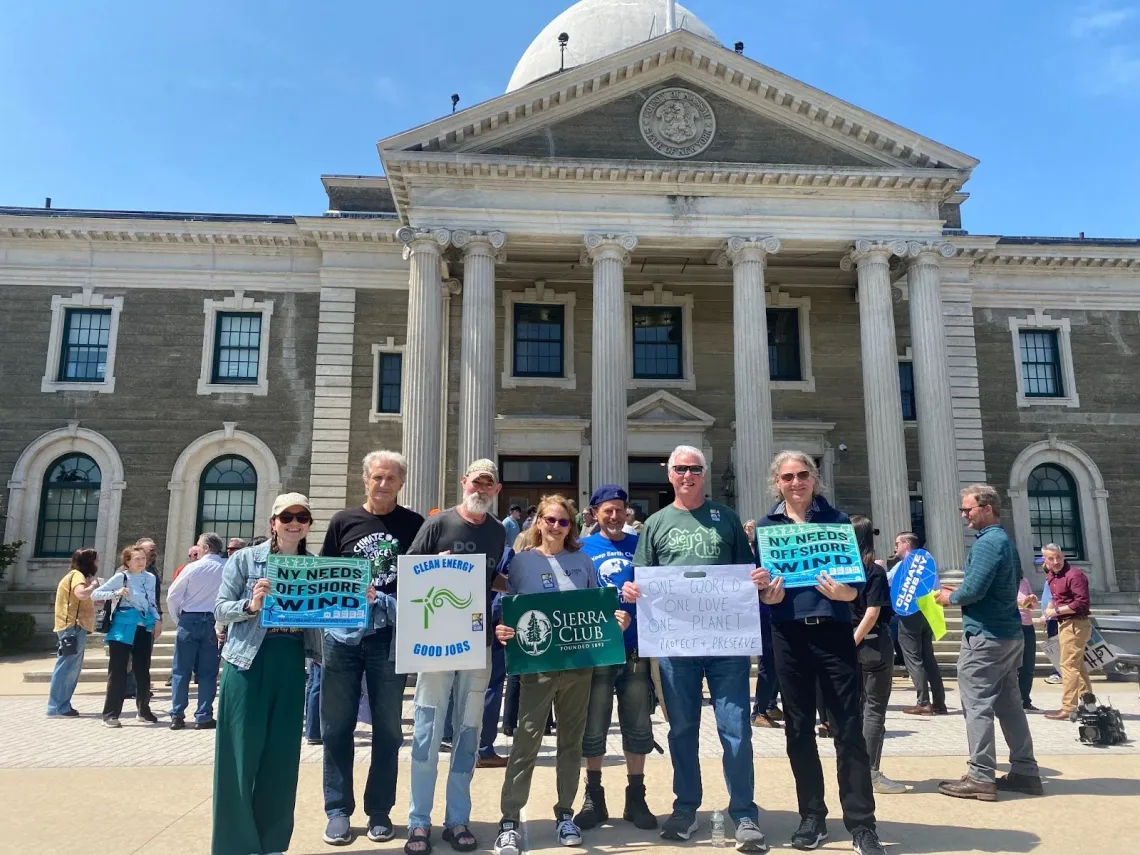
And in December, a federal judge ruled that Trump's Day-1 executive order halting wind energy permitting and leasing was unlawful, and vacated the order. This comes on the heels of another federal judge's ruling that the Trump administration could not revoke the construction and operations permits granted to US Wind for Maryland's offshore wind project, which is poised to power 718,000 homes in the Delmarva region, and support over 2,500 local jobs.
Showing That Yes, Local Communities Do Want Wind, Solar, and Battery Storage In Their Backyards
Local county opposition to wind, solar, and battery storage -- fueled by disinformation promulgated by the fossil fuel industry -- reached an all-time high in 2025. Well-sited clean energy projects bring local jobs, diversify local economies, and provide an essential new source of revenue to farmers.
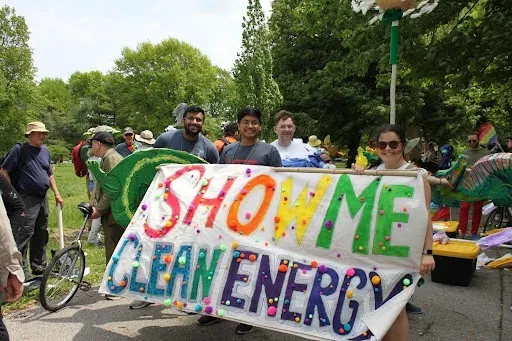
Sierra Club is using its voice as a leader in the environmental and conservation movement to educate the public about the critical role that utility-scale wind, solar, and battery storage will play in building healthier communities and averting catastrophic climate change.
We are pairing Sierra Club outings with tours of wind and solar farms. And we are tapping our powerful grassroots infrastructure to mobilize the public to show up at local permitting bodies and tell their local representatives that they support the benefits that responsibly-sited clean energy will bring to their communities.
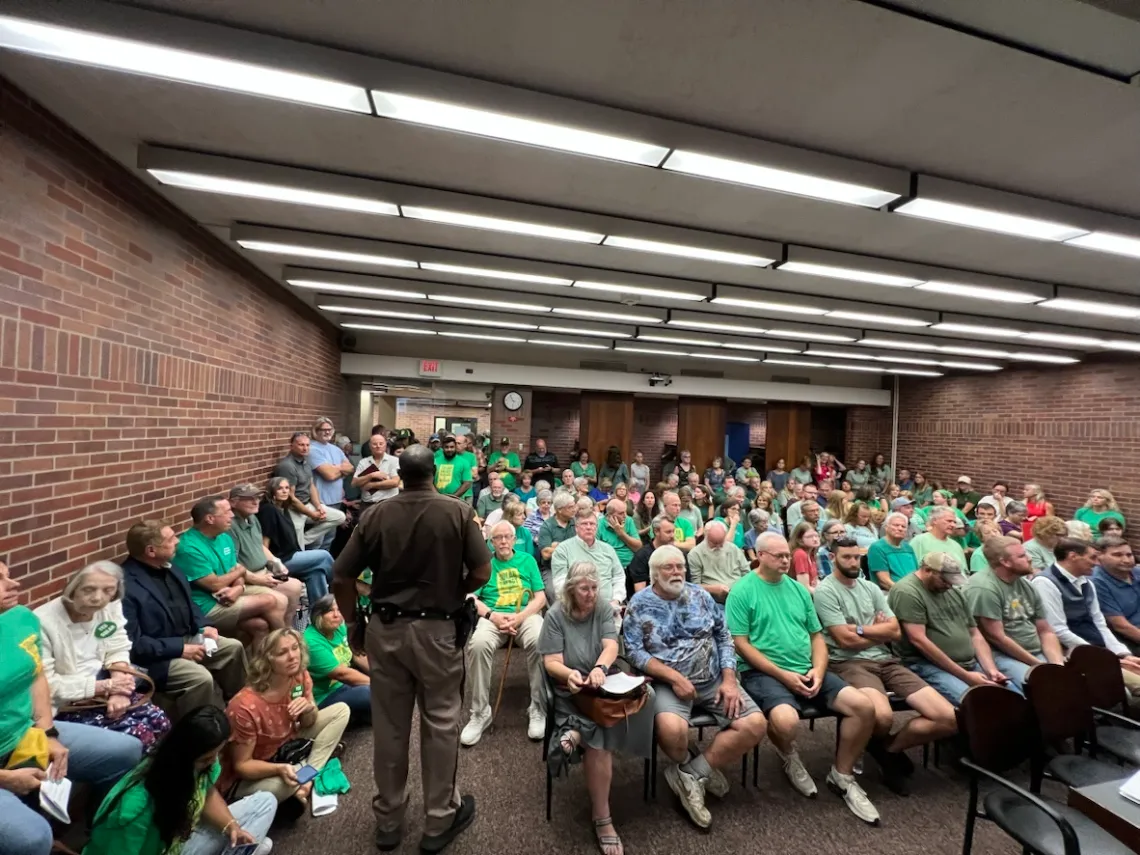
In 2025, we geared up to support dozens of projects across 20 states, totaling nearly 9 GW of onshore wind, solar, and storage projects -- and in 2026, we aim to double this engagement. We’re ending the year with some decisive wins, with local approvals secured for solar projects in Arizona and Pennsylvania.
The Dirty Truth: Holding Public Utilities Accountable
Household concerns about electricity bills are at an all-time high. Our fifth annual Dirty Truth Report showed that utilities across the country are failing to live up to their commitments to transition to a more affordable renewable energy-based electricity system. By continuing to double down on pricey and risky fossil fuels, utilities are driving costs for their customers when they could instead be adding clean energy that will lower monthly bills.
This year’s record-breaking report garnered over 80 national and regional media hits, engaged nearly 60,000 people on the Sierra Club website, and received millions of views through a robust paid media campaign.
With our state-based teams engaging in more than 30 public utilities commissions on behalf of the public, we are demonstrating that continued dependence on coal plants and new gas plant proposals are driving up electricity bills.
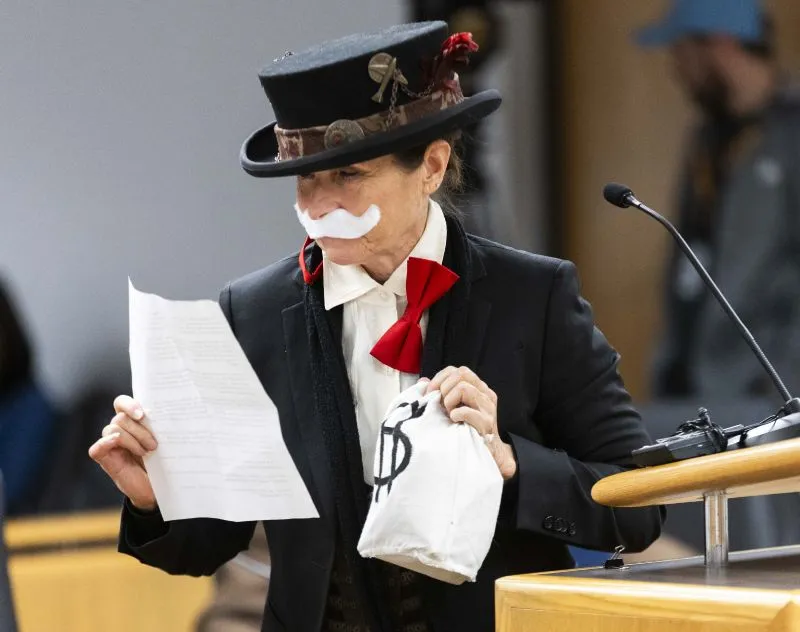
For example, our Utah team showed that Warren Buffet can’t play monopoly with Utah ratepayers. With a creative messaging campaign and strong public turnout, we successfully beat back a request from Berkshire Hathaway-owned monopoly public utility Rocky Mountain Power to raise rates, tied to its expensive coal plants. The Utah commission denied most of the utility’s requested rate increase, resulting in more affordable electricity for Utah customers.
In West Virginia, our team helped ratepayers across the state get engaged in the AEP rate case, where the utility proposed cuts to distributed solar funding and sought a rate hike that would amount to more than 13.5 percent for the average West Virginia residential electricity customer. Over the past 15 years, AEP has more than doubled electric rates for West Virginians, the nation’s third oldest population with the country’s second lowest median income. More than 5,000 members of the public sent in comments. In a resounding victory, the West Virginia Commission rejected most of the requested rate increase. Instead of paying an extra $24 each month, families will see a much smaller increase, possibly a decrease — and new protections that put people first.
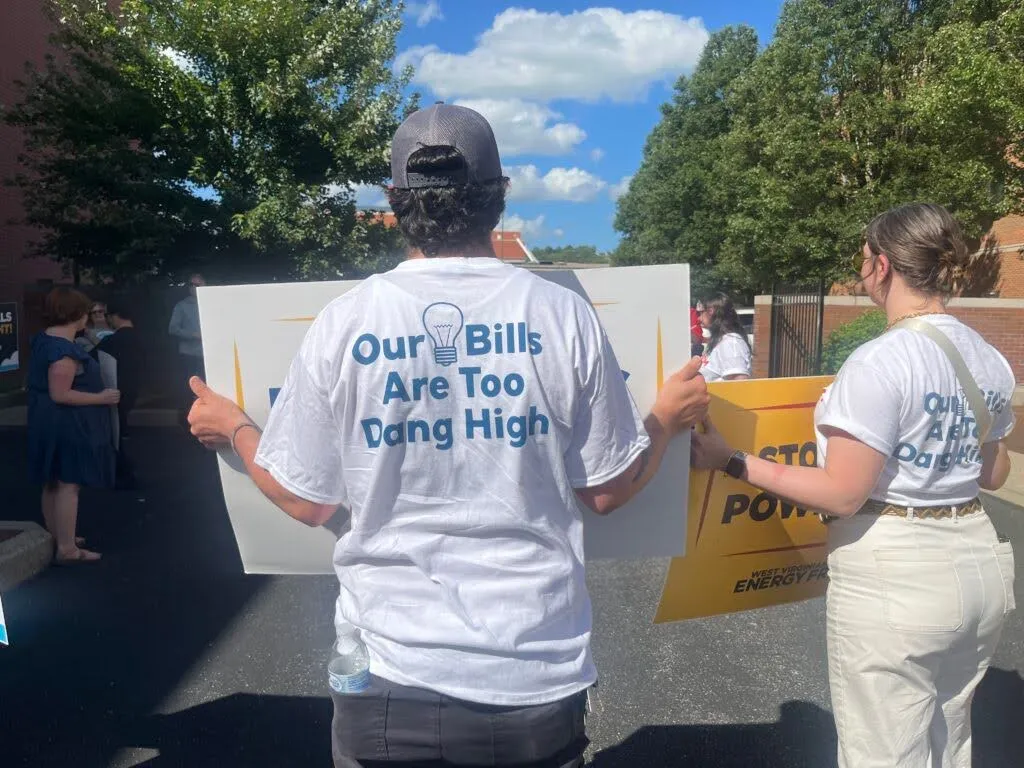
This case shows the power of public engagement. West Virginians are tired of skyrocketing bills, unreliable service, and utilities putting profits over people. The PSC’s decision reflects what happens when we speak with one voice: stronger protections for low-income families, fair treatment for solar, and smarter policies that let communities save money.
Across the country, our campaign engaged in 120 PUC cases. We demonstrated not only that clean energy is cheaper and better for customers, but also that the public is demanding this transition.

Our teams help the public speak truth to some of the most powerful people in the country. Here, a Sierra Club Nebraska Chapter volunteer asks Warren Buffet to end coal burning at Berkshire Hathaway’s Shareholder Meeting in May 2025.
Meeting the Moment on the Explosive Buildout of Data Centers to Power Artificial Intelligence
Two years ago, AI wasn’t on anyone’s bingo card of threats to climate progress; today, it is clear that electricity demand from data centers -- the warehouse-sized computer banks that power the internet -- is a major threat, compounded by the Trump administration’s stripping of state-level protections to regulate AI.
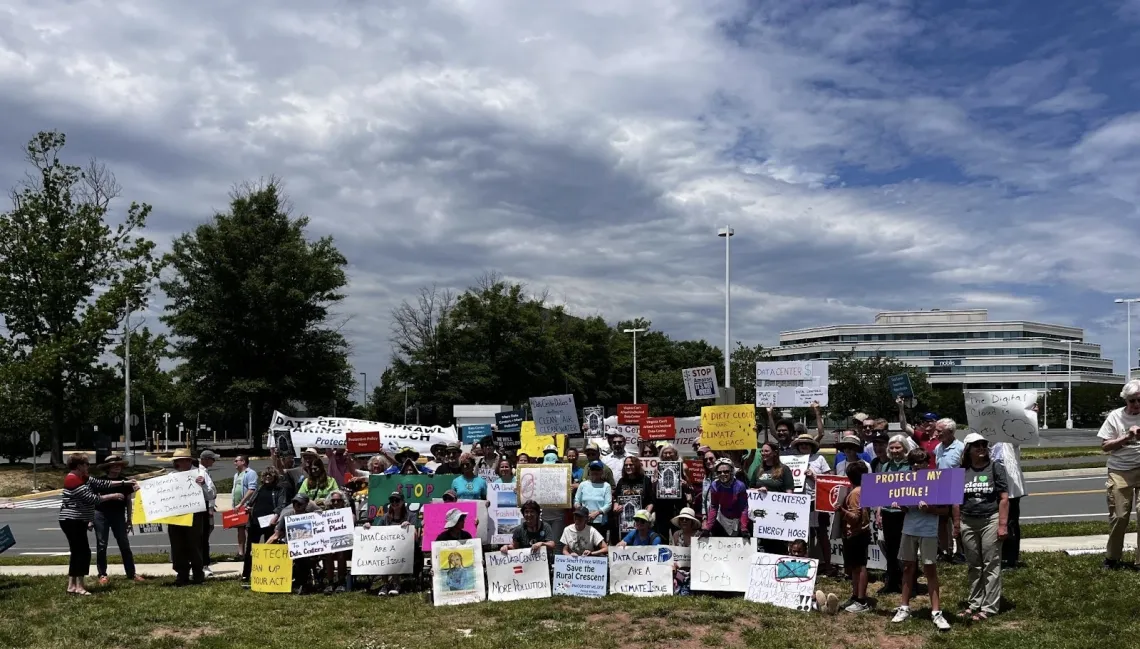
Electricity demand from data centers nearly doubled between 2022 and 2025, and is expected to double again by 2029 - and far too much of that demand is being met with coal and gas plants. Electric utilities across the country are proposing to delay coal retirements and build out over 100 gigawatts of new gas plants to meet this unexpected demand.
Last fall, we issued Demanding Better, a policy roadmap for powering this load growth with clean energy while lowering risk to customers. This year we put a full page ad in the San Francisco Chronicle and Seattle Times calling on the country’s largest technology company CEOs – Amazon’s Andy Jassy, Google’s Sundar Pichai, Meta’s Mark Zuckerberg, and Microsoft’s Satya Nadella – to power their data centers with clean energy, or risk failing to meet their own climate goals. Thousands of people signed up and watched our webinar on how to engage with local data center proposals in their communities. And as states grapple with how to accommodate this new load without causing astronomical cost increases to local customers, we engaged in over a dozen PUC cases to show how commissions can put guardrails around load growth.
We’re leading the charge to make sure data centers pay their fair share, and ensuring that residential customers don’t get stuck with the bill if (or when?) AI speculation turns out to be more of a bust than a boom.
Climate Leadership in State Legislatures
If you tune out national political noise, there were big wins in leadership state legislatures that are showing how it’s done: setting a trajectory for a more affordable grid with more clean energy and more accountability for monopoly utilities.
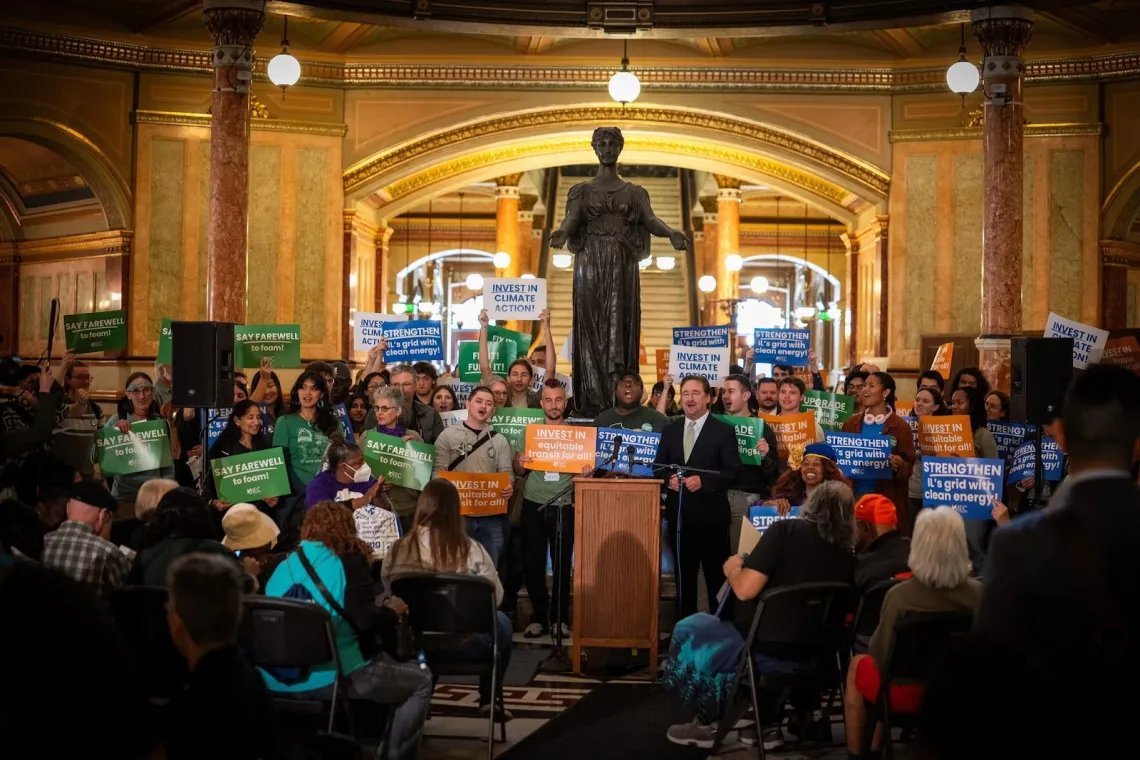
In Illinois, our team helped lead the Clean Jobs Coalition to pass the Clean and Reliable Grid Affordability Act (CRGA), continuing Illinois’ role as a leading clean energy state. CRGA is Illinois’ next step in comprehensive climate action that also addresses the energy affordability crisis. To reduce rates and move towards a modern power grid, Illinois needs to build its clean energy capacity while lowering peak demands through innovative demand management programs. CRGA addresses multiple key issues needed for decarbonizing the grid in an equitable and just manner, including:
- Integrated Resource Planning: For the first time owners of the state’s remaining coal plants must complete integrated resource plans. This means the Dallman, Prairie State, and Marion coal plants will finally face the scrutiny that most other utilities in the US face to determine if they represent the best energy resource for their customers.
- Increases Clean Energy & Storage Standards While Supporting Labor: The law strengthens Illinois’ Renewable Portfolio Standard to deliver, by 2035, 6.9 GW of wind and 5.9 GW of solar, and for the first time a requirement to deliver 6.6 GW of storage - and requiring Project Labor Agreements on utility-scale battery storage projects.
- Storage for All: Allows the Illinois Power Agency to create carveout of Illinois Solar for All program, designed to allocate up to 25 percent of program funding toward energy storage solutions, helping eligible households maximize the full benefits of solar energy paired with storage
Wrap Up
This work shows that by continuing to demonstrate that low cost and reliable clean energy is the solution to an electricity affordability crisis, we can hold the line against a new generation of entrenched coal and gas plant infrastructure. Whatever the Trump administration says, coal is costly and harms communities across America. Period. We will continue to make the case for why America deserves better. There is so much hope and joy to be found in local action, and our work is helping good-hearted people remember they still have the power to change the world.