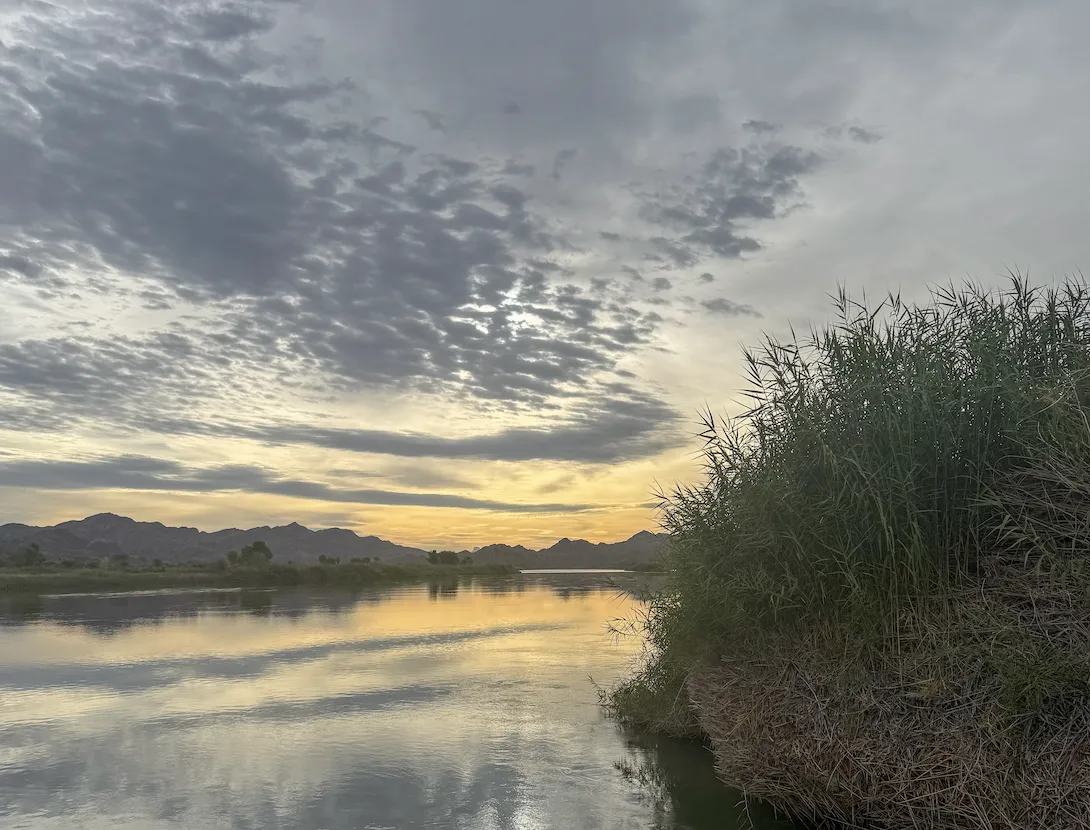
On a beautiful April weekend, I joined nearly 30 Sierra Club members from the Arizona Grand Canyon, San Gorgonio, and San Diego chapters on a journey into a proposed National Monument in southeastern California. We came to experience firsthand the extraordinary landscape the Fort Yuma Quechan Indian Tribe is working to protect.
The Quechan homelands are a place of immense beauty and significance. Rugged mountains, broad desert valleys, and ancient river corridors create a landscape that feels both timeless and alive. It is a powerful reminder that the desert is never empty—it is filled with life, history, and deep connection.
What made the trip truly unforgettable was the generosity of our Quechan hosts. Tribal members welcomed us with a home-cooked meal, shared stories around the campfire, and honored us with traditional bird songs rooted in Quechan oral history. The full song cycle normally lasts all night. “I’m not going to start at the beginning,” the singer told us, “because we’re already a couple hours past sunset.”
Though I did not understand the words, the songs were clearly heartfelt, and the profound connection between the Quechan people and their land came through unmistakably.
Later, we hiked through a wooded, sheer-sided wash beneath one of the darkest skies in the Southwest. Under the stars, the desert itself seemed to glow. Moments like these make clear why protecting public lands matters.
The next morning, some of us boarded an optional EcoFlight. From above, the scale of the land came into focus: an interconnected landscape of mountains, washes, river corridors, wildlife habitat, and sacred cultural sites. Seeing it from the air revealed what maps alone cannot -- this is a landscape worthy of permanent protection.
The proposed National Monument would protect nearly 390,000 acres of public land while honoring Indigenous leadership and preserving critical wildlife habitat, cultural resources, and outdoor recreation opportunities.
But the aerial view also revealed the threats facing this region. We saw the diminished Colorado River, sprawling agricultural fields encroaching on wetlands, and a mine tearing into a mountain range. It was impossible not to reflect on the tradeoff of habitat and spiritual values for exported hay, gold jewelry, and coins locked away in safe deposit boxes.
This journey deepened my appreciation for this extraordinary place and strengthened my commitment to its protection.
If you would like to experience this area for yourself—and I strongly encourage you to do so—Sierra Club will be organizing another outing this November. I encourage members, photographers, naturalists, and public lands advocates alike to join.
Learn more and take action at protectkwtsan.org. Together, we can help ensure these lands remains protected for generations to come.