Protect Bears Ears National Monument
Protect Bears Ears National Monument
Bears Ears National Monument is vital to tribal communities as a place of subsistence, spirituality, and healing. These lands are home to tens of thousands of important cultural sites, including the Ancestral Puebloan people's cliff dwellings, villages, and rock art panels.
Now, this magnificent landscape, rich in biodiversity and critical to the Colorado River Basin upon which 40 million Americans rely, is threatened again.
Despite widespread public support, Bears Ears is targeted for dismantling
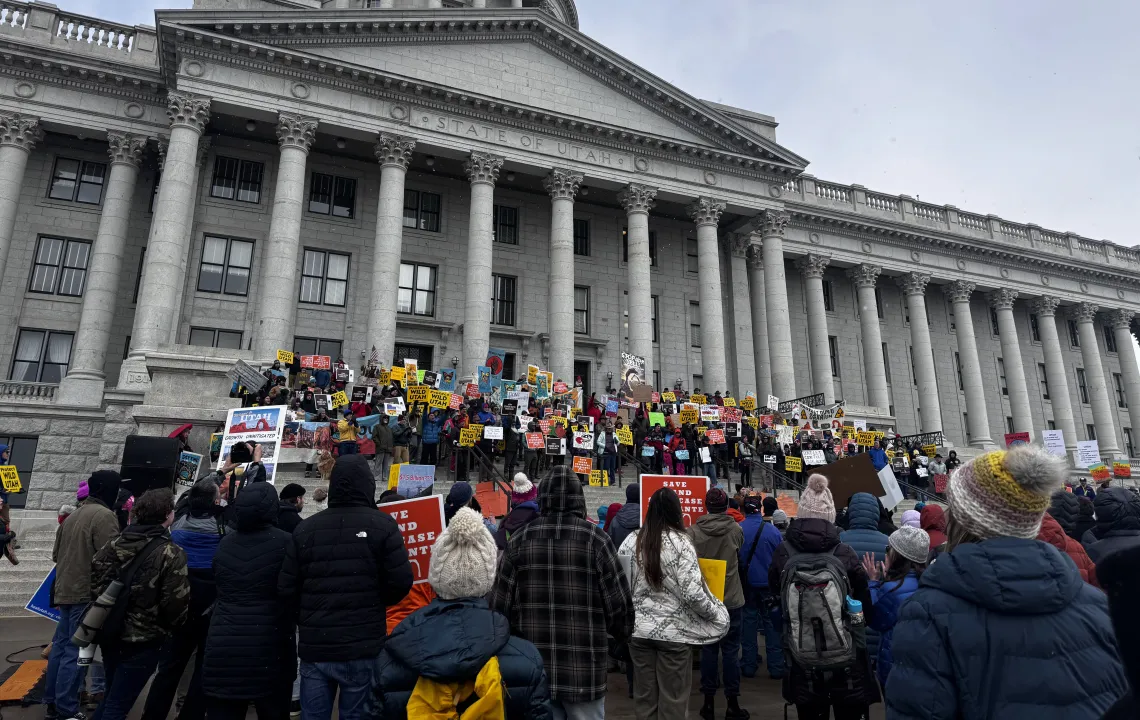
Utahns rally to support conservation of public lands at the Utah Capitol on Jan. 11, 2025. A poll released in January shows more than 70% of Utahns support keeping the states' national monuments intact. Photo by Kat Hickey
Bears Ears National Monument has a rich cultural heritage and is sacred to many Native American Tribes who rely on these lands for traditional and ceremonial uses. There are also world-class opportunities for scenic driving, photography, rock climbing, hiking, biking, camping, paleontological exploration, and wildlife viewing
President Obama designated Bears Ears as a national monument in 2016, responding to years of Indigenous action urging protection for this landscape in Utah. As part of the designation, the Bears Ears Commission was created to guide its management.
Donald Trump slashed the monument’s size by 85% in 2017, but in 2021, President Biden issued a proclamation restoring the Bears Ears National Monument and recognizing the importance of knowledge of Tribal Nations in managing the monument by reconstituting the Bears Ears Commission as established by President Obama in 2016, consisting of one elected officer each from the five Tribes.
The BLM and the U.S. Forest Service jointly manage the monument and have finalized a management plan for federal lands within the 1.36-million-acre boundaries of the Bears Ears National Monument.
The final plan was developed after years of collaboration between the five Tribal Nations of the Bears Ears Commission – the Ute Indian Tribe, Ute Mountain Ute Tribe, Zuni Tribe, Hopi Tribe, and the Navajo Nation – and federal agencies. Bears Ears is a significant national monument due to its cultural and environmental importance in the region, but also for the role Tribal Nations played in its designation and its subsequent management.
Project 2025, the extremist right-wing manual that President Trump has followed in his first days in office -- targets Bears Ears, Utah's Grand Staircase Escalante and other monuments. That's despite a recent Grand Canyon Trust poll showing an overwhelming 71% of Utahns support keeping Bears Ears protected as it is.
Campaign Updates
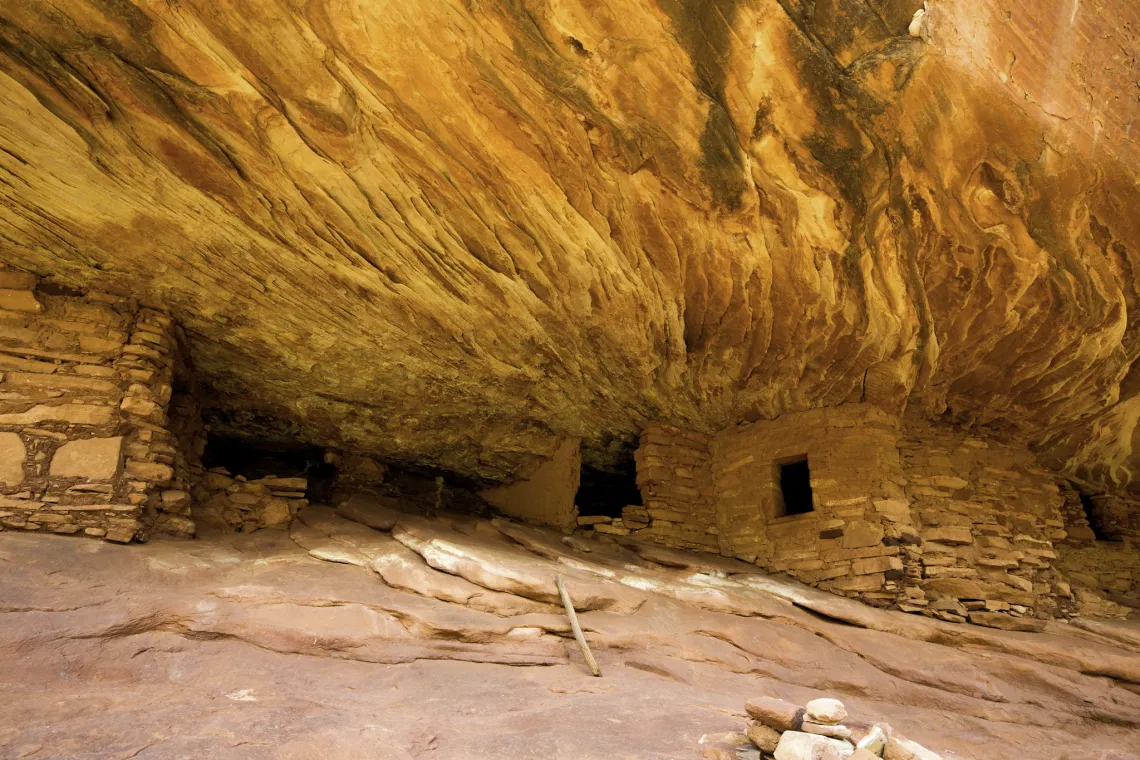
On Jan. 14, after years of consultation and more than 20,000 comments submitted by people like you in support of the tribal co-management -- the Bureau of Land Management finalized its management plan for preserving Bears Ears' soaring vistas, cliffs, petroglyphs and cultural value from destructive oil and gas mining.
The management plan was crafted in consultation with the five-tribe Bears Ears Commission. The Bears Ears Resource Management Plan marks a historic achievement, implementing Tribal collaborative management to preserve one of the country's largest national monuments.
In response, Jackie Feinberg, Sierra Club’s National Lands Conservation Campaign Manager, released the following statement:
"After years of collaboration between Tribes, federal agencies, and key stakeholders, we can celebrate this significant milestone not only for the preservation of Bears Ears, but for the integration of Traditional Indigenous Knowledge into public land management. For years, we’ve witnessed the detrimental effects of Tribal voices being ignored, but this plan signals a shift towards Indigenous leadership in conservation. As Bears Ears continues to face threats, we are committed to working with the Tribes in advocating for long-term stewardship of the land.”
Take action to protect Bears Ears

Stop the Selloff of Bears Ears and Grand Staircase Escalante National Monuments
90% complete
Add My NameTweet action
Text for sample tweet here. To pre-load the text, it must be in the URL of the button link.
Tweet Now