We've been feverishly supporting our North Carolina Sierrans this year to speak up to protect a couple of key national policies: the Roadless Rule and the definition of Waters of the U.S. in the Clean Water Act.
Folks who are longtime Sierra Club members and supporters know the issues at stake – the broad impact on clean air, safe drinking water, and unspoiled landscapes that are threatened by rollbacks in longstanding protections.
We're grateful for all of you who responded to the action alerts for both of these issues (and for all our action alerts!). Your support is essential to protecting our environment and all who live in it – in North Carolina, and far beyond.
Where we need to move the needle is in connecting the dots on how these issues impact the environment right in people’s backyards. That's why the N.C. Chapter staff and key volunteers have been stepping in to bring home the importance of these policies not just to our state, but to individual communities and the people who live in them.
The truth about the Roadless Rule
David Reid, a volunteer who's spent decades leading our national forests advocacy from his home in western North Carolina, has been a key voice in gauging and communicating to the public what might happen to North Carolina's public lands if the Roadless Rule is rescinded.
To support our organizing and advocacy over the past year, David tallied the North Carolina acreage protected by the Roadless Rule and which areas stand the greatest threats. He identified popular areas for hiking, hunting, fishing and other recreation, and places where some of the last undisturbed rich, biologically diverse habitats survive – places like Graveyard Fields, Laurel Mountain, and Wilson Creek in the mountains, and Catfish Lake North and Sheep Ridge in the Croatan.
David shared his findings in multiple op-eds and interviews over the past year. His research also showed that the Trump administration's latest argument in favor of rescission – the threat of wildfires – was demonstrably false.
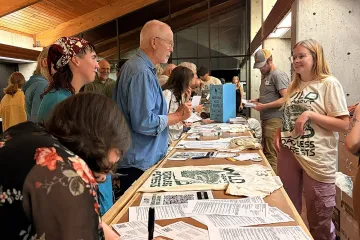
He wasn't the only one. Fellow WNC Group member Rob Campbell spoke to WCNC about the importance of our western Roadless areas. On the coast, our Croatan Group leaders Joel Dunn and Ralph Tramontano eloquently described the unique threats to the Croatan National Forest.
And when the federal government refused to hold any public hearings on the rescission plan before the end of the public comment period this week, the Chapter's organizing staff jumped into action, teaming with allied groups to hold multiple rallies in support of the Rule. Sierrans' energy and visibility around this issue even inspired Gov. Josh Stein to submit formal comments supporting the Rule.
NC wetlands are all around us
We've been laboring to safeguard North Carolina's wetlands since the U.S. Supreme Court's 2023 Sackett decision and the N.C. General Assembly's concurrent legislation undermined protections nationwide and our state's longstanding elevated standards.
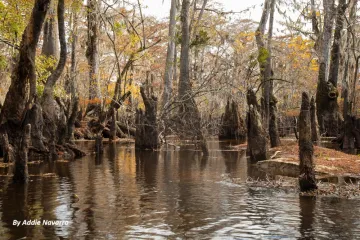
That included a webinar last year explaining not just the importance of our wetlands for clean drinking water and wildlife protection, but how these wetlands are pervasive across our state, in locations many residents may not realize.
Right now (Oct. 9 at midnight), the federal government is wrapping up its very brief public comment period on plans to further narrow the definition of "Waters of the United States" (WOTUS). This plan puts practically all our streams and wetlands at risk in a blatant giveaway to corporate polluters who have been trying to weaken the Clean Water Act for decades.
What does changing this definition mean? Erin Carey, the Chapter's deputy director and conservation policy lead, got granular in a recent interview with Charlotte TV station WCNC. In the interview, she named wetlands right outside our state's biggest city – and why residents there should be alarmed as people in the rest of our state about how changing WOTUS will affect them directly.
More broadly, she called out the federal government's efforts to shift the regulatory burden to states, "many of which are already overwhelmed by all the new responsibilities the federal government has decided it doesn’t want anymore. … It’s dereliction of duty."
We'll keep working – with your help
The end of these comment periods doesn't mean the end of our efforts. We hope that federal agencies will be swayed by the thousands of North Carolinians and millions of people nationwide who spoke out in support of WOTUS and the Roadless Rule, and act accordingly.
But if they move forward to undermine these policies – threatening not just the environment, but our families and communities – we'll be ready to rally Sierrans and all North Carolinians to fight back.
About Us: The Sierra Club is America’s largest and most influential grassroots environmental organization, with tens of thousands of members and supporters in North Carolina. We help people from all backgrounds explore nature and our outdoor heritage, and work to promote clean energy, protect wildlife, safeguard the health of our communities, and preserve our remaining wild places through grassroots activism, public education, lobbying, and legal action.