“Thousands of tired, nerve-shaken, over-civilized people are beginning to find out that going to the mountains is going home; that wildness is a necessity; and that mountain parks and reservations are useful not only as fountains of timber and irrigating rivers, but as fountains of life.”
― John Muir, Our National Parks, 1901
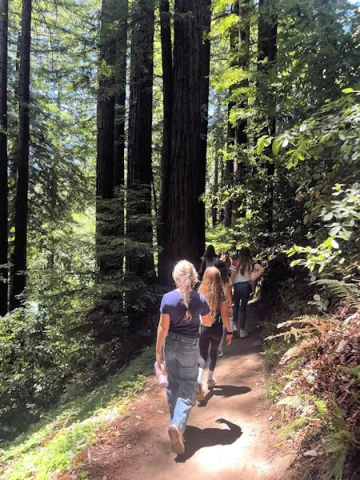
This summer, I had the opportunity to work as a counselor at an outdoor education Christian camp in Scotts Valley called Frontier Ranch, surrounded by towering redwood forests, native plants, and incredible biodiversity. Every day, I watched these young campers explore trails, identify plants, and discover the natural world in ways many of them never have before.
One thing that stood out to me was how fascinated the campers were by nature. They were excited to learn the names of plants, search for wildlife, and asked questions about the ecosystems around them. During hikes, many were amazed to discover that some local plants were edible and had been used by Indigenous communities for generations. What seemed ordinary to those who spend time outdoors often felt like a completely new world to these young people.
At the same time, their curiosity highlighted an important challenge. Many campers told me that they rarely spend time outside at home. Between busy schedules, technology, and limited access to natural spaces, opportunities to connect with nature is far in between. As a result, many children have not had the chance to develop a deeper appreciation for the environment simply because they have not been exposed to it.
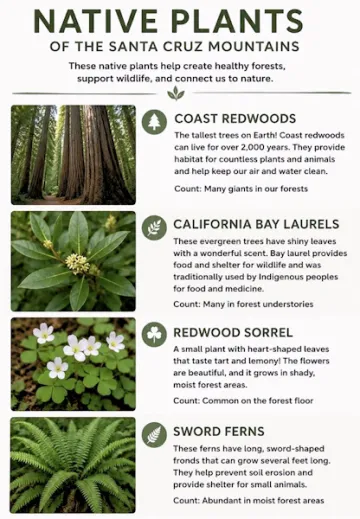
The redwood forests of the Santa Cruz Mountains provided an ideal outdoor classroom. Campers learned about native species such as coast redwoods, California bay laurels, redwood sorrel, and sword ferns while experiencing these plants firsthand. They gained a greater understanding of how these species support local ecosystems and why protecting natural habitats is so important.
Through outdoor experiences, children began to build a personal connection to the environment. Instead of viewing conservation as a confusing concept, they could actually see themselves as part of the natural world. Whether they were examining a fern, tasting an edible plant, or standing beneath a hundred-year-old redwood tree, these moments created lasting memories that could inspire environmental stewardship for years to come.
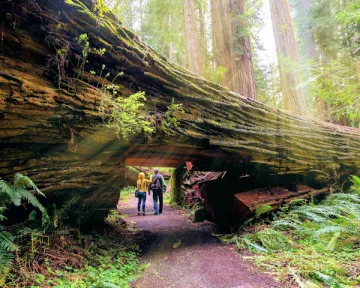
Working at camp reinforced my belief that getting young people outside is one of the most effective ways to cultivate future conservationists. When children are given the opportunity to explore nature directly, their curiosity grows into appreciation, and appreciation often grows into a desire to protect the places they love. In a time when many young people are increasingly disconnected from the outdoors, experiences like these are more important than ever.