Beneath This Brooklyn Cemetery, the Ground Teems With Life
Analyzing environmental DNA reveals hundreds of hidden species in urban green spaces
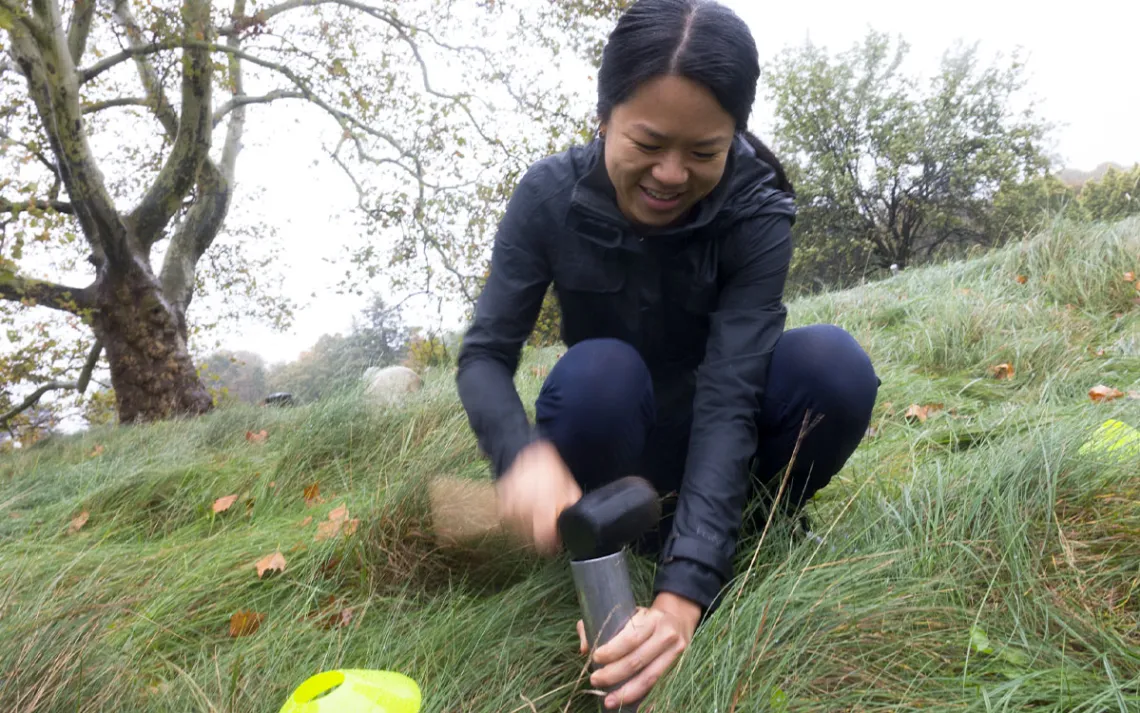
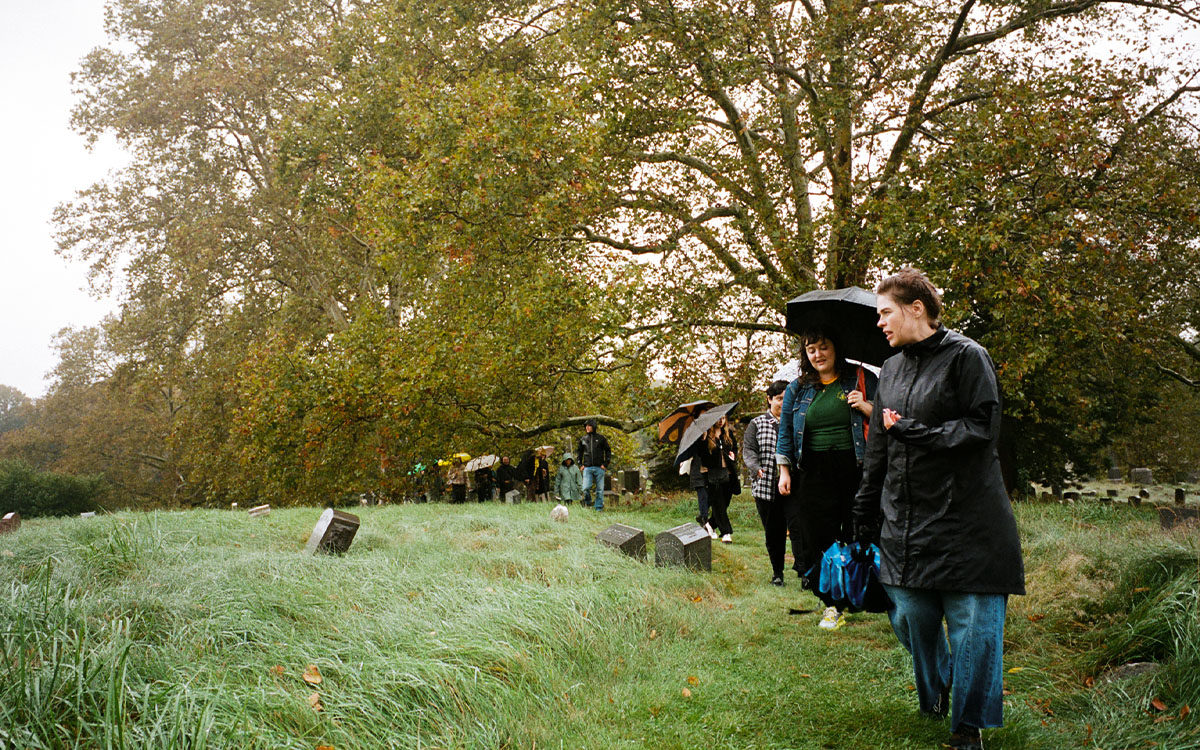
On a cool October afternoon in Brooklyn, 20 New Yorkers ventured out to Green-Wood Cemetery in search of the unseen. They weren’t here to visit grave sites, but instead, the microscopic soil fungi that lay beneath, hidden among the roots of the cemetery’s trees, shrubs, and grasses.
This was the last of three fungus digs led by Whitney Bauck and Lauren Wilson, a team halfway through a one-year research fellowship with the cemetery. Bauck, an environmental journalist, and Wilson, a marketing and communications director at New York Restoration Project, lead a community science project seeking to attune New Yorkers to the city’s diverse and abundant fungi. Their project draws on a burgeoning technique in ecological research: sampling environmental DNA, or eDNA, to detect the past presence of organisms.
While the data aren’t in yet, their community science approach has proven successful—all three of their free events hit capacity with enthusiastic volunteers. The fact that Bauck and Wilson aren’t professional mycologists themselves—and yet have delivered discoveries of their own through this work—is evidence that anyone can contribute to this field of scientific inquiry. A pilot dig that Bauck and Wilson held in a Brooklyn park last year detected 500 species that had previously never been recorded in the city. Discoveries like this could lie around every corner in mycology.
It’s not uncommon for amateurs to contribute to the field of mycology, where so many basic questions remain unanswered. Their Green-Wood fellowship aims to document some of the almost 2,000 fungus species that have been recorded in New York City—and likely discover some firsts for the city—across habitats. The researchers are particularly interested in the mycorrhizal fungi that have adapted to live alongside plant roots and help keep the surrounding ecosystem functioning.
Two previous digs took samples around aboveground mushrooms and at a grove of hybrid American chestnuts. The once-widespread tree is now functionally extinct in the wild. Sampling the soil around chestnut hybrids, the researchers hope, could reveal mycorrhizal relationships that the trees need to survive.
“Fungi are sort of out of sight, but they are playing these really crucial roles in our climate regulation, in plant growth,” Bauck said. “It’s transforming how I see the world. Even when I can't see a mushroom, I'm seeing the fungus hovering out of sight underneath the roots.”
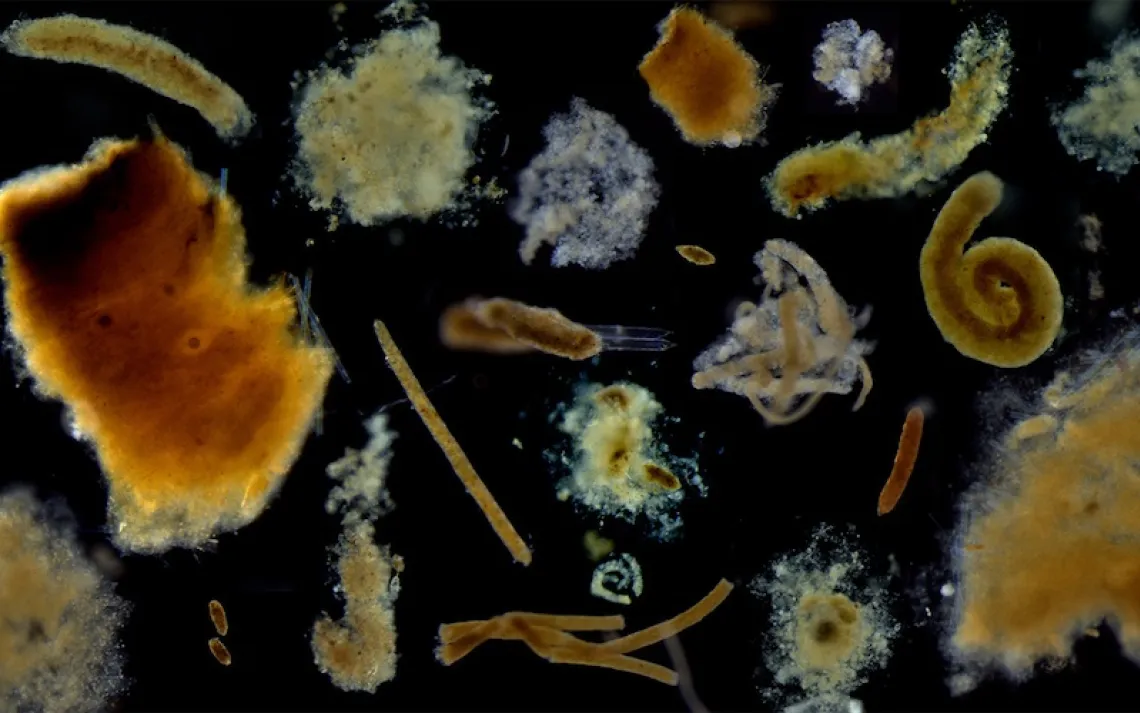
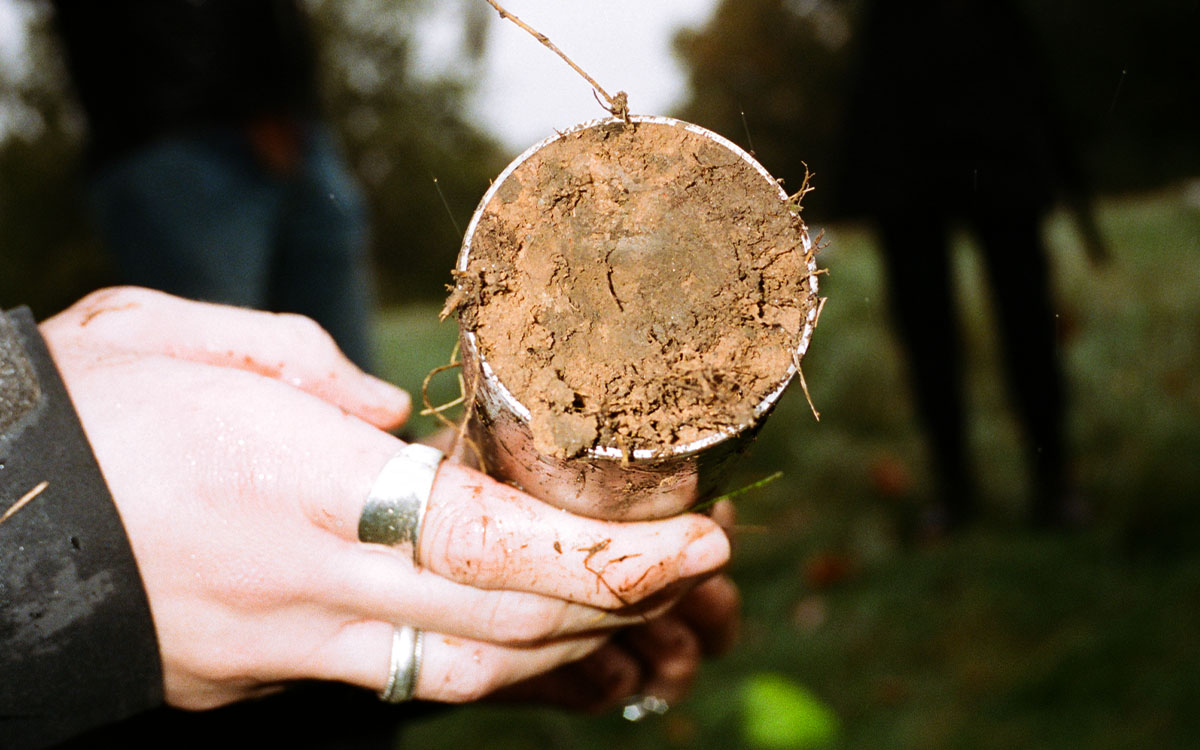
Cryptic species like underground fungi are impossible to detect, let alone identify, by sight. Researchers use eDNA instead to identify species from traces of genetic material left behind in the environment. A small sample in a couple teaspoons of soil can reveal the fungi that have been present in a given spot.
“Using eDNA really blows open what we can find,” Bauck said. “We have a way to make the invisible visible.”
Last year, the mycorrhizal fungus research group SPUN (Society for the Protection of Underground Networks) leveraged eDNA research to launch a map documenting global hot spots of wild fungi. An accompanying paper in Science estimated that mycelial networks in the earth’s topsoils outweighed humanity by as much as six to one.
Even in urban landscapes, fungi thrive unseen and seldom studied. Bauck and Wilson worked with SPUN to process the data from their trial dig and to design the protocols for their Green-Wood project. Beyond the science, though, they hope their research inspires people to appreciate this mysterious kingdom of life thriving beneath our feet.
“This is a highly disturbed natural environment, and yet it’s still teeming with life, and it's worth understanding what's present here,” Wilson said.
In the cemetery, Bauck and Wilson guided volunteers to the first dig site: a native wildflower meadow, lush with the fall colors of goldenrod, beebalm, and aster. The cemetery planted these flowers in 2022 as an experiment in lawn rewilding. Later, Bauck and Wilson will compare the fungal diversity in these restored grasslands with wild habitats. Some of the first fungi to develop partnerships with plants evolved in grasslands, which remain hot spots of fungal diversity.
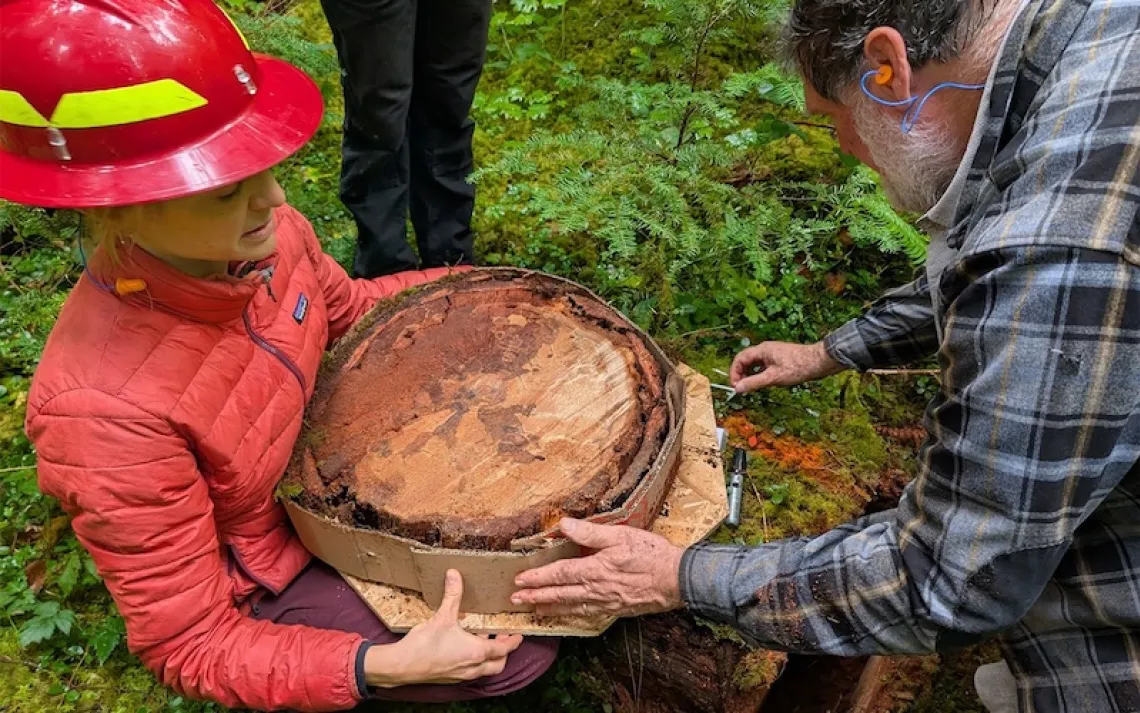
Bauck drove a foot-long section of two-inch metal pipe halfway down into the ground, then drew it back out to pull a six-inch soil core. With a sanitized plastic spoon, Wilson scraped soil from the bottom of the core into a plastic sandwich bag.
Volunteers then took their own samples. Bauck and Wilson measured out squares on the ground marked with cones; one participant drove the pipe into the ground at each corner, and another scraped soil into a bag. On a hillside next to a mausoleum, in the rain-dampened soil, the pipe sunk steadily into the earth with each mallet blow.
Less than 10 percent of the world’s estimated 2.5 million fungi species have been documented. These fungi play an essential role in the ecosystems they support: 70 percent of plants, for example, rely on mycorrhizal fungi. As Bauck put it, you cannot understand the earth without understanding fungi. She hopes that data from their surveys can support future research.
“We're really excited to be part of that proud lineage of amateurs and community scientists who are trying to help fill some of those gaps in mycology,” Bauck said.
At the dig site along an open ridge known as the Hill of Graves, the grasses all but swallowed the worn gravestones. In a light drizzle, the volunteers continued their work, undeterred by the wet conditions—driven by mutual wonder at the mystery of the world below.