The Midterms Are Finally Here. So Are Surging Costs and Corruption, Which Remain Top Concerns for Voters.
Trump and the fossil fuel industry are key drivers of both, Democrats and environmental advocates say
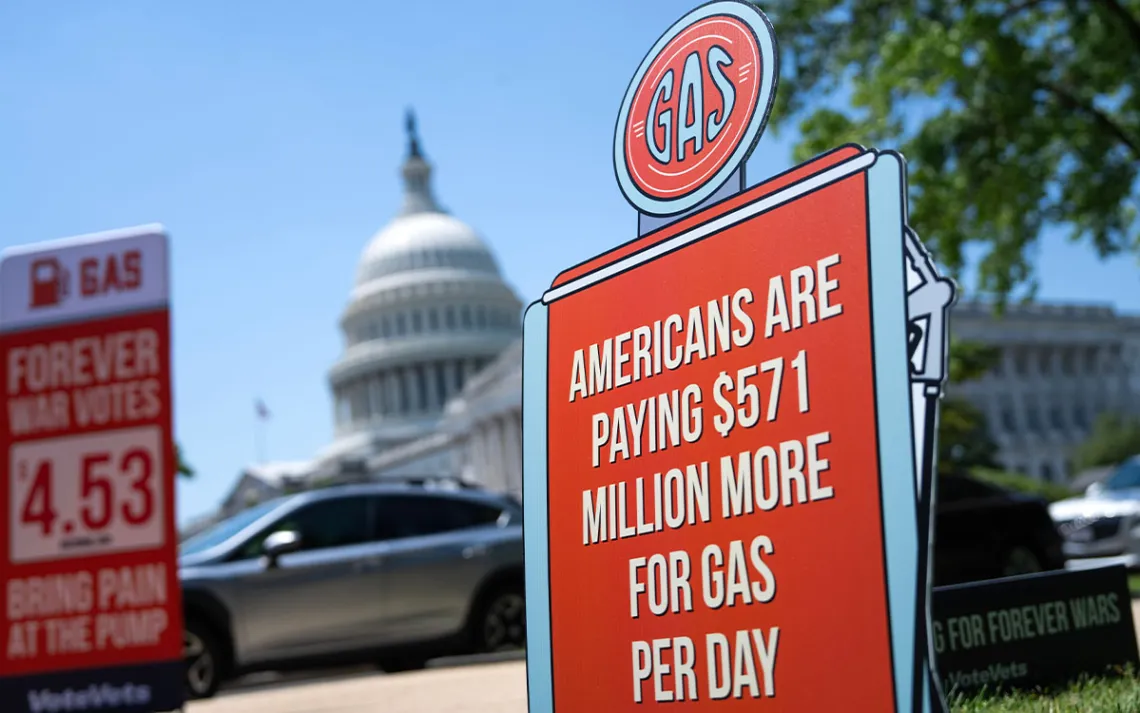
Photo by Tom Williams/CQ Roll Call via AP
While running for a second term as president, Donald Trump told Americans that he would lower costs and end inflation starting on day one. His administration, he claimed, would cut energy prices and electricity bills in half, and the price of gasoline would drop below $2 a gallon.
During his campaign, Trump also offered promises to a very different audience at a private dinner at the Mar-a-Lago club in April 2024. The gathering was organized by billionaire oil tycoon Harold Hamm. Trump urged the room full of oil and gas executives and lobbyists to donate $1 billion to his campaign. In return, he said he would deliver on the industry’s agenda—wiping out environmental regulations, providing tax relief, killing clean energy competition, and more.
Now, as voters head to the ballot box for the 2026 midterm elections with control of Congress on the line, Trump and Republicans may pay a price for a worsening affordability crisis that critics argue is tied to Trump’s corruption and penchant for enriching his fossil fuel donors at the expense of working families.
“Every American family struggling with high costs is suffering because of the corrupt relationship between Donald Trump and the fossil fuel industry,” said David Arkush, director of Public Citizen’s climate program.
Arkush was commenting on a report examining Trump’s “corrupt bargain” with polluters and how that bargain is hitting Americans in the pocketbook. The investigative report, led by Senators Chuck Schumer (D-NY) and Sheldon Whitehouse (D-RI), was released in September as part of Schumer’s Anti-Corruption Working Group. It details how the fossil fuel industry has infiltrated and “bought” the executive branch, having benefited heavily from its political spending in the 2024 election. That infiltration into the politics of the nation, thanks to Trump, is now costing Americans billions of dollars and leaving them to foot the bill through more pollution, more climate chaos, and more expensive dirty energy.
“This staff report presents the most detailed assessment to date of the Trump administration’s corrupt bargain with polluting industries and its contributions to the current climate, cost, and accountability crises in America,” the report says. “Our government has been occupied by a corrupt industry and is being run from within to the benefit of that corrupt industry.”
Fossil fuel executives and polluting interests invested hundreds of millions of dollars into Trump’s campaign and those of allied Republican lawmakers (including $19 million in the inaugural fund). It was, according to the report, the “largest political investment the industry had ever made.” Now, through new tax breaks and subsidies along with regulatory rollbacks and other giveaways, the fossil fuel industry stands to gain a massive return on its investment, to the tune of hundreds of billions of dollars, the report found.
“When we talk about higher costs and corruption, the two are linked,” Schumer said at a press conference highlighting the report. “And there’s probably no greater link in terms of the fossil fuel industry and the Trump administration that ties the corruption to the high costs that people are paying.”
“It’s not just Big Oil that is profiting off Trump’s action: The president himself is lining his own pockets.”
“This midterm is the energy election”
Government corruption and the high costs of living are top voter concerns heading into the midterm elections, polling indicates. Costs are up on nearly everything, from gas and groceries to energy and electric bills, healthcare, and housing. Majorities of voters say that affordability has worsened under Trump and that he has broken his campaign promises to lower costs, according to Data for Progress.
Overall, inflation has risen 3.7 percent over the last 12 months, Consumer Price Index’s most recent data shows. Rising gasoline and energy costs, driven in part by Trump’s war with Iran and the blockage of the Strait of Hormuz, account for much of the increase. Energy prices have climbed over 20 percent in the last 12 months (ending in September), with electricity up 4.4 percent, gasoline up 34.2 percent, and fuel oil up a staggering 74.2 percent.
“What we are witnessing is fossilflation—real, direct, and hitting people where it hurts: their pockets,” Candice Fortin, US campaigns manager at 350.org, said in a statement responding to the latest inflation numbers. “When dependence on fossil fuels leaves household budgets at the mercy of war and volatile global markets, it is ordinary people who pay the price for an energy system built around fossil fuels. Rising gas prices are squeezing household budgets, and the impacts are spreading across the economy, making everyday life more expensive at a time when many families are already struggling to get by.”
Since the price of oil is set by the global market, drilling more domestically does not automatically insulate American consumers from global fuel price shocks. And although the US is the world’s top oil and gas producer, it has actually paid the most overall out of any country for the Hormuz oil price shock, according to a new analysis from the Center for Research on Energy and Clean Air. The organization found that the war-driven supply disruption has added $160 billion to what Americans pay for fuel, or $471 per person on average. The reason that Americans have paid the most, the analysis says, is because of their high oil consumption and reliance on inefficient gas-powered vehicles and slower transition away from oil and diesel.
Trump and his administration are pursuing an “energy dominance” agenda that aims to increase Americans’ fossil fuel dependency and consumption. And Trump has even celebrated high gas prices. At an October 24 rally in Georgia, for example, he boasted about the “fortune” being made and said that he “doesn’t give a damn” that people are suffering at the pump.
“It’s not just Big Oil that is profiting off Trump’s action: The president himself is lining his own pockets,” Mahyar Sorour, Sierra Club director of Beyond Fossil Fuels Policy, told Sierra. “A new report from the US Congress Joint Economic Committee found Trump’s personal wealth from oil and gas stocks has grown by as much as $35.8 million since he took office. He is even bragging about how rich he and his donors are getting while Americans struggle to make ends meet. Trump does not care about people’s health or about building a secure, clean energy future. He cares about him and his friends in Big Oil getting richer.”
American voters, however, do care that they are paying more, not only for gas but for energy broadly, which is tied in with many other costs.
“Families are paying more to fill their tanks, heat their homes, and keep the lights on—and that’s driving the price of everything else up,” Climate Power president Lori Lodes said in a recent memo. “This midterm is the energy election, and the gap between what Trump and Republicans promised versus what they actually delivered is shaping the closing arguments.”
“The Trump administration is pursuing policies and interventions, without Congress, that are driving up the price of energy."
“The ‘Golden age’ of energy corruption”
Reports from Democratic lawmakers and public interest groups outline some of the myriad ways that actions by the Trump administration and congressional Republicans have benefited polluting industries and driven up costs for average Americans.
“Rising costs are a direct result of President Donald Trump and Republicans’ failed policies and naked corruption,” a report released by Senate Democrats in March argued.
Corruption has a cost, and Trump has ushered in the ‘golden age’ of energy corruption,” Climate Power senior adviser Jesse Lee said in a statement accompanying an April report from Climate Power and Public Citizen.
Legislatively, the One Big Beautiful Bill Act that passed last year gutted the Inflation Reduction Act’s climate action investments—including tax credits for renewable energy, electric vehicles, and energy efficiency—and bestowed extensive subsidies, tax breaks, and other benefits on the fossil fuel industry. Critics slammed it as the most anti-environment bill in US history and the largest-ever transfer of wealth from working-class families to wealthy Americans.
Trump and his cabinet have also undertaken sweeping actions intended to boost fossil fuels and decimate clean energy, at the expense of Americans’ health and their wallets. Study after study makes clear that clean energy is cheap energy.
“The Trump administration is pursuing policies and interventions, without Congress, that are driving up the price of energy,” Pete Wyckoff, vice president of policy at Evergreen Action, told Sierra.
Under Trump, federal agencies have worked to expand fossil fuel leasing, production, and consumption while taking unprecedented deregulatory action to dismantle pollution controls. The latest deregulation, announced just a week before the midterm elections, is the EPA’s proposed overhaul of a 2024 methane pollution rule requiring the oil and gas industry to prevent leaks and reduce wasteful emissions of the potent greenhouse gas. Commenting on the methane rule rollback, Whitehouse said, “Trump’s EPA once again delivers pay-to-play payback to Trump’s fossil fuel donors.”
The oil, gas, and coal industries have all benefited from the Trump administration’s numerous actions—from expanding LNG exports to attacking electric vehicles to spending more than a billion dollars on the uneconomic and declining coal sector.
The Department of Transportation recently rolled back fuel economy standards on motor vehicles, which will result in autos guzzling more gas and consumers paying more at the pump, while the EPA is simultaneously axing greenhouse gas pollution controls on these vehicles. In the power sector, the administration is forcing dirty coal plants that were scheduled to shut down to stay online, facilitating the rampant buildout of AI data centers that is leading to a rise in new gas plants to power them, and at the same time eliminating carbon pollution standards on coal and gas plants.
Emergency orders issued by the Department of Energy to keep seven dirty power plants operating beyond their slated retirement dates have cost Americans over $628 million so far, according to a Sierra Club tracker. And a new analysis from Environmental Defense Fund finds that the Trump administration is propping up nearly half of the US coal fleet through pollution exemptions, taxpayer-funded subsidies, and emergency orders to keep specific plants running. The DOE has committed $950 million in taxpayer dollars to prop up 24 coal plants, according to the analysis.
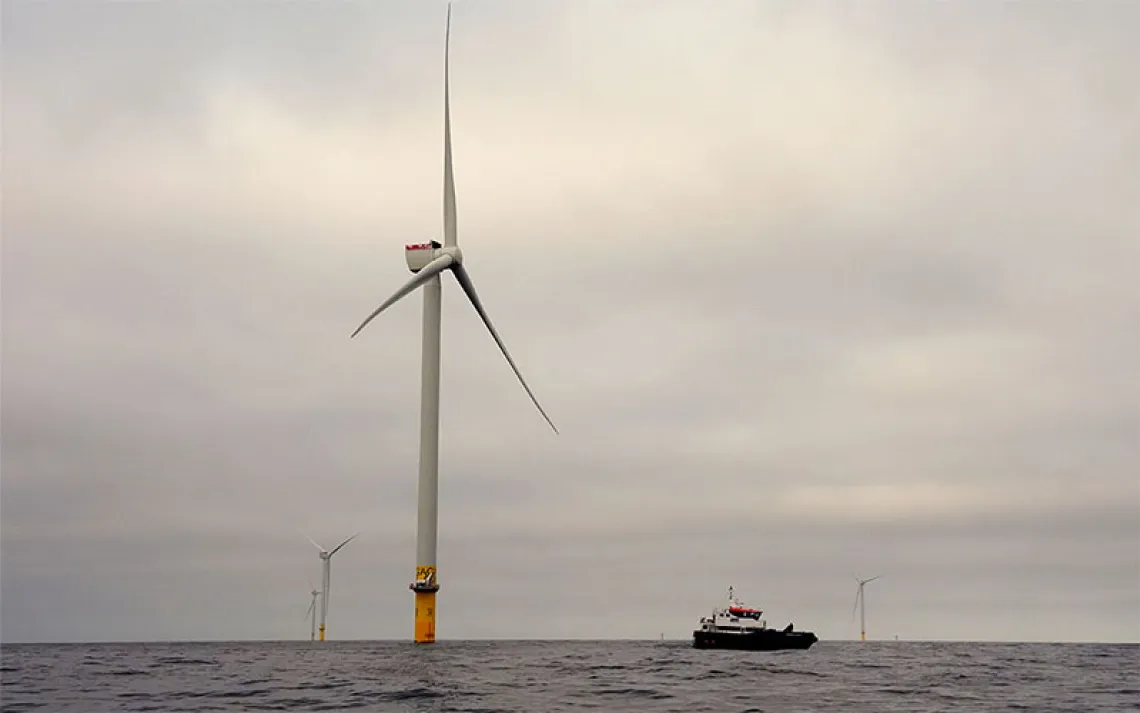
Additionally, the administration is working to block access to cleaner and cheaper renewable energy through canceling or interfering with hundreds of clean energy projects, delaying or stymying permitting for new solar and wind development, terminating green energy grants in states that didn’t vote for Trump, canceling proposed transmission corridors, inflating project costs through tariffs, and more. The offshore wind sector has been especially targeted through multiple strategies, including buybacks of wind leases (in exchange for the developers plowing that money into fossil fuel projects), stop-work orders on wind farms under construction, and attempts to reconsider or revoke wind project permits.
“All of these things have the same net effect. They hurt American energy consumers, but they help fossil fuel producers,” Wyckoff said.
The Trump administration’s fossil fuel frenzy and attacks on clean energy also exacerbate the climate crisis, which saddles Americans with even more costs—damaged property and infrastructure from extreme weather disasters, rising homeowners’ insurance premiums, higher food prices, and more healthcare costs, for example.
As the Schumer/Whitehouse report on Trump’s fossil fuel corruption states: “Every price increase Americans are experiencing today is, in some measure, a downstream consequence of an administration that prioritized fossil fuel profits over family budgets.”